Home Blog Page 68

EFF unveils draft student debt relief bill to confront higher education crisis

By Johnathan Paoli

The EFF has released the first draft of the Student Debt Relief Bill, 2025, a sweeping proposal to address what it calls the “structural crisis” of student debt in South Africa.

EFF MP and Higher Education Portfolio Committee member Sihle Lonzi, who is driving the Bill, described the crisis as a national emergency.

“There are more than 300,000 students who have met all their academic requirements but cannot graduate, cannot receive their certificates, because of student debt. This is not failure; this is poverty being weaponised,” Lonzi said.

The party says the Bill is not only a legislative milestone but also the continuation of its longstanding campaign for free, quality education.

The draft legislation, gazetted earlier this year, proposes the establishment of a Student Debt Relief Fund through which eligible students may apply to have their debts cancelled.

Crucially, it also seeks to compel institutions of higher learning to release qualifications to all students who have completed their academic requirements, irrespective of outstanding fees.

According to the EFF, more than 500,000 students across the country are burdened by institutional debt, preventing many from graduating or receiving their qualifications.

In 2022 alone, over 120,000 students were unable to graduate due to unpaid fees. Student debt, which stood at R16.5 billion in 2021, has ballooned further in recent years, turning higher education into a “tool of exclusion,” the party argues.

The EFF contends that the withholding of qualifications entrenches inequality, trapping young people in cycles of joblessness and debt.

“Young people were told to go to school. They did, they completed their studies, yet they cannot graduate because of the economic backgrounds they come from,” Lonzi added.

The Student Debt Relief Bill would create a state-backed Student Debt Relief Fund, empowering students who meet specific criteria to have their debts written off.

The fund would also ensure that universities and colleges are reimbursed, preventing disruptions to institutional budgets.

EFF national spokesperson Sinawo Thambo described the Bill as “a people’s bill, grounded in the pain and suffering of students who have been excluded for too long.”

He argued that clearing debt would not only empower individuals but also stimulate the economy by allowing graduates to enter the workforce and contribute meaningfully.

“This is not simply about financial relief; it is about restoring dignity, enabling graduates to work, to specialise, to start businesses, and to participate in the economy,” Thambo said.

Public consultation on the draft Bill is now open for 30 days, with written submissions invited to Parliament.

The EFF has urged students, academics, workers, civil society organisations, and the broader public to participate in shaping the final version.

“We have exactly 30 days to unite the whole of South Africa behind this progressive Bill. This is about the future of our young people and the future of our nation,” Lonzi said, calling for a broad coalition of support.

The EFF also plans to hold nationwide consultative meetings at universities and TVET colleges in the coming weeks.

Lonzi said these engagements will not only refine the legislation but also mobilise public pressure ahead of its formal tabling in Parliament.

Opposition parties are expected to scrutinise the Bill.

The African National Congress has historically resisted blanket debt cancellation, favouring schemes like NSFAS, while the DA has argued for a means-tested model to assist only the poorest students.

The EFF rejects these alternatives, insisting that means-testing perpetuates exclusion.

The Bill is being positioned by the EFF as part of its broader struggle for free, decolonised education.

The party, which was instrumental in amplifying the #FeesMustFall protests of 2015–2016, says this legislation marks a critical shift from protest to policy.

If passed, the legislation could free hundreds of thousands of graduates from financial exclusion, potentially altering South Africa’s higher education landscape.

INSIDE EDUCATION
KZN Education Department condemns racial violence at Glenover Secondary

By Levy Masiteng 

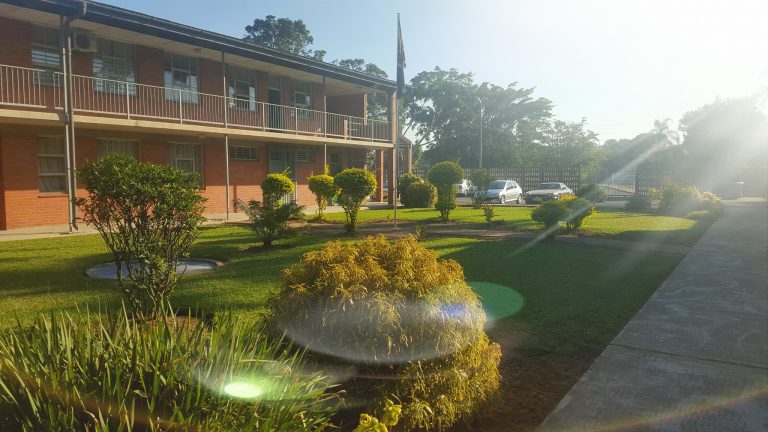
The KwaZulu-Natal Department of Education has expressed deep concern and regret following a serious incident of racial violence at Glenover Secondary School on Friday.

Five learners were stabbed in the attack — four African learners and one Indian learner.

According to departmental spokesperson Muzi Mahlambi, the violence began as a minor altercation on the soccer field between two learners but escalated into a wider conflict with racial undertones.

“The school acted swiftly, suspending the four learners directly involved in the initial incident,” Mahlambi said.

The situation worsened after school hours when a group, including a parent and former learners not part of the original altercation, confronted and assaulted some of the learners.

In a statement, the school strongly condemned the violence, warning that such incidents would disrupt learners’ preparation for their trial examinations.

“We are gravely concerned that this violence was racially motivated and aggravated by adults who should be setting an example of tolerance, peace, and restraint,” the school said.

Mahlambi stressed the importance of parental responsibility, adding: “Discipline begins at home. Parents play a critical role in instilling values of respect, tolerance, and non-violence.”

Education MEC Sipho Hlomuka echoed the condemnation, denouncing the “criminal behaviour of certain community members alleged to be fuelling violence” at the school.

“We will stand firmly with the principal, management team, SGB, and SAPS to ensure that this racial conflict is swiftly resolved and that schools remain safe spaces for teaching and learning,” he said.

The department said they are working with  the school to restore peace and stability, urging parents to support the school’s efforts to maintain a safe and inclusive learning environment.

“We urgently call on all parents to work with us to restore peace and stability,” the school appealed. “Your support is more important now than ever. Together, let us ensure the safety, well-being, and future of every learner at Glenover Secondary School,” Mahlambi said. 

INSIDE EDUCATION

Chiloane pledges new school for Nigel after Alra Park safety crisis

0

By Johnathan Paoli

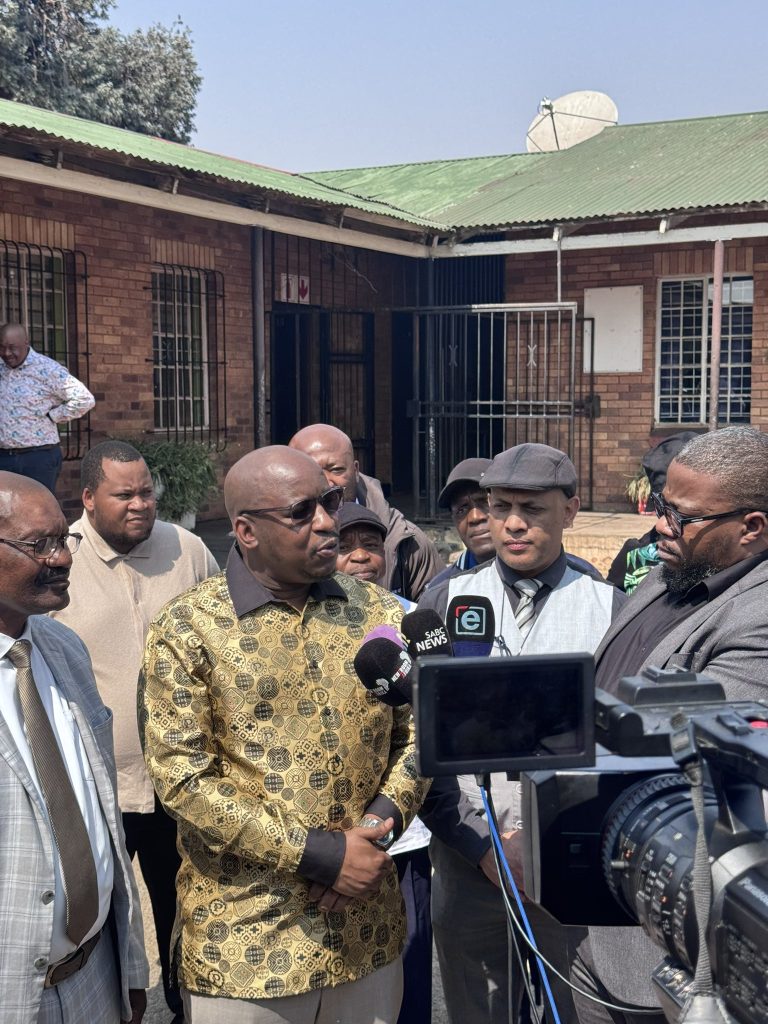
Gauteng Education MEC Matome Chiloane has pledged to deliver a new school for the Nigel community within 18 months, following weeks of turmoil over unsafe learning conditions at Alra Park Primary School.

Speaking to the media after a meeting with the School Governing Body (SGB), staff, departmental officials, and the Infrastructure Crisis Committee, Chiloane stressed that learners have already missed more than three weeks of schooling following the shutdown of the 85-year-old school in protest over crumbling infrastructure.

“Ultimately, what we want is to get our children back to class. It’s not good that they’ve been at home for so many weeks. They are losing a very important aspect of teaching and learning. The district will work closely with the school on a recovery plan,” he said.

He acknowledged that the school’s condition had justifiably alarmed parents, describing it as “not fit for today’s schooling” and promising that the community’s demand for a new facility would be honoured.

Chiloane said his department would implement a catch-up plan to help learners recover lost time, which may include weekend and after-school classes. He outlined a phased-in reopening strategy, starting with Grade 7 learners preparing to transition to high school.

“They’ve already lost a lot of time. We want to start with them so that they don’t suffer next year,” he said.

As immediate relief, the department will install additional mobile classrooms and prepare interim learning spaces while plans for the new school are finalised. Chiloane emphasised that renovating old and unsafe buildings would cost more than building anew, stressing that the new school is intended not only for current learners but for generations to come.

However, the Democratic Alliance (DA) in Gauteng has slammed Chiloane and the provincial government for what it called a sluggish and negligent response to the crisis.

In a statement, DA Gauteng Shadow MEC for Education Sergio Isa Dos Santos accused Chiloane of abandoning learners for weeks despite the school being declared unsafe in 2023.

“The MEC’s failure to act swiftly reveals the Premier Panyaza Lesufi-led administration’s disregard for learners’ rights. Not only is it arrogant, but it is also unresponsive to the plight of our learners,” Dos Santos said.

He noted that despite asbestos structures and mobile classrooms plagued by electrical faults, the department inexplicably installed air conditioners in hazardous buildings in 2024 rather than addressing urgent safety concerns. Both learners and staff have reportedly been injured by collapsing infrastructure.

“A DA-led Gauteng Department of Education would never abandon learners in this manner. We would prioritise safe and dignified learning spaces by eradicating asbestos schools, accelerating upgrades, and ensuring compliance with occupational health and safety standards,” Dos Santos added.

The crisis at Alra Park Primary reached a boiling point in mid-August when parents, citing health and safety risks, forcibly closed the school and barred learners and staff from entering.

Frustrated by broken promises, parents and community members launched protests, blockading roads and clashing with police. Officers fired rubber bullets to disperse demonstrators, heightening tensions.

The chairperson of the community crisis committee, Farid Mohammed, said residents had been demanding a new school for years.

The GDE previously attempted to address safety concerns by installing mobile classrooms in 2023 after engineers declared parts of the school unsafe. But parents argue that too few units were provided, forcing continued use of condemned buildings.

The department initially resisted calls for a new school, citing budget constraints and engineers’ recommendations that refurbishments could extend the life of existing structures. However, mounting community pressure and sustained protests have now forced a shift in approach.

Chiloane told parents that his commitment to a new school is final, emphasising that the immediate priority is getting learners back into classrooms safely while construction plans are set in motion.

INSIDE EDUCATION

South African learners struggle with reading comprehension: study reveals a gap between policy and classroom practice

South African learners consistently struggle with reading comprehension, performing poorly in both international and local assessments. A significant issue is that 81% of grade 4 learners (aged 9 or 10) are unable to read for meaning: they can decode words, but do not necessarily understand them.

While this problem has received considerable attention, no clear explanation has emerged.

In my recent PhD thesis, I considered a crucial, but often overlooked, piece of the puzzle – the curriculum policy.

My research sought to uncover and understand the gaps and contradictions in reading comprehension, especially between policy and practice, in a grade 4 classroom.

This research revealed a difference between curriculum policy and practice, and between what learners seemed to have understood and what they actually understood in a routine reading comprehension task.

My main findings were that:

grade 4 learners were being asked overly simple, literal questions about what they were reading, despite the text being more complex than expected

the kinds of questions that learners should be asked (as indicated in the curriculum policy) were different from what they were being asked

  • this gap led to learners seeming to be more successful at reading comprehension than they actually were.

Pinpointing the gaps between what the policy says and how reading comprehension is actually taught at this crucial stage of development (grade 4) could pave the way for more effective interventions.

Curriculum policy

South African teachers are expected to base their reading comprehension instruction and assessment on the guidelines provided by the 2012 Curriculum and Assessment Policy Statement.

The policy outlines specific cognitive skill levels – essentially, ways of thinking and understanding – that learners should master for each reading task.

These levels are drawn from Barrett’s 1956 Taxonomy of Reading Comprehension, an international guideline. It’s based on the popular Bloom’s Taxonomy of Reading Comprehension, which categorises reading comprehension according to varying skill levels.

According to Barrett’s Taxonomy, reading comprehension involves five progressively complex levels:

  1. Literal comprehension: Identifying meaning that is directly stated in the text. (For example, “Name the animals in the story”.)
  2. Reorganisation: Organising, paraphrasing, or classifying information that is explicitly stated. (“Find four verbs in the story to describe what the animals did.”)
  3. Inference: Understanding meaning that is not directly stated, but implied. (“When in the story is the leopard being selfish?”)
  4. Evaluation: Making judgements about the text’s content or quality. (“Who do you think this story is usually told to?”)
  5. Appreciation: Making emotional or personal evaluations about the text. (“How well was the author able to get the message across?”)

Typically, reading comprehension tasks will assess a range of these cognitive skills.

South Africa’s Curriculum and Assessment Policy Statement document specifies (on pages 91-92) that all reading comprehension tasks should comprise questions that are:

  • 40% literal/reorganisation (lower-order thinking skills)
  • 40% inferential (middle-order)
  • 20% evaluation and appreciation (higher-order).

This approach aims to allow most students to demonstrate a basic understanding of the text, while challenging more advanced learners.

However, as my classroom case study shows, the system appears to be failing. There was a mismatch between the policy and what was taking place in the classroom.

Classroom practice

For this research, I observed the reading comprehension practices in a single classroom in a public school in the Eastern Cape province. This took place over six months, at a time when schools were not fully reopened during the COVID-19 pandemic.

The task in question included a text and activity selected by the teacher from a textbook aligned with the policy.

My analysis (which used Appraisal, a linguistic framework that tracks evaluative meaning) showed that most of the text’s meaning was implicit. To fully understand it, learners would need higher-order thinking and sophisticated English first-language skills. This was a surprising finding for a grade 4 resource, especially because most learners in this study were not English first-language speakers.

Even more surprising, learners achieved seemingly high marks on comprehension, with an average of 82.9%. This suggested they understood this complex text.

However, I found that the questions in the textbook did not align with policy. Instead of the balance of skills required by the policy, 73% of the questions called only for lower-order skills. Only 20% were inferential and a mere 7% required evaluation or appreciation (middle- to higher-order skills).

At least six of the 15 available marks could be gained simply by listing explicitly stated items, not requiring genuine comprehension.

This reveals that, in this classroom, activities labelled as policy-compliant actually tested only lower-order comprehension. Learners could pass simply by identifying and listing information from the text. This creates a false sense of comprehension success, as revealed by the high marks.

When learners were tested on the same text but using different questions that I designed to align with the policy requirements, they scored lower marks, especially for the higher-order questions.

This mismatch might partly explain why South Africans score poorly in international tests (which require more higher-order thinking).

Why this matters and moving forward

These findings are concerning, as learners may be lulled into believing that they are successful readers. A false sense of accomplishment could have significant impacts on the rest of their education.

Comprehension difficulties can’t be blamed solely on the disconnect between policy and practice, however. Many other contextual factors shape how learners perform in reading comprehension tasks.

In my study, factors like COVID-19, insufficient home language teaching policies, educational inequalities, and the pressures on teachers during a crisis (brought on by COVID-19) all contributed to the literacy crisis.

How to get kids back on a sleep schedule for the school year

0

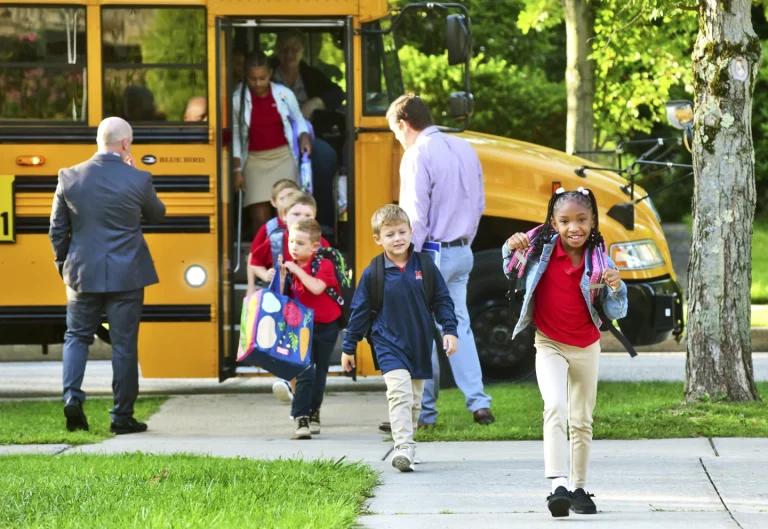
After a summer of vacations and late nights, it’s time to set those back-to-school alarms. A good night’s sleep helps students stay focused and attentive in class. Experts say it’s worth easing kids back into a routine with the start of a new school year.

“We don’t say ‘ get good sleep ’ just because,” said pediatrician Dr. Gabrina Dixon with Children’s National Hospital. “It really helps kids learn and it helps them function throughout the day.”

The amount of sleep kids need changes as they age. Preschoolers should get up to 13 hours of sleep. Tweens need between nine and 12 hours. Teenagers do best with eight to 10 hours of shut-eye.

Set an earlier bedtime

Early bedtimes can slip through the cracks over the summer as kids stay up for sleepovers, movie marathons and long plane flights. To get back on track, experts recommend setting earlier bedtimes a week or two before the first day of school or gradually going to bed 15 to 30 minutes earlier each night.

Don’t eat a heavy meal before bed and avoid TV or screen time two hours before sleep. Instead, work in relaxing activities to slow down like showering and reading a story.

“You’re trying to take the cognitive load off your mind,” said Dr. Nitun Verma, a spokesperson for the American Academy of Sleep Medicine. “It would be like if you’re driving, you’re slowly letting go of the gas pedal.”

Parents can adjust their back-to-school plans based on what works best for their child. Nikkya Hargrove moves her twin daughters’ bedtimes up by 30 minutes the week before school starts.

Sometimes, her 10-year-olds will negotiate for a few extra minutes to stay up and read. Hargrove said those conversations are important as her children get older and advocate for themselves. If they stay up too late and don’t have the best morning, Hargrove said that can be a learning experience too.

“If they’re groggy and they don’t like how they feel, then they know, ‘OK, I have to go to bed earlier,’” said Hargrove, an author and independent bookstore owner from Connecticut.

In the morning, soaking in some daylight by sitting at a window or going outside can help train the brain to power up, Verma said.

Squash back-to-school sleep anxiety

Sleep quality matters just as much as duration. First-day jitters can make it hard to fall asleep no matter how early the bedtime.

Dixon says parents can talk to their kids to find out what is making them anxious. Is it the first day at a new school? Is it a fear of making new friends? Then they might try a test run of stressful activities before school starts to make those tasks feel less scary — for example, by visiting the school or meeting classmates at an open house.

The weeks leading up can be jam-packed and it’s not always possible to prep a routine in advance. But kids will adjust eventually so sleep experts say parents should do what they can. After all, their kids aren’t the only ones adjusting to a new routine.

“I always say, ‘Take a deep breath, it’ll be OK,’” Dixon said. “And just start that schedule.”

AP

NotInMyName demands firing of Prinshof teacher accused of raping 14-year-old learner

By Johnathan Paoli

Civil society organisation NotInMyName International (NIMNI) is calling for the immediate dismissal of a teacher at Prinshof School for the Blind in Pretoria, following disturbing allegations that he raped a 14-year-old learner in 2024.

NIMNI spokesperson Themba Masango said the education department must act swiftly and decisively in response to the allegations.

“The Department of Education needs to come in here and handle this issue. Gender-based violence, femicide and the assault of young children need to be made a national outcry. We cannot afford to have teachers like this amongst us,” Masango said.

The movement staged a protest outside the school on Monday, calling for urgent intervention by the Gauteng Education Department.

The case, which only came to light recently, has sparked outrage amid growing concerns about sexual abuse within South African schools.

“This horrific crime came to light only after the victim’s father, concerned by a sudden drop in her academic performance, pursued the matter with school authorities. It was then that the traumatised child confided in her father, revealing that she was no longer happy or comfortable at the school because she had been sexually assaulted by the said teacher,” said Masango.

“We hold the school management accountable for their apparent failure to protect this child and to create a safe environment where learners can thrive without fear. The fact that this was uncovered by a vigilant parent, and not through the school’s own safeguarding mechanisms, is a damning indictment of its leadership. We confirm that the names of both the minor victim and the alleged perpetrator are known to us. We welcome the news that a criminal case has been opened at a Pretoria South African Police Service (SAPS) station and we will be closely monitoring its progress.”

The girl’s father, who asked to remain anonymous, told journalists he was only informed of the alleged assault two weeks ago after being called to the school by social workers concerned about his daughter’s academic performance and fainting spells.

According to him, the teenager confessed during a private session that she had been sexually assaulted by her music teacher.

“She explained that on that day the class was moved to a different room without cameras. That’s when it happened. He touched her, tried to kiss her, and put his hands in her private parts,” the father said.

The father expressed anger that he had been kept in the dark.

“I then asked the social workers why I am hearing this for the first time. They said they thought I knew. The school spoke to the mother and child, but I was excluded. The mother admitted she was told the case was being handled internally,” he added.

The father has since opened a criminal case and sought legal advice.

He claims that when he approached the school principal for information, he was met with hostility.

“I asked for the case file with my daughter’s statement and meeting minutes. The principal told the social worker not to give me anything and said if I wanted answers, I should ask my daughter or her mother. She told me to get out of her office,” he recounted.

The family has called for transparency, saying the school attempted to suppress the matter instead of escalating it to authorities.

The Prinshof case is not isolated.

In the Free State, six former learners from St Bernard High School in Bloemfontein have come forward with allegations of sexual harassment against at least three teachers.

The incidents, which reportedly took place in 2024 and 2025, involved inappropriate messages, unsolicited nude images, and other forms of misconduct.

Lesedi Motlangane, 19, said she decided to go public after a teacher sent her explicit material.

Another former learner, Mapaseka Veldman, said a teacher sent her a sexually inappropriate video.

Following media exposure, the Free State Education Department confirmed that one of the implicated teachers has been dismissed, while two others face suspension pending investigations.

These cases underscore systemic failures in schools’ handling of sexual abuse complaints.

Victims and parents often face intimidation, while institutions appear to prioritise reputational protection over learner safety.

NotInMyName International has vowed to intensify its campaign until the accused Prinshof teacher is removed from the classroom and criminal proceedings are expedited.

INSIDE EDUCATION

Western Cape tops National Education Awards with 21 wins

0

By Johnathan Paoli

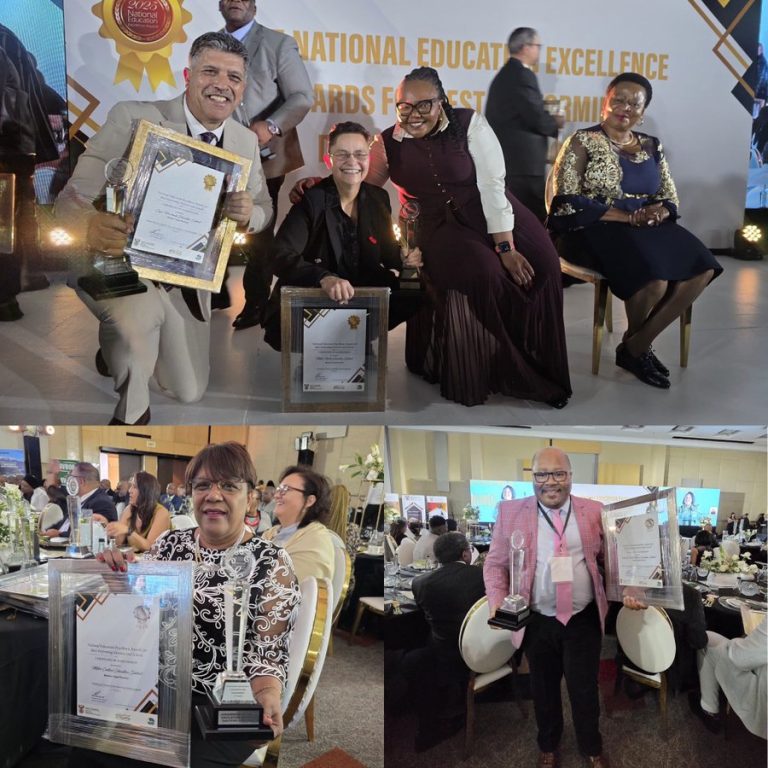
The DA has praised the Western Cape Education Department as South Africa’s leader in education, following the province’s impressive haul of 21 awards at the National Education Excellence Awards.

The achievement comes alongside efforts to protect thousands of teaching jobs amid national budgetary pressures.

The party’s Western Cape education spokesperson, Peter Johnson, said the province’s success reflects both systemic excellence and the dedication of its learners and educators.

“These incredible achievements once again demonstrate that the Western Cape continues to set the standard for education excellence in South Africa,” said Johnson.

“Sweeping awards in Mathematics, Physical Science, and Accounting shows that the DA-led WCED is ensuring that learners who exit our schooling system are well-equipped to contribute to the progress of our province.”

The awards ceremony, held at the Sandton Convention Centre on Friday, 29 August 2025, celebrated outstanding teaching and learning achievements across the country.

The Western Cape dominated the event, securing top honours in key categories such as Mathematics, Physical Science, and Accounting, subjects central to building a skilled workforce capable of driving economic growth and innovation.

Among the standout awards won by the province’s education districts were: Highest NSC Mathematics Passes 60% and above (2022–2024), Highest NSC Participation vs Achievement in Mathematics (2022–2024), Highest NSC Physical Science Passes 60% and above (2022–2024), Highest NSC Participation vs Achievement in Physical Science (2022–2024), and Highest NSC Accounting Passes 60% and above (2022–2024).

The Western Cape also led in ensuring broad participation and achievement across these critical gateway subjects.

Johnson added that every accolade was the product of immense effort from school communities.

“Behind every award are learners, teachers, principals and officials who work tirelessly to achieve success, often under challenging circumstances,” he said.

The DA’s praise for the department did not stop at academic outcomes.

The party welcomed the announcement that the province will retain its Basket of Posts allocation of 35 934 teaching posts for the 2026 school year.

This move comes against the backdrop of severe national fiscal constraints, with provincial education departments across South Africa being forced to cut staff, freeze posts, or consolidate classes due to dwindling budgets.

For the Western Cape, however, the decision provides teachers and learners with much-needed stability as enrolment continues to grow.

Johnson described the retention of posts as a “significant victory” that highlighted the province’s ability to “do more with less”.

“The Western Cape continues to face enormous pressure as thousands of learners move here every year. Retaining over 35 000 teaching posts is a victory for teachers and learners alike, and a clear sign that the DA-run Western Cape is doing more with less to keep education strong, despite national fiscal constraints,” he said.

The Western Cape remains one of South Africa’s fastest-growing provinces, attracting families in search of economic opportunities and more reliable public services.

This influx has increased the demand for classrooms, teachers, and learner support programmes such as school nutrition, transport, and specialised education for children with disabilities.

The DA has positioned the Western Cape’s dual achievements of academic excellence and job protection as evidence of its governance model in action.

While learners benefit from award-winning teaching and improved access to high-demand subjects, teachers and support staff are also assured of job security, which in turn strengthens classroom performance.

Johnson stressed that this balance was deliberate, saying the DA-led provincial government will continue to ensure that teachers are supported, classrooms are adequately staffed, and learners receive the opportunities they need to thrive.

As South Africa grapples with economic stagnation, rising unemployment, and fiscal belt-tightening, the DA argues that the Western Cape’s education trajectory offers a glimpse of what a focused, outcomes-driven approach can achieve.

The party has made it clear that it will use the province’s success as both a political platform and a governance benchmark in its broader national campaign.

INSIDE EDUCATION

Gauteng education: Incomplete school applications won’t be considered

Rafieka Williams

The Gauteng Department of Education (GDE) has called on parents to finalise their online applications by 12pm on 9 September 2025 or risk their children not being placed.

Parents and guardians must upload or submit certified copies of all required documents by the deadline.

The department warned that incomplete applications will not be considered, while fraudulent or invalid documents will result in forfeiture.

“We urge all parents who have not yet completed the full five-step process to do so immediately. Failure to act before the deadline will result in disappointment and loss of placement priority,” said Education MEC Matome Chiloane.

Online applications for Grades 1 and 8 closed on 29 August 2025, with over 800,000 applications recorded.

However, the GDE flagged 52,929 incomplete applications, noting that many parents have yet to select schools or submit the necessary documents.

Gauteng education spokesperson Steve Mabona said that only learners with complete and verified applications will receive placement offers.

The placement period begins on 16 October and will continue until all learners are placed.

To support families without internet access, the department made schools and walk-in centres available for assistance.

While no new applications are being accepted, parents can still use these facilities to submit outstanding documents.

Mabona added that placements will be determined by several criteria, including whether the learner lives within the school’s feeder zone, has siblings already enrolled, the proximity of a parent’s workplace, and whether the home is within a 30km radius of the school.

INSIDE EDUCATION

Gauteng showcases future innovators at Technical Skills Festival

By Johnathan Paoli

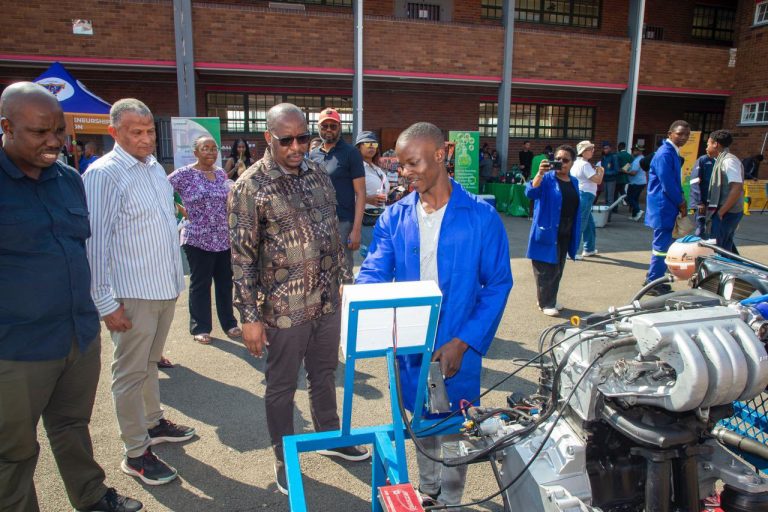
The Gauteng Education department has reaffirmed its commitment to building a skilled workforce for the future by hosting the much-anticipated Technical Skills Festival at John Orr Engineering School of Specialisation.

Addressing the event, MEC of Education Matome Chiloane applauded the learners for their creativity and commitment.

“These young talents proved that they are not merely learners, but innovators with the imagination and ability to shape industries,” he said.

Chiloane emphasised that the winners would advance to higher levels of competition, with the potential to reach a global stage.

By recognising excellence early, the Department hopes to encourage young innovators to pursue technical careers that will support Gauteng’s industrial growth and economic sustainability.

“By harnessing these skills early, we are nurturing creators and builders who will drive innovation and define the future of our economy. We extend our heartfelt thanks to our partners and sponsors for walking this journey with us in building tomorrow’s technicians today,” Chiloane added.

The event brought together learners from across the province who showcased their technical expertise and innovative problem-solving skills in a range of disciplines critical to South Africa’s economy.

The festival, branded under the hashtag #TechnicalSkillsFest, provided a platform for learners to demonstrate their capabilities in Automotive, Power Systems, Electronics, Fitting and Machining, Civil Services, Woodworking, Construction, and Welding.

Far from being a traditional competition, the initiative was designed as a dynamic hands-on showcase of knowledge, creativity, and application in real-world contexts.

Throughout the day, workshops allowed participants to engage in practical projects that tested their technical abilities, teamwork, and creativity.

From fine-tuned engines in the Automotive category to precision measurements in Fitting and Machining, the learners displayed not only technical mastery but also ingenuity in solving practical challenges.

To encourage excellence, trophies were awarded to the top three learners in each of the eight subjects, recognising outstanding performance in Automotive, Electrical, Electronics, Fitting and Machining, Welding, Civil Services, Woodworking, and Construction.

Winners were further rewarded with full sets of professional tools of their trade, giving them a tangible foundation to continue developing their craft and careers.

According to the department, the festival was not just about competition but also about creating a learning space where young people could gain exposure to industry expectations and showcase their potential to educators, industry partners, and future employers.

The Technical Skills Festival forms part of the department’s broader Schools of Specialisation programme, which focuses on developing excellence in priority sectors such as engineering, aviation, ICT, mining, and the arts.

By aligning education with the province’s industrial and economic needs, the department seeks to equip learners with both the academic knowledge and technical expertise required in the workplace.

Industry partners and sponsors played a critical role in supporting the festival, providing resources, mentorship and prizes.

Their involvement also helped expose learners to professional networks and industry-standard tools, bridging the gap between classroom learning and workplace expectations.

By giving learners a competitive stage and rewarding their excellence, the department said it was ensuring these careers are seen as aspirational and essential.

With unemployment among South African youth remaining stubbornly high, initiatives such as the Technical Skills Festival underscore the urgency of equipping learners with employable, in-demand skills.

By fostering confidence, creativity, and practical ability, the Department aims to position its learners not just as job seekers but as future innovators, entrepreneurs, and industry leaders.

The festival concluded with celebrations of the winners, but the broader message was clear that the province’s economic future is in capable hands.

INSIDE EDUCATION

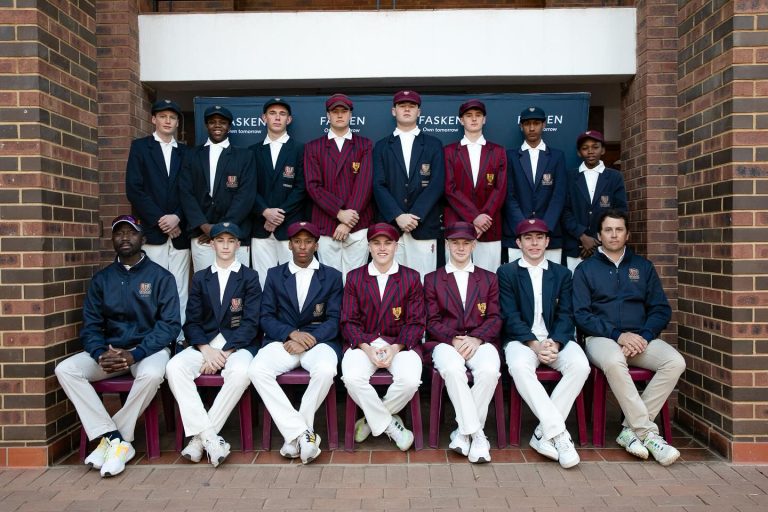
Patience, resilience and talent on show at Fasken Time cricket festival

By Johnathan Paoli

The seventh edition of the Fasken Time Cricket Festival wrapped up this weekend at St David’s Marist Inanda in Sandton, reaffirming its status as a launchpad for South Africa’s emerging cricket talent.

St David’s Director of Sports Performance and Cricket, Dave Nosworthy, hailed the event as a true celebration of time cricket.

“It’s massive value to the youngsters to be able to bat for long periods, bowl long spells and learn game management. The spinners come into play, captains think differently about field placements, and players build resilience through the long sessions,” Nosworthy explained.

While hosts’ star Jason Rowles walked away with the Player of the Festival award, and King Edward VII School’s (KES) Steele Grooteman and Tiago Dias claimed Bowler and Batsman of the Festival respectively, the tournament’s impact stretched far beyond individual accolades.

Rowles embodied the resilience demanded by the long format, amassing 272 runs in three innings — including two centuries — and taking seven wickets. Dias topped the run charts with 292 runs, while Grooteman’s 15 wickets at an average of 11 confirmed his dominance with the ball.

Yet the festival’s purpose runs deeper: teaching South Africa’s top schoolboy cricketers the craft of red-ball cricket. Unlike the quick thrills of limited-overs formats, time cricket prizes patience, adaptability, and mental toughness. Matches often turn on concentration or lapses in discipline, and the festival is deliberately designed to immerse players in these realities.

St David’s Director of Sports Performance and Cricket, Dave Nosworthy, said the event is about laying lasting foundations:

“The true test of character isn’t in easy runs, but in the long spells, the tough sessions, and the moments that demand resilience. Any international cricketer will tell you, learning the longer format first gives you the tools you need for the rest of your career.”

The festival’s legacy is already clear: more than 100 former participants have gone on to provincial or international cricket. Among them are Proteas Gerald Coetzee and Marco Jansen, Ireland international Curtis Campher, and rising stars Kwena Maphaka, Richard Seletswane, and Riley Norton — all once in the shoes of the 156 players who competed this weekend under 12 schoolboy captains.

This year’s edition featured leading schools including St David’s, KES, Waterkloof, St Stithians, Jeppe, St John’s, Clifton College, St Andrew’s, Noordheuwel, Nelspruit, St Charles, and the Lions Invitational XI. Victories were recorded by St David’s, KES, Waterkloof, and Noordheuwel, but the greater goal was to immerse every participant in the tempo and nuance of time cricket.

The festival continues to thrive thanks to committed sponsorship, particularly title partner Fasken Law. Managing Partner Blaize Vance described the partnership as an investment in South Africa’s sporting and personal development:

“We often judge talent by timing or shot-making, but qualities like determination, courage, discipline and temperament are just as important. That’s the kind of talent this festival nurtures.”

With its blend of competitive intensity, developmental focus, and proven record of producing professional cricketers, the Fasken Time Cricket Festival has cemented its place as a cornerstone of South Africa’s schoolboy cricket calendar.

INSIDE EDUCATION