Home Blog Page 73

Crash in Johannesburg injures 20 learners

By Johnatahn Paoli

The Gauteng education department has confirmed that 20 learners were injured in a scholar transport accident near West Park Cemetery in Johannesburg early Monday morning.

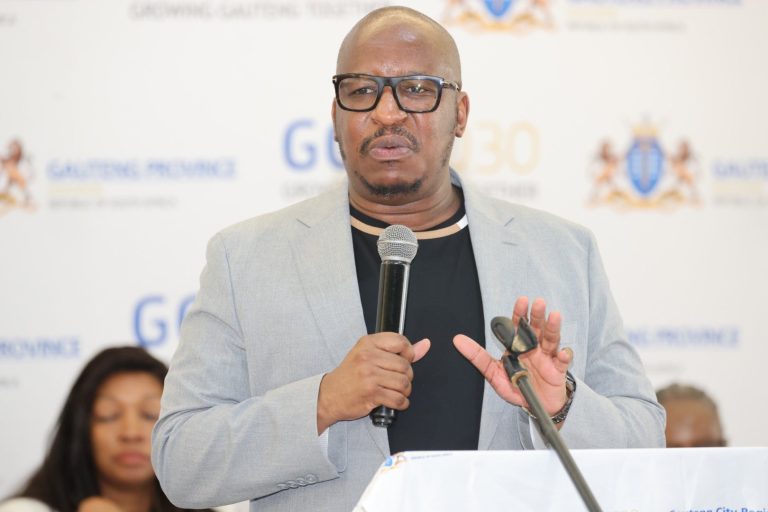
Gauteng education MEC Matome Chiloane expressed relief that there were no fatalities and praised the quick response of emergency services and school authorities.

“We are continuing to engage with relevant authorities to determine the cause of the accident and ensure accountability. We urge all scholar transport drivers, whether public or private, to ensure that the safety and wellbeing of our learners remains a top priority at all times. We wish all learners a speedy recovery,” Chiloane said.

The incident occurred at around 7am along West Park Road. The vehicle was reportedly transporting learners to Greenside High School, Parktown Girls’ High School and Roosevelt High School.

According to a statement released by department, the vehicle overturned after the driver lost control while navigating a bend.

Preliminary reports suggest that the vehicle was travelling at high speed, which may have contributed to the crash.

The department confirmed that 13 of the injured learners were from Greenside High, spanning Grades 8 to 11.

Four were from Roosevelt and three from Parktown.

Emergency medical personnel treated the injured learners on-site before transporting them to various healthcare facilities across Johannesburg for further assessment and treatment.

Most of them have already been discharged.

However, the department noted that one learner from Greenside High remained hospitalised and would undergo surgery for injuries sustained during the crash

The department has activated its trauma support unit and is providing counselling services to the learners and their families.

These services are being made available both at the schools and through referrals to social workers, psychologists and other support professionals to help the learners deal with the emotional aftermath of the incident.

The department has committed to working closely with law enforcement agencies and the transport department to investigate the accident.

INSIDE EDUCATION

KZN education allays fears on school feeding programme

By Johnathan Paoli

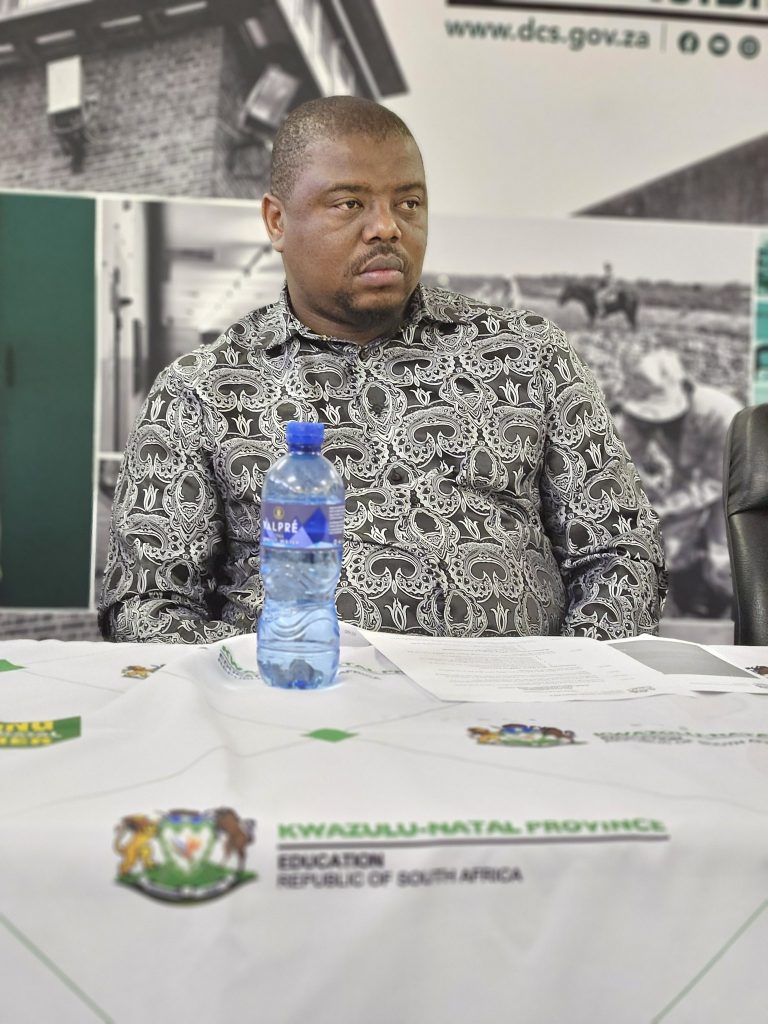
This week, more light is expected to be shed on a R2.9 billion National School Nutrition Programme (NSNP) tender in KwaZulu-Natal that has some political parties and NGOs demanding action against education MEC Sipho Hlomuka.

The MEC was given until Monday by KwaZulu-Natal premier Thami Ntuli to submit a detailed report in response to allegations of corruption, political interference and tender irregularities within his department.

Education spokesperson Muzi Mahlambi said the MEC had met the deadline, and the department would issue a statement on Tuesday.

This follows Ntuli writing to Hlomuka seeking a written explanation regarding his alleged links to a company currently bidding for a portion of the nutrition contract.

“As the department of education in KwaZulu-Natal, we can confirm that the MEC has received the letter from the premier as the premier had promised he was going to write to the MEC requesting him to give to give explanation as to the allegations regarding the school nutrition tender. The MEC has dealt with the letter accordingly. We are appealing to the public to give both the premier and the MEC the space to process the responses as per the premier’s request,” Mahlambi said.

While there were concerns about the impact of feeding learners in the province, Mahlambi said the current tender process had not been compromised and remained within prescribed regulatory stages, including the current NSNP contracts that ended in March 2026.

“With the one that kick starts in next year April, it must be understood in the context of it being a process with stages. There was a stage of advertising, there was a stage of briefing, there was a stage of closing, there was a stage where we needed to advertise the attendance registers. We did that,” Mahlambi said.

“Now is the stage where we have advertised publicly the intention to award so that we allow anyone who’s got issues to raise those issues. So, as the department of education we are not alarmed by the issues that have been raised because this stage is for that reason. So, we have faith in the processes and mechanisms that Treasury has put in place in dealing with such matters.”

Last week, Hlomuka denied allegations of political interference and personal enrichment linked to the tender.

Responding to claims made by the NSNP Service Providers Association, the MEC acknowledged past ties with a company allegedly implicated in the current tender award, but said he had divested years before taking office.

“In 2015, when I was not in government, I registered a company. However, I’m no longer part of that company and I’m not aware of its activities. If it has received any tenders, that information will come out in the investigation,” Hlomuka said.

The MEC emphasised that as the political head of the department, he was not involved in the supply chain management process and had never sat on a tender adjudication panel.

The association claims to have evidence of deliberate procurement manipulation and has submitted complaints to provincial authorities.

Ntuli has vowed to act swiftly and transparently, assuring the public there will be a full update before the end of the week.

INSIDE EDUCATION

DA wants answers on school infrastructure in Qwaqwa

By Lungile Ntimba

The Democratic Alliance (DA) in the Maluti-a-Phofung Local Municipality has called on the Free State education department to account for the worsening state of school infrastructure in Qwaqwa, citing alarming conditions observed during an oversight visit.

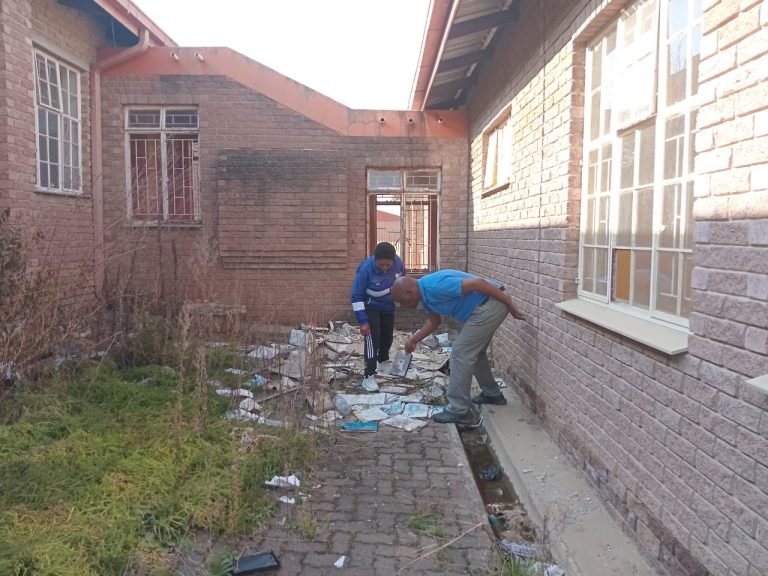
DA councillor Paseka Mokoena said the party visited Boitsebelo Junior Technical School, which was shut down in June 2023 with the intention of converting it into a special needs school. 

However, he said no visible progress has been made on the project and the facility had since become a target for vandalism and unlawful occupation. 

“We witnessed firsthand the deterioration of buildings that could still serve the community meaningfully,” Mokoena said in a statement on Monday.

“This is not an isolated case; many schools across the Qwaqwa area have suffered a similar fate, abandoned and stripped.”

In Matsieng village, Mokoena said one school had been destroyed to such an extent that there was no visible evidence it had ever existed. 

He said Makabelane Technical High School was another example of neglect.

The school still hosted camps for Grade 12 learners, but its adjacent hostel remained vandalised and partially occupied by unknown individuals and companies.

Following the oversight visit, Mokoena said the DA had submitted formal questions through its representatives in the Free State legislature, demanding clarity on the status and future of the affected schools.

The party is seeking answers on why the hostel at Makabelane Technical High School has not been rehabilitated, how many schools in Qwaqwa have been shut down due to neglect, whether these properties have been returned to the provincial department of infrastructure, and what plans exist to restore or repurpose the abandoned buildings.

“We believe that infrastructure, such as Boitsebelo, can be best transformed into a skills development centre, offering alternative education and vocational training for young people who struggle with formal schooling,” Mokoena added.

He said such a facility could provide accredited programmes to empower youth and contribute to addressing the high unemployment and poverty rates in the area.

Sibusiso Majola, who is the spokesperson for education MEC Mantlhake Julia Maboya, told Inside Education that Maboya has not yet received the formal questions from the DA.

INSIDE EDUCATION

Eskom science expo ignites passion amongst pupils

By Levy Masiteng

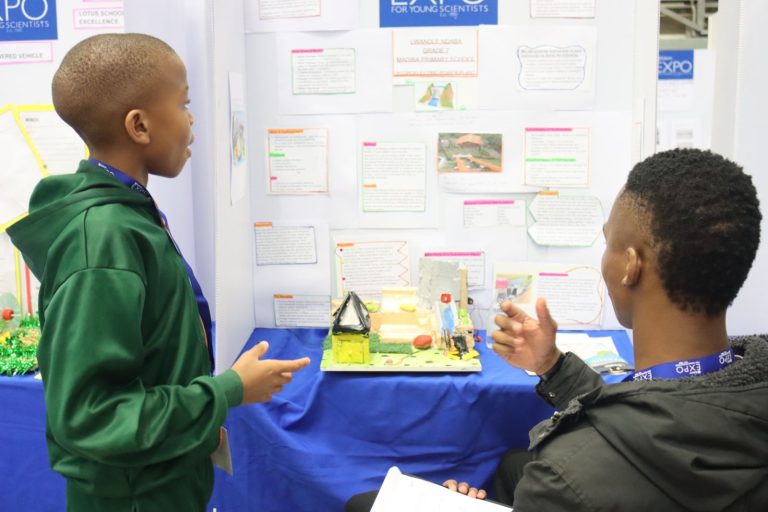
The Eskom Expo for Young Scientists is currently in full swing across the country, with regional science fairs taking place in 35 regions. 

The annual event provides a platform for learners to showcase their innovative ideas, scientific research and problem-solving skills in the fields of science, technology, engineering, mathematics and innovation (STEMI).

The Gauteng South Regional Science Fair took place at the University of Johannesburg’s (UJ) Soweto campus over the weekend. 

Raven Motswebangwe, the project manager for Gauteng, said close to 200 projects were judged, with learners going through interview phases with specialised judges. 

The Basic Education Department said the fair was part of a series of events happening across the country during July and August.

The Eskom Expo said the event had been taking place since 1980. It provided pupils with the opportunity to share their unique projects, discover the joys of scientific thinking and compete for exciting awards both locally and internationally. 

This year’s participants were pre-selected after taking part in various expo activities.

These included workshops designed to elevate scientific skills, as well as mandatory district expos where young scientists received expert guidance and insights into conducting impactful research investigations.

“By cultivating interest and excellence in STEMI from an early age, the Eskom Expo not only develops individual potential, but also contributes to the broader goals of economic growth, innovation and social equity,” said Eskom Development Foundation acting CEO Mologadi Motshele.

“These young scientists are the future problem solvers who will address the challenges of energy, climate change, healthcare, food security, and digital transformation.”

Over 6000 projects will be showcased across the country. They explore vital topics such as environmental science with sustainable practices, advancements in health and medical technology, robotics for designing autonomous machines and data science for uncovering insights from complex data.

The winners will compete at Eskom Expo International Science Fair from 6 to 10 October. 

The ISF participants stand a chance of winning a multitude of prizes, bursaries and a chance to be selected to showcase their projects at international science fairs in the US, Asia, Europe and the rest of Africa.

“These regional science fairs are the first step to our young scientists engaging with professionals in a meaningful way, which will further develop their research ideas and innovations,” said Eskom Expo executive director Parthy Chetty.

INSIDE EDUCATION

Tips for parents navigating the Gauteng school application process

By Levy Masiteng

The Gauteng education department has officially opened online admissions for Grade 1 and Grade 8 placements for the 2026 academic year, and many parents are feeling anxious about securing a spot for their child. 

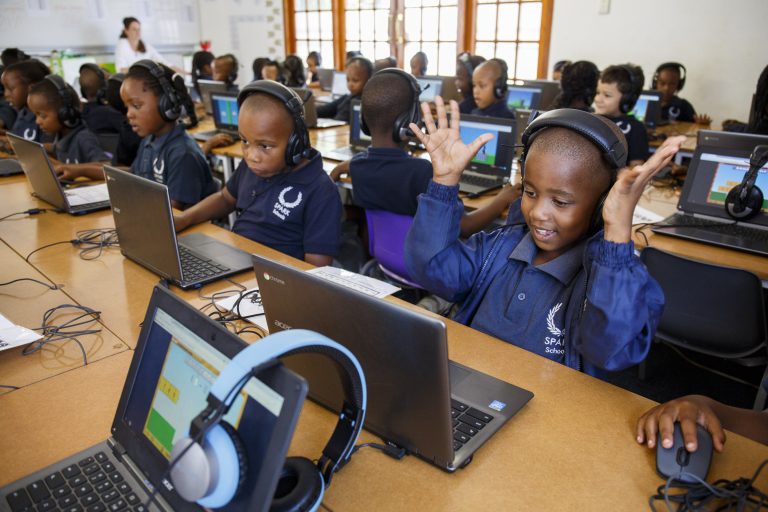
However, Tieho Mokoena, who is the principal at SPARK Turffontein in the south of Johannesburg, said that with some planning and preparation, the online application process could be manageable.

She advised parents to start by visiting a school’s website to understand the application process and required documents. 

“You cannot delay your application until the end of the year to secure a spot for your child in the school of your choice,” Mokoena said. 

She shared five tips to help parents navigate the school application process.

They included visiting the school website to understand the application process and required documents, double checking your application for accuracy and submitting required documents and making payments to secure a spot.

Parents and guardians must check on the progress of the application and visit the school to learn about its values and environment to see if the child will fit in.

“The application process might feel daunting, but if parents and guardians do a little homework and preparation, the process should go much smoother,” Mokoena said.

The online application for Gauteng opened on 24 July and closes at midnight on 29 August.

The department said that on the first day it had already processed 213,000 Grade 1 and Grade 8 online applications.

Education MEC Matome Chiloane advised parents to take advantage of the system as it allowed them to identify schools within the feeder zones covering their home address.

“Selecting schools within the correct feeder zones improves the chances of securing placement closer to home and helps reduce daily travel distances for learners,” he reiterated.

To improve the likelihood of placement, parents are required to apply to at least three schools and may apply to a maximum of five. 

All necessary documents must be submitted or uploaded within seven days of the application. 

The department said parents requiring help could visit their nearest district office or one of the 81 decentralised walk-in centres across Gauteng. 

INSIDE EDUCATION

SA’s youth unemployment crisis: Can digital skills unlock their future?

By Prof. Khehla Ndlovu

A year into South Africa’s national government of unity (GNU), the country’s young people remain trapped at the precipice of despair.

The promise of job opportunities and pathways for entrepreneurship continues to diminish, especially in a world increasingly led by a youthful population whose inventive thinking often conflicts with the traditional methods of those in power. This disconnection is not merely an abstract idea; it is a tangible reality for millions, showing as a deep sense of exclusion and a suppression of potential.

The grim reality of South Africa’s youth unemployment crisis is stark and well-documented. Statistics SA’s Quarterly Labour Force Survey for the first quarter of this year paints a sobering picture: young people aged 15-24 face a staggering unemployment rate of 62.4%, while those aged 25-34 contend with 40.4%. These are not just numbers; they represent a generation sidelined, their energy and creativity unharnessed.

With 20 million South Africans aged between 15 and 34, this demographic forms the largest segment of our population. This demographic dividend, a potential driver of economic growth and social progress, is instead becoming a source of national concern. This alarming reality requires urgent and decisive action, moving beyond mere discussion to implement tangible and impactful measures across all sectors of society.

Our collective response must begin at home, extend through our communities, reshape our educational institutions, and energise our civil, public, and private sectors. The goal should be to nurture an active, future-oriented population, equipped to become tomorrow’s leaders and innovators. Importantly, this quest for solutions must fully harness the transformative potential of technology.

The rapid rise of generative artificial intelligence (AI), for example, should not be viewed with concern but as a significant opportunity. It prompts us to reconsider how we can utilise this technology to empower young people, unlock entrepreneurial talent and boost economic development. It is time to move past the negativity rooted in a failure to recognise opportunities and instead embrace the immense potential within this digital frontier.

At the Vaal University of Technology (VUT), strategically located in one of Gauteng’s most influential industrial regions, we have long recognised this necessity. Our commitment goes beyond traditional academic teaching to proactive engagement with the digital future. Through initiatives like our Strategy 2033+, we focus on attracting and nurturing students with exceptional talent and potential, equipping them with the digital skills essential for a rapidly changing job market.

Our recent community service project, where our Faculty of Applied and Computer Sciences assisted Suncrest High School’s 2025 Grade 12 students with online applications, showcases our commitment to closing the digital gap and promoting a culture of access and opportunity from the grassroots.

The Gauteng government’s commendable focus on the township economy has achieved significant progress in supporting existing businesses. Nonetheless, our efforts must also shift towards empowering young people in these communities who aspire to start their own ventures, developing solutions and products tailored to local needs.

This requires a concerted effort from all stakeholders, particularly financial institutions. They must explore innovative, concessional financing models that recognise the unique challenges and vast potential of youth-led township enterprises. We cannot continue to champion the township economy while failing to equip its most dynamic segment – our youth – with the necessary skills and financial lifelines.

This year’s Unesco theme, “Youth empowerment through AI and digital skills”, resonates profoundly with South Africa’s challenges and aspirations. As a global community, we are collectively seeking solutions that improve young people’s skills for both employment and entrepreneurship. Unesco and other UN agencies have consistently supported the progress of the Sustainable Development Goals (SDGs). To truly accomplish these goals, we must put our solutions at the centre of the ingenuity and motivation of our young people, recognising them not merely as beneficiaries but as co-creators of our future.

Furthermore, the latest World Economic Forum’s World of Work report underscores that “technological change, geoeconomic fragmentation, economic uncertainty, demographic shifts and the green transition – individually and in combination – are among the major drivers expected to shape and transform the global labour market by 2030”.

While these are global forces, South Africa has a unique opportunity to lead in adapting and innovating. We can and must surpass the mediocre leadership that has often characterised our response to the challenges faced by our young people. This moment calls for visionary, agile and collaborative leadership that recognises the urgency of digital transformation.

At VUT, our concern about the high rate of youth unemployment runs deep. However, concern alone is not enough. We are committed to rolling up our sleeves and taking action that goes beyond mere talk. This commitment is reflected in concrete steps that clearly show our determination to make a difference.

Skills development, especially in digital and AI skills, provides a strong pathway to solutions. Learning institutions are no longer static brick-and-mortar places; they are active partners in national growth, evolving to effectively address today’s complex challenges and to produce graduates capable of leading in the digital era. This demands closer collaboration between academia, industry and government to jointly create curricula, support innovation hubs and enable smooth transitions from education to employment or entrepreneurship.

The path ahead will be challenging. It demands courage, ingenuity, and most importantly, readiness to listen to young people’s voices. They are not just the recipients of change; they must be its architects. If we are truly committed to building a future that works for everyone, we must invest in the blueprints that centre on youth, giving them the tools, networks and confidence to shape their own futures. The time for action is now.

Professor Ndlovu is the Vice-Chancellor of the Vaal University of Technology (VUT)

INSIDE EDUCATION

Learning statistics through story: students get creative with numbers

By Johan Ferreira

Statistics professor Johan Ferreira was feeling overwhelmed by the amount of “screen time” involved in online learning in 2021. He imagined students must be feeling the same way, and wondered what he could do to inspire them and make his subject matter more appealing.

One of the topics in statistics is time series analysis: statistical methods to understand trend behaviour in data which is measured over time. There are lots of examples in daily life, from rainfall records to changes in commodity prices, import or exports, or temperature.

Ferreira asked his students to write a short, fictional “bedtime” story using “characters” from time series analysis. The results were collected into a book that is freely available. He tells us more about it.

Why use storytelling to learn about statistics?

I’m fortunate to be something of a creative myself, being a professional oboe player with the Johannesburg Philharmonic Orchestra. It’s a valuable outlet for self-expression. I reflected on what other activity could inspire creativity without compromising the essence of statistical thinking that was required in this particular course I was teaching.

I invited my third-year science and commerce students at the University of Pretoria to take part in a voluntary storytelling exercise, using key concepts in time series analysis as characters. Students got some guidelines but were free to be creative. My colleague and co-editor, Dr Seite Makgai, and I then read, commented on and edited the stories and put them together into an anthology.

Students gave their consent that their stories could be used for research purposes and might be published. Out of a class of over 200 students, over 30 contributions were received; 23 students permitted their work to be included in this volume.

We curated submissions into two sections (Part I: Fables and Fairy Tales and Part II: Fantasy and Sci-Fi) based on the general style and gist of the work.

The project aimed to develop a new teaching resource, inspire students to take ownership of their learning in a creative way, and support them through informal, project-based peer learning.

This collection is written by students, for students. They used personal and cultural contexts relevant to their background and environment to create content that has a solid background in their direct academic interests. And the stories are available without a paywall!

What are some of the characters and stories?

Student Lebogang Malebati wrote Stationaryville and the Two Brothers, a tale about AR(1) and AR(2). In statistics, AR refers to processes in which numerical values are based on past values. The brothers “were both born with special powers, powers that could make them stationary…” and could trick an evil wizard.

David Dodkins wrote Zt and the Shadow-spawn. In this story, Zt (common notation in time series analysis) has a magic amulet that reveals his character growth through a sequence of models and shows the hero’s victory in the face of adversity. He is a function of those that came before him (through an AR process).

Then there’s Nelis Daniels’ story about a shepherd plagued by a wolf called Arma (autoregressive moving average) which kept making sheep disappear.

And Dikelede Rose Motseleng’s modern fable about the love-hate relationship between AR(1) (“more of a linear guy” with a bad habit of predicting the future based on the past) and MA(1), “the type of girl who would always provide you with stationarity (stability).”

What was the impact of the project?

It was a deeply enriching experience for us to see how students see statistics in a context beyond that of the classroom, especially in cases where students reformulated their stories within their own cultural identities or niche interests.

Three particular main impacts stand out for us:

  • students have a new additional reference and learning resource for the course content
  • new students can refer to the experiences and contextualisation of this content of former students, leading to informal peer learning
  • students engage in a cognitive skill (higher-order and creative thinking) that is not frequently considered and included in this field and at this level.

In 2024, shortly after the book was published, we asked students in the time series analysis course of that year to read any one of four stories (related to concepts that were already covered in the course material at that point in time). We asked them to complete a short and informal survey to gauge their experience and insights regarding the potential of this book as a learning resource for them.

The 53 responses we got indicated that most students saw the book as a useful contribution to their learning experience in time series analysis.

One positive comment from a student was:

I will always remember that the Random Walk is indeed not stationary but White Noise is. I already knew it, but now I won’t forget it.

Will you build on this in future?

It is definitely valuable to consider similar projects in other branches of statistics, but also, in other disciplines entirely, to develop content by students, for students.

At this stage, we’re having the stories and book translated into languages beyond English. In large classes that are essential to data science (such as statistics and mathematics), many different home languages may be spoken. Students often have to learn in their second, third, or even fourth language. So, this project is proving valuable in making advanced statistical concepts tactile and “at home” via translations.

Our publisher recently let us know that the Setswana translation is complete, with the Sepedi and Afrikaans translations following soon. To our knowledge, it’ll be the first such project not only in the discipline of statistics, but in four of the official languages in South Africa.

Johan Ferreira is a Professor, University of the Witwatersrand.

The Conversation

3D printed food: yuck or yes? Researchers ask South African consumers

0

By Oluwafemi Adeboand Nicole Cunningham

Would you eat food that was printed by a machine? 3D printed food is built up by equipment (a 3D food printer), layer after layer, using edible pastes, dough and food slurries in three-dimensional forms. These machines use digital models to produce precise, often personalised food items. Most 3D printed foods are made from nutrient-dense sources (plant and animal), which means they can offer health benefits.

The global market for 3D printed food is growing. It’s been estimated as worth US$437 million in 2024 and projected to reach US$7.1 billion in 2034. But the concept is still emerging in Africa.

Food science and technology researcher Oluwafemi Ayodeji Adebo and marketing academic Nicole Cunningham share what they learnt from a survey about South African consumers’ feelings on the subject.

How is food 3D printed and why?

In 3D food printing, edible food materials are formulated into printable materials (food ink). These inks can be made from pureed vegetables, doughs, or nutrient-rich mixes. The food ink is loaded into a 3D printer and extruded in layers until the selected shape is complete.

After printing, some products are ready to eat, while others need further processing such as baking or freeze-drying. The most common method is extrusion-based printing, valued for its simplicity and versatility.

The technique enables the customisation of food. Meals can be highly personalised in texture, appearance and nutritional content.

It can also transform food waste into food products. For example it can turn imperfect broccoli and carrots into healthy snacks and make noodles from potato peels.

It’s also useful in texture-modified diets for people with swallowing difficulties (dysphagia), especially the elderly. The products available for these patients tend to be bland and unappealing meals such as mashed potato, pumpkin and soft porridge. 3D food printing can produce nutritionally dense meals that are easier to eat and more appetising.

Food ink can combine various sources with different nutrients to boost the health benefits. Not having to process the product with heat can also result in higher nutritional content.

In South Africa, what sorts of foods might be 3D printed?

Virtually any edible material could be transformed into food inks, although some might require additives to make them printable. The abundance of nutrient-dense and health-promoting food crops in South Africa presents an excellent opportunity for 3D food printing to create novel food.

Sorghum, cowpea and quinoa have been used to make 3D printed biscuits, for example. They are more nutritious than wheat and don’t contain gluten.

Research at the Centre for Innovative Food Research at the University of Johannesburg has already demonstrated the feasibility of obtaining 3D printed products from different sources (for example whole-grain sourdough and malt biscuits, biscuits from wholegrain and multigrain flours and nutritious and appetising meals for dysphagia patients).

3D food printing is still in its infancy in South Africa, compared to developed countries such as China, Japan, the US and some European countries. The best-known companies that have adopted this technology include BluRhapsody, based in Italy, which makes 3D-printed pasta, and Open Meals based in Japan, which specialises in personalised sushi.

We carried out a study to understand South African consumers’ attitudes toward 3D-printed foods. Although the technology is not yet in wide use, we found some consumers were fairly knowledgeable about these foods and the associated benefits. These findings lay the foundation for business opportunities to commercialise and market 3D printed products in the region.

Who did you ask about it in your study?

The study surveyed South African consumers aged 18-65 who were familiar with the concept of 3D-printed food. We collected 355 responses, mostly females aged 24 to 44. They provided information and opinions on several aspects, including:

  • their awareness of 3D-printed food
  • their familiarity with 3D-printed food
  • their food neophobia (fear of new foods)
  • the convenience that 3D-printed food offers
  • their perspective on their health needs
  • the perceived benefits that 3D-printed food offers
  • attitudes towards 3D-printed food.

What did they say?

Positive attitudes were strongest among those who recognised the convenience and health-related benefits of this new technology. The potential to reduce waste, customise nutrition, and simplify meal preparation stood out as key motivators.

Interestingly, food familiarity didn’t play a significant role in people’s responses. This means they aren’t necessarily clinging to traditional or childhood meals when forming attitudes about 3D-printed food.

In short, novelty alone isn’t a deal-breaker, it’s more about perceived safety, usefulness, and understanding the benefits.

What does this tell us?

The findings highlight the crucial role of consumer education and awareness in shaping attitudes toward 3D-printed food. While unfamiliarity with the technology can create some hesitation, the research shows that consumers are not necessarily resistant to innovation. They just need to understand it better and be educated about the benefits it offers.

If food manufacturers and marketers invest in increasing public knowledge and offering hands-on experiences such as tastings, demonstrations, or transparent production processes, then consumer attitudes could shift positively.

This approach has shown promise in other markets. For example, educational campaigns in Europe and the US around lab-grown meat and plant-based proteins have improved public perception over time.

Marketers should talk about safety, health and sustainability, and demystify the technology through clear, engaging messaging. In countries where such strategies have been used, consumers have shown increased willingness to try novel food technologies. This is significant because of predicted growth in the industry.

If South African consumers see 3D-printed food more positively, this innovation could unlock opportunities to enhance food security, address malnutrition, and support personalised dietary solutions.

Oluwafemi Adebo is a Professor of Food Technology and Director of the Centre for Innovative Food Research, University of Johannesburg and Nicole Cunningham is an Associate Professor, University of Johannesburg.

The Conversation

Western Cape working on Grade R strategy and BELA implementation

By Thapelo Molefe

The Western Cape education department has come out strongly in defence of its implementation of the Basic Education Laws Amendment (Bela) Act, particularly around compulsory Grade R, teacher qualifications, language policies and school governance. 

The department recently responded to questions in the Portfolio Committee on Basic Education.

Western Cape education MEC David Maynier began the session by clarifying the province’s stance on school governing bodies (SGBs).

“Our approach is certainly not to undermine school governing bodies, but to the extent that we can, to support school governing bodies to fulfil their functions,” Maynier said. 

Education head Brent Walters addressed the issue of Grade R teacher qualifications. He said the province had been promoting Grade R since 2003, but the sector was long hamstrung by the national decision not to make it compulsory earlier.

“Training institutions would not have churned out Grade R teachers… because Grade R wasn’t compulsory,” Walters said. 

He added that this resulted in a shortage of qualified personnel and a mix of qualified, underqualified, and unqualified teachers working in Grade R classrooms across the country.

The department conducted a comprehensive assessment of its Grade R workforce and was the first province to categorise educators into three groups – qualified, underqualified and unqualified. 

Walters confirmed that engagements with tertiary institutions were underway to enable conversion courses for underqualified teachers.

Department deputy director-general Alan Meyer clarified that the 1323 Grade R teachers requesting an upgrade were underqualified, and not unqualified. 

Most possess NQF Level 5 qualifications from TVET colleges, and the department is exploring bridging programmes into Bachelor of Education degrees.

“We want to support that 1323 to become fully qualified in terms of REVQ14… and be paid as a teacher within the system,” Meyer said.

However, he said 93 teachers expressed no interest in upgrading their qualifications, often citing age or lack of basic qualifications such as matric. 

A further 301 teachers did not respond to the department’s survey and officials have been tasked with following up.

Meyer also addressed concerns about classroom sizes.

“We do not have learners more than one to 35 in a Grade R classroom,” he stated. 

He invited evidence from anyone claiming that some classes exceeded 50 to 60 learners, assuring that the department had checked its systems and found no such cases.

The department recently issued Circular 001 of 2025, increasing the learner-teacher ratio in Grade R to a maximum of 1:35, a move aimed at absorbing more learners amid high demand.

In terms of infrastructure, every new primary school now includes dedicated Grade R classrooms as a standard feature. One such example is the newly built Blue Ridge Primary in Kraaifontein, which has four fully equipped Grade R classrooms were already in use.

Meyer said the department prided itself on its subsidy payment system, which ensured that Grade R teachers and Early Childhood Development (ECD) centres were paid timeously through the SEMA platform.

“We have built a system around that… so the ECD centre doesn’t sit without money waiting for us to pay them,” Meyer said.

The department has trained 800 Grade R teachers this year, 400 during the March holidays and another 400 in June. It plans to train another 400 in early 2026.

The WCED has conducted more than 5200 stakeholder engagements as part of its Bela mediation programme, including sessions with district officials, principals, SGB members and senior management teams.

“Training covered legal compliance, uniformity in governance, admissions… school rationalisation and the impact of Grade R,” said Walters, adding that every school was invited to participate, with sessions scheduled from the morning until evening.

“No, of course it’s not [enough], and we’re not satisfied with it,” Meyer acknowledged, referring to the 5200 participants.

He noted that the department extended the deadline to 31 July to catch more SGBs and parents who missed earlier sessions.

The department’s implementation plan focuses on ensuring compliance with Bela’s amended provisions, standardising school governance and admissions, strengthening institutional governance and implementing digital attendance tracking systems. 

These include a smartphone app that enables teachers to log absenteeism and flags late submissions using colour codes for district oversight.

The department reaffirmed that all schools must submit admissions and language policies to its digital system, which allows for district-level oversight. 

Meyer said circulars were issued to schools annually, outlawing practices such as requesting financial statements or deposits from parents particularly at no-fee schools as these are illegal.

He said efforts were ongoing to bring all school policies into alignment with Bela’s Section 5 (admissions) and Section 6 (language), including work with circuit managers and school management to review and refine outdated policies.

Meyer also noted significant challenges in securing lecturers to train future teachers in Afrikaans and mathematics, leading to concerns over future shortages in these subjects.

Meyer revealed that the department was developing an automated homeschooling application system. This would allow officials to assess curricula, verify parental qualifications and conduct site visits to ensure learning spaces are adequate.

On learner placement, Walters assured the committee that there are no unplaced learners for the current academic year. 

“We place the learners who presented,” he said. 

For the upcoming 2026 admissions cycle, policies will be finalised to reflect Bela requirements.

Meyer confirmed that no schools have been closed in the past four years, except one rural facility affected by access issues on private land. Learners were relocated nearby.

While the department maintained that significant strides had been made after members of the committee expressed concerns around equity, quality assurance, and systemic disparities.

Some raised questions about the readiness of infrastructure in rural schools, the continued use of underqualified teachers and the exclusionary practices in some historically privileged schools, particularly around language policy and admissions criteria. 

There were also worries about whether digitisation efforts like the attendance tracking system were delivering measurable outcomes or masking deeper access challenges.

The committee also questioned the department’s pace and inclusivity in its training rollout, saying that the Bela Act’s transformative intentions must reflect in both policy and practice, especially for marginalised communities.

The department said it remained committed to improving access, quality and compliance in education across the province, especially amid increased demand and systemic reform. 

“We want to work within [Bela’s] framework, but of course we are reliant on the regulations being finalised at DBE level,” Meyer said.

INSIDE EDUCATION

Gwarube praises strengthening of foundational learning in the Northern Cape

By Johnathan Paoli

Basic Education Minister Siviwe Gwarube has welcomed national and provincial efforts of facilitating a new phase in the country’s drive to ensure that every South African child receives quality education from the earliest years.

Joined by Northern Cape education MEC Abraham Vosloo, Gwarube visited key education sites in Galeshewe and Platfontein, concluding with a large-scale Early Childhood Development (ECD) registration drive aimed at improving access to quality early learning.

“When our children thrive, families are strengthened, communities prosper and the nation as a whole becomes stronger. I want you to go back to your communities and encourage every ECD centre to register with the department,” the minister said.

Gwarube undertook a comprehensive community outreach visit to the Northern Cape as part of her national campaign to strengthen foundational learning and advance her department’s five strategic sector priorities.

The visit began at Thabane High School in Galeshewe, a Quintile 2 institution that has transformed itself into one of the top-performing schools in the province.

The school recorded a 94.59% matric pass rate in 2024 and now aims to achieve a 100% pass rate for the Class of 2025.

School principal Mthetho Mapula presented a report on the school’s turnaround strategy, highlighting targeted tutoring, community support and nutritional interventions as key contributors to the school’s success.

Addressing the matric class during assembly, Vosloo encouraged learners to maintain their focus and take pride in the high expectations placed on them.

“We believe in you and we are rooting for you to make history,” he said.

Gwarube followed with a motivational message, telling learners that achieving required preparation.

“A dream without a plan is just a fantasy. With hard work, that dream becomes your reality,” she said.

Gwarube toured the school’s kitchen under the National School Nutrition Programme and inspected digital learning infrastructure in its ICT centre.

The minister then travelled to the !Xankwesa ECD Centre in Platfontein, which was recently completed to serve over 400 children from the San communities of !Xun and Khwe.

Built through a partnership between the provincial education department and corporate donor Palms for Life, the centre replaced two facilities that were previously vandalized.

It now offers early education in the children’s mother tongue.

“This is an example of what can happen when communities and government unite. Language is key to comprehension, and mother-tongue education is crucial to building strong literacy foundations,” Gwarube said.

The minister emphasised that investment in ECD infrastructure was one of the pillars of her five strategic priorities, particularly in historically marginalised communities.

Vosloo echoed her sentiments, noting that “initiatives like !Xankwesa change the trajectory of entire communities”.

The delegation then proceeded to Kimberley Academy for a stakeholder engagement session with the Quality Learning and Teaching Campaign Provincial Steering Committee.

In her address, Gwarube outlined the department’s five priorities including ECD; literacy and numeracy; inclusion and special needs; teacher development and school leadership; and safe and dignified learning environments.

“Eight out of 10 Grade 4 learners cannot read for meaning in any language. We must treat this as a national emergency,” the minister reiterated.

She called for intensified mother-tongue based bilingual education, more inclusive classrooms and stronger district support systems to drive learner achievement.

The visit concluded with the launch of the Bana Pele ECD Registration Clinic, a mass campaign aimed at accelerating the registration of ECD centres nationwide.

Addressing hundreds of ECD practitioners, the minister encouraged informal childcare providers, including day mothers and creche operators, to formalise their programmes.

The Bana Pele initiative, launched earlier this year, is designed to fulfil South Africa’s goal of ensuring universal access to quality early learning for children aged 3 to 5 by 2030.

The roadmap includes efforts to increase the ECD subsidy from R17 to R24 per child per day, establish a national ECD Outcomes Fund and implement digital tracking systems such as the eCARES platform to simplify registration and data management.

Gwarube reiterated that ECD was both an educational and economic lever.

“The ECD sector already employs over 200,000 people, mostly women. If we reach our 2030 targets, we could double that. That’s real economic empowerment,” Gwarube said.

The minister hailed the event as a powerful demonstration of the government’s renewed commitment to early learning and grassroots transformation.

INSIDE EDUCATION