Home Blog Page 77

Gwarube praises strengthening of foundational learning in the Northern Cape

By Johnathan Paoli

Basic Education Minister Siviwe Gwarube has welcomed national and provincial efforts of facilitating a new phase in the country’s drive to ensure that every South African child receives quality education from the earliest years.

Joined by Northern Cape education MEC Abraham Vosloo, Gwarube visited key education sites in Galeshewe and Platfontein, concluding with a large-scale Early Childhood Development (ECD) registration drive aimed at improving access to quality early learning.

“When our children thrive, families are strengthened, communities prosper and the nation as a whole becomes stronger. I want you to go back to your communities and encourage every ECD centre to register with the department,” the minister said.

Gwarube undertook a comprehensive community outreach visit to the Northern Cape as part of her national campaign to strengthen foundational learning and advance her department’s five strategic sector priorities.

The visit began at Thabane High School in Galeshewe, a Quintile 2 institution that has transformed itself into one of the top-performing schools in the province.

The school recorded a 94.59% matric pass rate in 2024 and now aims to achieve a 100% pass rate for the Class of 2025.

School principal Mthetho Mapula presented a report on the school’s turnaround strategy, highlighting targeted tutoring, community support and nutritional interventions as key contributors to the school’s success.

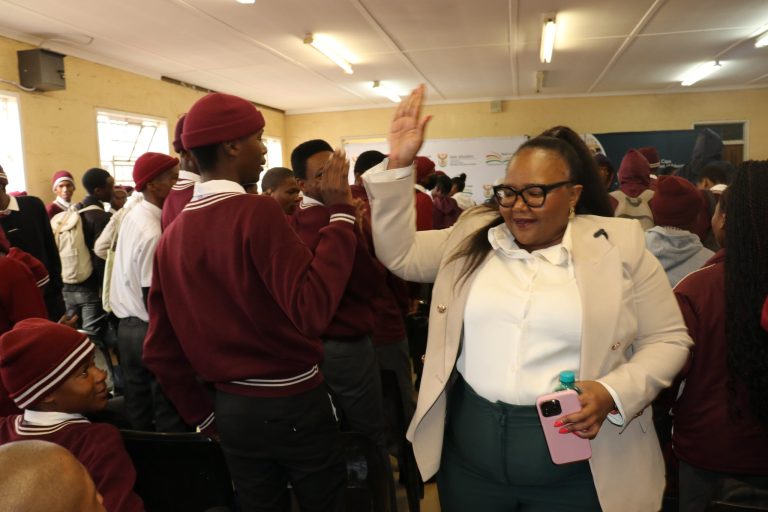
Addressing the matric class during assembly, Vosloo encouraged learners to maintain their focus and take pride in the high expectations placed on them.

“We believe in you and we are rooting for you to make history,” he said.

Gwarube followed with a motivational message, telling learners that achieving required preparation.

“A dream without a plan is just a fantasy. With hard work, that dream becomes your reality,” she said.

Gwarube toured the school’s kitchen under the National School Nutrition Programme and inspected digital learning infrastructure in its ICT centre.

The minister then travelled to the !Xankwesa ECD Centre in Platfontein, which was recently completed to serve over 400 children from the San communities of !Xun and Khwe.

Built through a partnership between the provincial education department and corporate donor Palms for Life, the centre replaced two facilities that were previously vandalized.

It now offers early education in the children’s mother tongue.

“This is an example of what can happen when communities and government unite. Language is key to comprehension, and mother-tongue education is crucial to building strong literacy foundations,” Gwarube said.

The minister emphasised that investment in ECD infrastructure was one of the pillars of her five strategic priorities, particularly in historically marginalised communities.

Vosloo echoed her sentiments, noting that “initiatives like !Xankwesa change the trajectory of entire communities”.

The delegation then proceeded to Kimberley Academy for a stakeholder engagement session with the Quality Learning and Teaching Campaign Provincial Steering Committee.

In her address, Gwarube outlined the department’s five priorities including ECD; literacy and numeracy; inclusion and special needs; teacher development and school leadership; and safe and dignified learning environments.

“Eight out of 10 Grade 4 learners cannot read for meaning in any language. We must treat this as a national emergency,” the minister reiterated.

She called for intensified mother-tongue based bilingual education, more inclusive classrooms and stronger district support systems to drive learner achievement.

The visit concluded with the launch of the Bana Pele ECD Registration Clinic, a mass campaign aimed at accelerating the registration of ECD centres nationwide.

Addressing hundreds of ECD practitioners, the minister encouraged informal childcare providers, including day mothers and creche operators, to formalise their programmes.

The Bana Pele initiative, launched earlier this year, is designed to fulfil South Africa’s goal of ensuring universal access to quality early learning for children aged 3 to 5 by 2030.

The roadmap includes efforts to increase the ECD subsidy from R17 to R24 per child per day, establish a national ECD Outcomes Fund and implement digital tracking systems such as the eCARES platform to simplify registration and data management.

Gwarube reiterated that ECD was both an educational and economic lever.

“The ECD sector already employs over 200,000 people, mostly women. If we reach our 2030 targets, we could double that. That’s real economic empowerment,” Gwarube said.

The minister hailed the event as a powerful demonstration of the government’s renewed commitment to early learning and grassroots transformation.

INSIDE EDUCATION
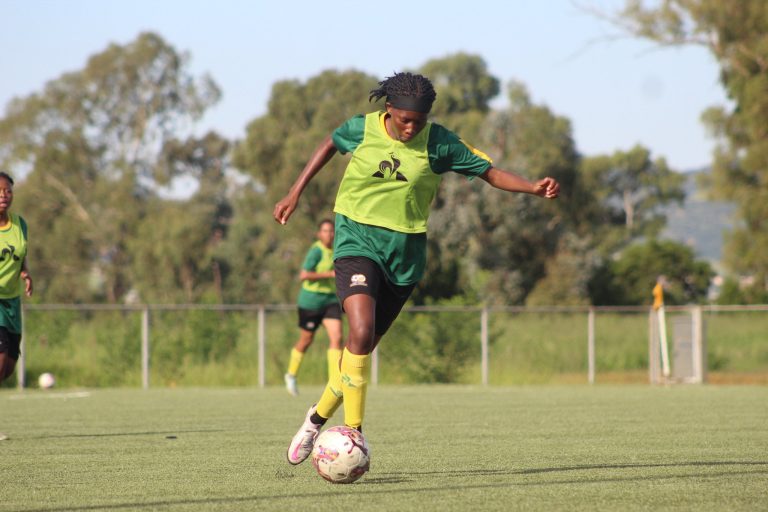
UJ football stars sign international deals

By Lungile Ntimba

The University of Johannesburg’s (UJ) two top women’s football players, Adrielle Mibe and Ayesha Moosa, have secured international club deals in the United States and Spain.

According to the university, both players have been key contributors to the success of the institution Women’s Football Team in the Hollywoodbets Super League and national tournaments.

Nthabeleng “Dunga” Modiko, who is a head coach of the UJ women’s football team, said the club was pleased with Mibe, who had been part of the university’s football structures from a young age. 

“We are very proud as a club and as a coach to see her go to the United States to further her education and play football. As her coach, I wish her all the best; let her fly her country’s flag proudly,” she said in a statement.

Commenting on Moosa’s departure, Modiko said the team was not only losing a talented footballer, but also someone who had significantly impacted the national league. 

“Ayesha is a highly skilled technical player who is humble in how she conducts herself. She’s our pride and our alumnus who has played the best football in the UJ colours. Congratulations to her on this move to Spain; make us proud! We will be watching you, hoping to see you in the Champions League,” she said.

UJ sports spokesperson Collen Maepa confirmed that Mibe would be joining the University of Arizona, where she would compete in the National Collegiate Athletic Association (NCAA) League while pursuing a degree in Social and Behavioral Sciences. 

He noted that Mibe had already achieved significant milestones in her career, including representing Banyana Banyana while still in high school.

Most recently, she was part of the Banyana Banyana squad for the 2025 Women’s Africa Cup of Nations in Morocco, but had to withdraw early due to her upcoming move to the US and adjustments to the squad by coach Desiree Ellis.

In an interview with UJ Sport, Mibe expressed gratitude to the institution’s football club, coaches, teammates and her family for their unwavering support throughout her football journey.

“I’m going there to learn and grow and also showcase my talent on a global stage,” she told UJ Sport. 

“This opportunity will give me the ability to develop further as a player; I am ready to embrace the change and all the good things that will come out of it.” 

Meanwhile, Moosa, who is a a recent Sport Science graduate, is set to join CD Argual in La Palma in Spain, for a season-long stint. 

Maepa said Moosa had been a central figure in the university’s football achievements, including the 2022 Varsity Football title and the USSA 2024 title. 

He added that Moosa made her national team debut during the 2023 Women’s COSAFA Cup in Gqeberha, solidifying her credentials as a rising football star.

“Football is a universal language, settling down will not be such a challenge,” said Moosa.

“I am looking forward to exploring life abroad and helping my team win trophies.”

According to Maepa, both players believe their overseas experiences would be crucial for their development, allowing them to hone their skills and contribute significantly to future national team endeavors on the global stage.

INSIDE EDUCATION

Hlomuka denies wrongdoing amid tender fraud allegations

By Johnathan Paoli

KwaZulu-Natal education MEC Sipho Hlomuka has firmly denied allegations of political interference and personal enrichment linked to a R2.9 billion National School Nutrition Programme (NSNP) tender.

He is facing mounting pressure from opposition parties, service providers and civil society for his immediate resignation and a full-scale investigation.

Responding to claims made by the NSNP Service Providers Association and opposition politicians, Hlomuka acknowledged past ties to a company allegedly implicated in the current tender awards but said he had divested years before taking office.

“In 2015, when I was not in government, I registered a company. However, I’m no longer part of that company and I’m not aware of its activities. If it has received any tenders, that information will come out in the investigation,” Hlomuka admitted.

In an interview with Newzroom Afrika, Hlomuka addressed a growing storm surrounding his alleged ties to the company, his role in the procurement process, and broader accusations of corruption plaguing the provincial education department.

The MEC emphasised that as the political head of the department, he had no involvement in the supply chain management process and had never sat on a tender adjudication panel.

He called for aggrieved parties to lodge formal appeals with the provincial Treasury, which was overseeing the current appeal stage of the procurement process.

“I’ve engaged the MEC for finance and the premier. If there are irregularities, the law must take its course. No one is above accountability,” Hlomuka said.

Despite his denials, political pressure is intensifying.

The uMkhonto weSizwe Party (MKP) is demanding that Hlomuka resigns or face formal removal proceedings.

The party has also called for a presidential proclamation to mandate the Special Investigating Unit to probe the matter, and has appealed to the Auditor-General, Public Protector and Hawks to launch parallel investigations.

“This is a feeding scheme hijacked for political gain. This is not governance, it is exploitation of hungry children.” spokesperson Nhlamulo Ndhlela said.

The Democratic Alliance has welcomed the Treasury’s preliminary intervention and called on Basic Education Minister Siviwe Gwarube to transfer all future NSNP funding responsibilities from the education department to the provincial Treasury.

“If the allegations prove true, MEC Hlomuka must be removed immediately. Corruption cannot be tolerated, especially when it affects hungry children,” DA KZN education spokesperson Sakhile Mngadi said.

The DA has also submitted a formal request to the Standing Committee on Public Accounts (Scopa) for an urgent investigation and subpoena of all procurement documents related to the NSNP tenders.

At the heart of the scandal is a detailed complaint from the NSNP Service Providers Association, which claims to have obtained “concrete evidence” of tender rigging.

According to association spokesperson Thabang Mncwabe, supply chain procedures were allegedly deliberately undermined, with whistleblowers and legitimate bidders sidelined.

KwaZulu-Natal finance MEC Francois Rodgers has confirmed that while no formal complaint had yet been submitted, his office is open to investigating any evidence brought forward.

“It is my responsibility to ensure fiscal discipline. Allegations of tender fraud deeply concern me. Anyone with evidence must approach my office so we can probe further,” Rodgers said.

When asked about the MKP’s demand for his resignation, Hlomuka was defiant but restrained.

“I was appointed by the premier. If there’s a need for me to resign, I’ll wait for guidance from the one who appointed me. I have not appointed myself,” he said.

With Treasury open to probing the matter, Scopa expected to intervene and growing calls for a national-level investigation, the future of KwaZulu-Natal’s school nutrition programme and Hlomuka’s political career hangs in the balance.

INSIDE EDUCATION

School of government partners with TVET colleges to enhance performance

By Lungile Ntimba

The National School of Government (NSG) has signed a Memorandum of Understanding with the Technical and Vocational Education Training Colleges Governors’ Council to strengthen the capacity and governance of TVET sectors.

This strategic partnership brings together the expertise of both institutions in training, research, advisory services and professional development to empower college councils with the necessary skills and competencies to contribute meaningfully to national development.

“Both parties are committed to identifying joint initiatives and projects that create shared value, particularly as it pertains to the training of college councils on leadership, governance, ethics and other areas of mutual interest,” NSG spokesperson Dikeledi Mokgokolo said.

The partnership would focus on the development and implementation of project-specific ventures to ensure alignment with agreed objectives.

Key areas of co-operation include ensuring strategic alignment of initiatives with the goals of the TVET college sector and enhancing the overall performance of institutions through collaboration with NSG’s diverse service offerings.

Furthermore, Mokgokolo highlighted the importance of ethical leadership and value-driven support within the TVET framework, saying that the partnership would involve engagement with industry partners, government agencies and other stakeholders to advance the initiative.

The agreement would also involve hosting workshops, seminars and coaching programmes tailored to meet the evolving needs of the intended audience.

It would enable the mobilisation of resources and support from external partners, donors and stakeholders, contributing towards enhancing the capacity and performance of TVET colleges and increasing investment in the sector.

“The NSG is looking forward to working closely with the TVETCGC and other stakeholders to deliver on this shared vision and contribute meaningfully to building a capable, ethical and developmental state,” the NSG principal Prof. Busani Ngcaweni said in statement.

“We aim to ensure that public servants, educators and administrators in TVET colleges are equipped with the skills, tools and ethical leadership required to transform the post-school sector.”

TVETCGC secretary-general Sanele Zondi agreed that the partnership was a step in the right direction.

He said it would enable the development of tailored training modules for council members in areas such as ethics, governance, leadership, budgeting and oversight.

INSIDE EDUCATION

Parliament confirms no SETA appointment panel

By Johnathan Paoli

Parliament’s Portfolio Committee on Higher Education and Training has concluded that no independent panel ever formally existed to oversee the appointment of Sector Education and Training Authority (SETA) board chairpersons, despite repeated claims by now-dismissed minister Nobuhle Nkabane.

The committee, undeterred by this week’s sudden Cabinet reshuffle, has resolved to continue investigating what it now views as a deeply flawed, politically influenced process.

“This matter could have been easily avoided, but we are here because systems meant to ensure transparency and legality were ignored. The reality is that there was never a panel in effect,” committee chairperson Tebogo Letsie said.

The committee’s decision to press ahead follows President Cyril Ramaphosa’s removal of Nkabane on Monday, replacing her with former deputy minister Buti Manamela.

While some ANC and Patriotic Alliance’s Ashley Sauls argued that the inquiry should end with the minister’s dismissal, others most vocally from the Democratic Alliance, Inkatha Freedom Party, Economic Freedom Fighters and uMkhonto weSizwe, insisted the process had revealed serious governance lapses that must still be accounted for.

The department’s deputy director-general for corporate services, Rhulani Ngwenya, who was appointed secretary of the so-called panel, admitted she had never convened a meeting, set an agenda, or recorded minutes.

“I was neither compensated nor remunerated against my appointment as a secretariat. I wish to clarify that all communications with Advocate Terry Motau SC was undertaken as part of my secretarial support services to the nomination panel,” she said.

Chief of staff Nelisiwe Semane clarified that although her name appeared on the list of panel members for the selection of SETA board chairpersons, she did not participate in that process.

In a letter dated 19 June, Semane stated her involvement was limited to the recommendation of SETA accounting authorities.

She attributed the confusion to Nkabane’s submission of an all-inclusive panel list that failed to distinguish between the two roles, confirming that she received no additional remuneration for her involvement.

Ministerial advisor Asisipho Solani, now unemployed following Nkabane’s axing, denied accusations that he had orchestrated the appointment process on his own.

While he confirmed helping facilitate a meeting between Advocate Motau and a legal acquaintance, Luvo Makasi, who held no formal role in the department, he insisted there was no misconduct.

MPs, however, expressed deep concern that external individuals were engaged in a government process without legal consultation, calling it “a serious violation of procedure”.

Director-General Nkosinathi Sishi came under intense scrutiny for his lack of oversight.

While he maintained he had no involvement in the appointments and only saw the final list at the same time as the public, MPs challenged his claims.

Sishi admitted the process had been flawed and called for future panels to be codified in legislation.

“We must write it into law… that such a panel is established,” he said.

However, he deflected responsibility for the debacle, insisting he was legally barred from appointing chairpersons himself.

The committee also condemned what they called a growing “culture of retaliation” against whistleblowers in the sector, warning the department against punishing staff who had testified.

Despite legal advice cautioning that it would be inappropriate to proceed without offering Nkabane the right to reply, the committee continued with finalising its oversight.

Members resolved to draft a preliminary report with findings and recommendations, including potential disciplinary steps against departmental officials and a legislative review of the Skills Development Act and Higher Education Act.

Meanwhile, Manamela and his deputy, Nomusa Dube-Ncube, were sworn in at Tuynhuys in Cape Town.

INSIDE EDUCATION

School safety agreement implemented in Inanda

By Lungile Ntimba

In an effort to make schools safer, KwaZulu-Natal police and Basic Education Department officials made unannounced visits to three schools in Inanada where they found cigarettes and dagga.

The visits form part of the Safe Schools Protocol, which is a joint initiative between the department and the South African Police Service. It was signed last month and seeks to address social challenges such as bullying, gangsterism, substance abuse, crime and gender-based violence in schools across the country.

The schools that were visited were Ikusasalentsha Secondary School, Newtown Combined School and Inanda Comprehensive School.

The area has been identified by the department as a high-risk area for violent crime.

Department spokesperson Elijah Mhlanga confirmed on Tuesday that police engaged with learners on safety awareness and conducted searches during the visits.

“This protocol is not just a document; it’s a commitment to action. It establishes clear lines of coordination between education and law enforcement sectors to protect learners and educators alike,” Mhlanga said in a post on X.

The department’s school safety director Sifiso Ngobese emphasised the department’s commitment to restoring discipline and dignity in schools. 

He described the protocol as a vital tool in the broader effort to create an environment where education could thrive.

INSIDE EDUCATION

Ramaphosa gives Nkabane the boot

By Johnathan Paoli

President Cyril Ramaphosa has removed Nobuhle Nkabane as Minister of Higher Education and Training amid mounting controversy over politically connected appointments to Sector Education and Training Authority (SETA) boards.

The president has swiftly filled the vacancy by appointing deputy minister Buti Manamela as the new minister, and former ZwaZul-Natal premier Nomusa Dube-Ncube in his old position as deputy minister.

The changes were confirmed by the Presidency in a statement issued late Monday evening, citing Section 91(2) and Section 93(b) of the Constitution as the basis for the appointments.

Manamela, a long-serving member of the executive, had been Deputy Minister of Higher Education and Training since 2014.

His elevation to the ministerial position marks a continuity of leadership, but also signals Ramaphosa’s attempt to restore stability and credibility in a portfolio crucial to tackling youth unemployment, skills shortages and institutional dysfunction in the post-school education system.

Manamela is a well-known figure in the education and youth development sectors, with a political career rooted in the Young Communist League and the African National Congress.

His appointment is being viewed as a logical progression following years of experience within the department, during which he oversaw key initiatives in TVET college development, student funding and SETA reform.

Manamela’s familiarity with policy processes and longstanding relationships with key education stakeholders are expected to ease the transition and facilitate continuity in programmes aimed at modernising the sector.

Section 93(b) of the Constitution allows the president to appoint up to two deputy ministers from outside the National Assembly.

The presidency said that Dube-Ncube brought a wealth of experience to the position.

She previously served as MEC for cooperative governance and traditional affairs in KwaZulu-Natal and was most recently the premier of the province, the first woman to hold that office.

Known for her administrative acumen and strong leadership record, Dube-Ncube’s appointment is being welcomed as an injection of new energy into the department.

The reshuffle follows months of tension and criticism directed at Nkabane.

Her tenure had become increasingly untenable after revelations surfaced that several SETA board chairpersons appointed under her leadership were either politically connected or held positions within her department, raising serious concerns about transparency and governance.

The crisis peaked when Nkabane failed to appear at two successive meetings of Parliament’s Portfolio Committee on Higher Education, where she had been expected to explain the SETA appointments.

Her absence drew sharp rebuke from opposition parties and civil society alike.

She was scheduled to appear on Tuesday before the committee to account for the controversial process, a meeting that is now in doubt following her dismissal.

In a statement released shortly after her removal, Nkabane confirmed her exit and expressed gratitude to Ramaphosa for the opportunity to serve in Cabinet.

“It was a privilege to lead such a crucial portfolio and I remain committed to the service of South Africans,” she said.

The Democratic Alliance (DA) welcomed the decision to remove Nkabane, with national spokesperson and MP Karabo Khakhau, who had earlier in the day renewed calls for her dismissal, citing poor leadership and alleged cadre deployment in SETA governance.

“To the Republic and its people, we remain committed. What a fight!” she said on X.

There is uncertainty over whether Manamela will attend the higher education committee meeting in her place, however, despite the removal of her executive position, Nkabane remains an MP and is potentially liable to the Joint Committee on Ethics and Members’ Interests.

INSIDE EDUCATION

Research replication can determine how well science is working – but how do scientists replicate studies?

0

By Amanda Kay Montoya

Back in high school chemistry, I remember waiting with my bench partner for crystals to form on our stick in the cup of blue solution. Other groups around us jumped with joy when their crystals formed, but my group just waited. When the bell rang, everyone left but me. My teacher came over, picked up an unopened bag on the counter and told me, “Crystals can’t grow if the salt is not in the solution.”

To me, this was how science worked: What you expect to happen is clear and concrete. And if it doesn’t happen, you’ve done something wrong.

If only it were that simple.

It took me many years to realize that science is not just some series of activities where you know what will happen at the end. Instead, science is about discovering and generating new knowledge.

Now, I’m a psychologist studying how scientists do science. How do new methods and tools get adopted? How do changes happen in scientific fields, and what hinders changes in the way we do science?

One practice that has fascinated me for many years is replication research, where a research group tries to redo a previous study. Like with the crystals, getting the same result from different teams doesn’t always happen, and when you’re on the team whose crystals don’t grow, you don’t know if the study didn’t work because the theory is wrong, or whether you forgot to put the salt in the solution.

A May 2025 executive order by President Donald Trump emphasized the “reproducibility crisis” in science. While replicability and reproducibility may sound similar, they’re distinct.

Reproducibility is the ability to use the same data and methods from a study and reproduce the result. In my editorial role at the journal Psychological Science, I conduct computational reproducibility checks where we take the reported data and check that all the results in the paper can be reproduced independently.

But we’re not running the study over again, or collecting new data. While reproducibility is important, research that is incorrect, fallible and sometimes harmful can still be reproducible.

By contrast, replication is when an independent team repeats the same process, including collecting new data, to see if they get the same results. When research replicates, the team can be more confident that the results are not a fluke or an error.

The “replication crisis,” a term coined in psychology in the early 2010s, has spread to many fields, including biology, economics, medicine and computer science. Failures to replicate high-profile studies concern many scientists in these fields.

Why replicate?

Replicability is a core scientific value: Researchers want to be able to find the same result again and again. Many important findings are not published until they are independently replicated.

In research, chance findings can occur. Imagine if one person flipped a coin 10 times and got two heads, then told the world that “coins have a 20% chance of coming up heads.” Even though this is an unlikely outcome – about 4% – it’s possible.

Replications can correct these chance outcomes, as well as scientific errors, to ensure science is self-correcting.

For example, in the search for the Higgs boson, two research centers at CERN, the European Council for Nuclear Research, ATLAS and CMS, independently replicated the detection of a particle with a large unique mass, leading to the 2013 Nobel Prize in physics.

The initial measurements from the two centers actually estimated the mass of the particle as slightly different. So while the two centers didn’t find identical results, the teams evaluated them and determined they were close enough. This variability is a natural part of the scientific process. Just because results are not identical does not mean they are not reliable.

Research centers like CERN have replication built into their process, but this is not feasible for all research. For projects that are relatively low cost, the original team will often replicate their work prior to publication – but doing so does not guarantee that an independent team could get the same results.

When projects are costly, urgent or time-specific, independently replicating them prior to disseminating results is often not feasible. Remember when people across the country were waiting for a COVID-19 vaccine?

The initial Pfizer-BioNTech COVID-19 vaccine took 13 months from the start of the trial to authorization from the Food and Drug Administration. The results of the initial study were so clear and convincing that a replication would have unnecessarily delayed getting the vaccine out to the public and slowing the spread of disease.

Since not every study can be replicated prior to publication, it’s important to conduct replications after studies are published. Replications help scientists understand how well research processes are working, identify errors and self-correct. So what’s the process of conducting a replication?

The replication process

Researchers could independently replicate the work of other teams, like at CERN. And that does happen. But when there are only two studies – the original and the replication – it’s hard to know what to do when they disagree. For that reason, large multigroup teams often conduct replications where they are all replicating the same study.

Alternatively, if the purpose is to estimate the replicability of a body of research – for example, cancer biology – each team might replicate a different study, and the focus is on the percentage of studies that replicate across many studies.

These large-scale replication projects have arisen around the world and include ManyLabs, ManyBabies, Psychological Accelerator and others.

Replicators start by learning as much as possible about how the original study was conducted. They can collect details about the study from reading the published paper, discussing the work with its original authors and consulting online materials.

The replicators want to know how the participants were recruited, how the data was collected and using what tools, and how the data was analyzed.

But sometimes, studies may leave out important details, like the questions participants were asked or the brand of equipment used. Replicators have to make these difficult decisions themselves, which can affect the outcome.

Replicators also often explicitly change details of the study. For example, many replication studies are conducted with larger samples – more participants – than the original study, to ensure the results are reliable.

Registration and publication

Sadly, replication research is hard to publish: Only 3% of papers in psychology, less than 1% in education and 1.2% in marketing are replications.

If the original study replicates, journals may reject the paper because there is no “new insight.” If it doesn’t replicate, journals may reject the paper because they assume the replicators made a mistake – remember the salt crystals.

Because of these issues, replicators often use registration to strengthen their claims. A preregistration is a public document describing the plan for the study. It is time-stamped to before the study is conducted.

This type of document improves transparency by making changes in the plan detectable to reviewers. Registered reports take this a step further, where the research plan is subject to peer review before conducting the study.

If the journal approves the registration, they commit to publishing the results of the study regardless of the results. Registered reports are ideal for replication research because the reviewers don’t know the results when the journal commits to publishing the paper, and whether the study replicates or not won’t affect whether it gets published.

About 58% of registered reports in psychology are replication studies.

Replication research often uses the highest standards of research practice: large samples and registration. While not all replication research is required to use these practices, those that do contribute greatly to our confidence in scientific results.

Replication research is a useful thermometer to understand if scientific processes are working as intended. Active discussion of the replicability crisis, in both scientific and political spaces, suggests to many researchers that there is room for growth. While no field would expect a replication rate of 100%, new processes among scientists aim to improve the rates from those in the past.

Amanda Kay Montoya is an Associate Professor of Psychology, University of California, Los Angeles.

The Conversation

Nkabane champions digital skills for SA youth

By Johnathan Paoli

Higher Education and Training Minister Nobuhle Nkabane has reaffirmed her department’s commitment to transforming the Technical and Vocational Education and Training (TVET) sector through strategic digital skills initiatives, partnerships and labour-aligned training programmes.

Speaking in conversation with former University of Cape Town Vice-Chancellor Professor Mamokgethi Phakeng, Nkabane highlighted several critical efforts to modernise the sector and address the country’s persistent youth unemployment crisis.

The minister was particularly enthusiastic about the partnership with NetCampus and Microsoft under a presidential initiative to build demand-led digital skills.

“We are excited to partner with NetCampus in this programme, which is one of the president’s priorities in post-school education and training. We recognise the severe skills mismatch in the country and are working to produce graduates that match the demands of our economy,” Nkabane said.

The programme stems from the Business-Government Partnership on Employment and Co-Funding, signed in September 2023 under the leadership of President Cyril Ramaphosa.

It aims to boost economic growth through digital skills development and job placement, coordinated by the Presidency’s Project Management Unit and Business Unity South Africa.

Nkabane revealed that introductory artificial intelligence (AI) courses have already been delivered to principals, deputy principals and senior managers at TVET campuses.

“But this is only the beginning,” she stressed. “We want this programme to reach students on the ground and ensure they leave with recognised certifications that support their employability or business ventures.”

She argued that expanding access alone was insufficient.

“We need to strike a balance between access and success. Training for the sake of training is not impactful, it must lead to meaningful pathways into work or entrepreneurship,” she said.

A cornerstone of Nkabane’s strategy is repurposing TVET colleges into Centres of Specialisation, offering high-impact, future-oriented courses in areas like robotics, welding, mechanical engineering, drone technology and cybersecurity.

She said these centres were being aligned with the country’s labour market intelligence systems and industrial needs.

“TVETs must produce graduates who are ready to be absorbed into the workforce. Our interventions are aimed at deliberately growing the sectors where young people can actively participate in the economy, especially the small business and informal sectors,” Nkabane said.

With approximately 3.8 million young South Africans not in education, employment, or training, the department’s efforts are targeted at drawing these youth into productive and future-ready learning environments.

“When these opportunities are offered, we want young people to come on board so we can thrive together,” she urged.

The minister also underscored a coordinated national approach through the newly established Inter-Ministerial Committee (IMC) on digital skills and employment.

Chaired by the Presidency, the IMC includes Nkabane herself, as well as ministers from Employment and Labour, Small Business, Communications, and the Industrial Development Corporation.

“This shows our commitment to tackling digital transformation from all angles, not in silos,” she said.

To ensure the relevance and credibility of TVET training, the Manufacturing, Engineering and Related Services Sector Education Training Authority has developed more than 50 new occupational qualifications in collaboration with industry and the Quality Council for Trades and Occupations.

These qualifications span data science, systems development, robotics engineering, drone operation, cybersecurity and cloud computing.

“These programmes are not just relevant, they are essential. They reflect the future of work and the kinds of careers young South Africans must be prepared for,” said Nkabane.

Despite her progressive agenda, Nkabane has come under fire in recent weeks over the controversial appointment of Sector Education and Training Authority (SETA) board chairpersons.

Parliament’s Portfolio Committee on Higher Education and Training rejected her written apology after she failed to appear before them on Friday, citing prior commitments.

She explained that she had been scheduled to travel abroad but, after the trip was cancelled due to lack of presidential approval, she committed to attending a gender-based violence and femicide (GBVF) event instead.

The controversy erupted after allegations that some SETA board appointees were politically connected or were officials from within her own department.

The committee is expected to press her on these appointments on Tuesday.

While Nkabane’s digital skills push signals a transformative vision for the TVET and post-school education sector, the backlash over the SETA board saga underscores the complex political and administrative terrain she must navigate.

With youth unemployment still stubbornly high and public confidence in government-led programmes under strain, her ability to implement these changes with credibility and accountability remains under scrutiny.

Still, the minister is resolute about the youth, describing the department’s mission as not just to train, but to empower, employ and elevate South Africa’s youth.

INSIDE EDUCATION

London mayor highlights youth sports as powerful beyond the school pitch

By Johnathan Paoli

In a stirring celebration of Mandela Day, London mayor Sadiq Khan has reaffirmed the powerful role of sport in social upliftment and cross-continental cooperation, amid trade missions to Nigeria, Ghana and South Africa.

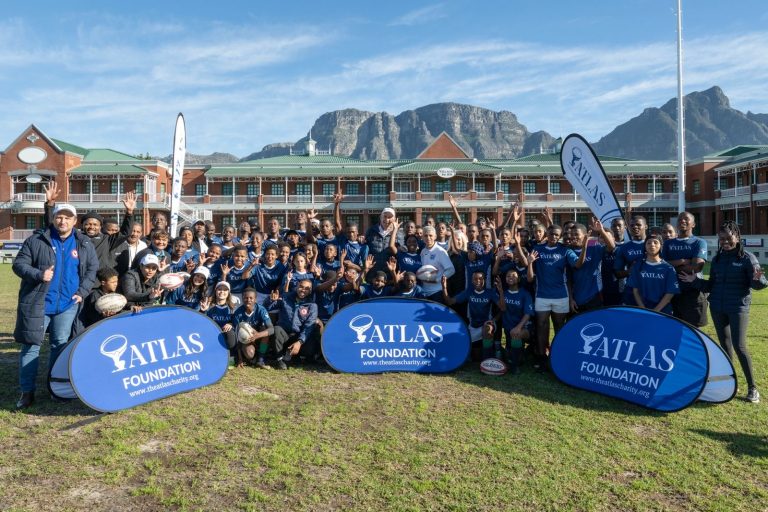
Khan visited Villagers FC in Claremont, Cape Town, where he engaged with young athletes from the Atlas Foundation South Africa, referencing the iconic image of Mandela in a Springbok jersey during the 1995 Rugby World Cup final as a moment that symbolised a fractured nation beginning to heal.

“Sport has the power to bring people together. Teamwork, leadership, respect, these are values learned on the sports field. They’re also values that prevent young people from being pulled into crime and gangs,” Khan said.

Khan, himself a former human rights lawyer, described his experience as “deeply humbling” and emotionally resonant.

“Nelson Mandela’s vision of equal rights and justice wasn’t just for South Africa. It was a vision for all of us, everywhere,” he said, recalling the powerful impact Mandela had on the UK, especially during his imprisonment.

The mayor’s remarks at Villagers FC linked the legacy of Mandela with the transformational power of sport, particularly for young people facing structural inequality, social exclusion, and risk of crime.

He highlighted the achievements of the Atlas Foundation SA, the local chapter of the UK-based foundation, for its work in empowering youth in under-resourced communities through rugby and life-skills training.

To that end, Khan used the occasion to announce a significant £1.4 million investment into London’s own grassroots sport programmes.

The funds, delivered through the Go! London initiative, the city’s largest ever community sports fund, will support youth development, encourage active lifestyles and help reduce crime in vulnerable communities.

The Atlas Foundation will be a key partner in these efforts in the UK, expanding its model from South Africa to London.

Khan’s visit to Villagers FC comes just months after Prince William toured the Atlas Foundation’s programmes in Ocean View and Masiphumelele, underlining the growing international attention on grassroots sport as a tool for development.

The mayor also used his time in Cape Town to meet with Mayor Geordin Hill-Lewis and engage in trade discussions focused on tech, fintech, and sustainability.

He praised Cape Town’s thriving start-up culture and expressed interest in building long-term partnerships between London and Cape Town-based businesses.

“As part of our Grow London Global initiative, we’re inviting South African businesses to expand into London. Whether you’re a start-up or scaling up, we’re here to offer support, funding, and connections. We don’t want to act as patrons, but as equal partners,” Khan said.

In summarising his African visit, Khan reflected on the interconnectedness of social justice, sport, and trade.

The mayor said his visit reinforced the symbolic and practical bridges being built between South Africa and the UK, grounded in a shared belief in equality, opportunity, and the transformative power of sport.

INSIDE POLITICS