Home Blog Page 9

OPINION | Skills key to fixing South Africa’s water crisis, says EWSETA

By Dr Mmaphefo Thwala

While EWSETA supports President Cyril Ramaphosa’s call to restore and upgrade critical water infrastructure, we believe water reform is as much a skills issue as a funding one.

This Water Month comes on the back of the President’s recent State of the Nation Address, where he went as far as saying that “water is now the single most important issue for many people in South Africa.”

The President acknowledged years of underinvestment, maintenance backlogs and system failures. However, infrastructure alone will not secure South Africa’s water future. The system only works when there are skilled people to operate and maintain it.

There is a clear opportunity for EWSETA to extend our contribution to water sector recovery. Through working with national and local government (i.e. municipalities), water boards and industry, EWSETA has already been involved in supporting skills development in the water sector.

However, considering the scale of the challenge outlined in the 2026 SONA, there is room for EWSETA to take on additional skills development initiatives.

Creating practical link between skills planning and service delivery

EWSETA is actively revolutionising the landscape of water management, and better aligning infrastructure investment with workforce planning will mean driving skills development that is guided by what’s happening in treatment plants, pump stations, and across reticulation networks.

When training priorities are informed by municipal maintenance backlogs or system failures, they can respond directly to the pressures faced on the ground.

This allows workforce development to support infrastructure upgrades and sector reform.

By strengthening training for water artisans such as plumbing and millwright technicians, and by expanding our programmes that upskill and reskill the existing municipal workforce, we can strengthen the technical backbone of the system.

Building technical competencies in operations and maintenance, through artisanal and learnership recognition of prior learning, ensures that skills development responds directly to where the system is under strain.

This also speaks to the President’s emphasis on a dual training model that links formal education with structured workplace experience.

EWSETA plays an important role in connecting training institutions such as TVET colleges with employers and public utilities, ensuring that learning is tied to the realities of plant operations and distribution networks through workplace-based learning.

It’s critical that we continue to reduce the disconnect between qualification and competence.

Identifying gaps and building capacity in those areas

Increased collaboration also makes it possible to see more clearly where skills gaps are and where existing training no longer matches the intricacies and realities of the water system.

Through engagement with water boards, municipalities and private industries, EWSETA supports the closure of these gaps and responds through designing qualifications that address operational demands.

EWSETA has developed suitable water-focused occupational skills programmes for qualifications across various skill levels, from Water

Conservation Practitioner NQF 4, Industrial Water Plant Operator (NQF level 4), Borehole Pump Operator (NQF 4), and Industrial Water Process Controller (NQF 5) to Water Works Management Practitioner (NQF 6), Water Control Officer (NQF 6), Water Use Specialist (NQF 7) and Water Resource Manager (NQF 8).

However, aligning qualifications to current needs is only part of the issue.

The pressures facing the water system are constantly evolving due to climate change, ageing infrastructure, rising demand, pollution impacts and rapidly advancing technologies.

Skills development must therefore look beyond keeping today’s infrastructure operational and begin actively preparing the workforce for what lies ahead.

Training that builds capability in smart systems, digital water management systems, nature-based solutions and sustainable water management will enable long-term resilience across the sector.

Strengthening capability under national accountability

The introduction of licensing for water service providers and the possibility of criminal consequences for ongoing failure, highlight that performance in the water sector is now directly linked to accountability.

The establishment of a National Water Crisis Committee, chaired by the President, also shows that water has been elevated to a matter of national priority.

This shift reframes the crisis not merely as an infrastructure challenge, but as a test of professional competence and institutional responsibility.

A sector facing stricter oversight and public scrutiny cannot function without a workforce able to operate and maintain increasingly complex systems.

Investing and strengthening the skills base of South Africa’s water workforce will improve the sector’s ability to respond to immediate failures and future pressures, making skills development inseparable from water security itself.

By Dr Mmaphefo Thwala, Water Sector Manager at EWSETA

INSIDE METROS
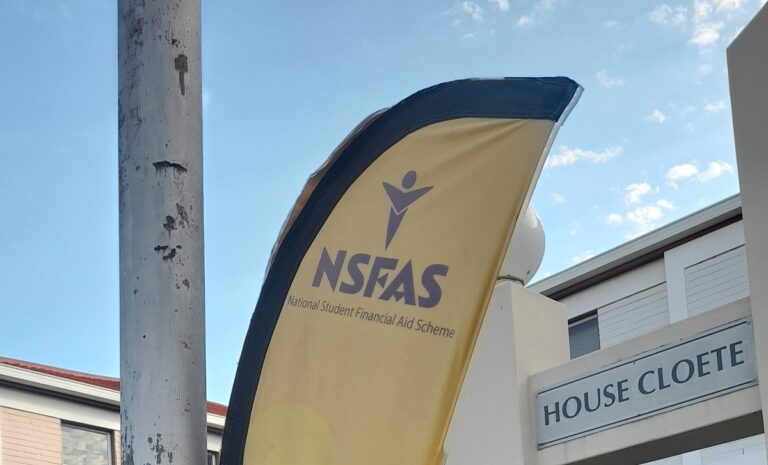
NSFAS welcomes report on student accommodation improvements

0

By Akani Nkuna

The National Student Financial Aid Scheme (NSFAS) says it has welcomed a report by the Organisation Undoing Tax Abuse (OUTA) on student accommodation and will review its findings to improve how the system is managed.

“NSFAS is resolute in ensuring that any student, accommodation provider, service provider, or staff member found to have defrauded NSFAS, and by extension the state, is held accountable, with appropriate consequence management measures implemented,” NSFAS said in a statement.

ALSO READ: Durban jobs drive puts 231 young people into work

OUTA released the report last week after a two-year investigation into corruption risks, governance failures and student accommodation quality within the NSFAS system.

It said the probe examined how structural changes to the student-centred accommodation model altered how billions of rand in public funds move through the student housing pipeline.

According to OUTA, its investigation found weaknesses in accreditation inspections, procurement processes and funding arrangements involving portal service providers and accreditation agents.

It said structural changes introduced multiple intermediaries into the funding pipeline, while some accreditation agents approved properties that did not comply with the Department of Higher Education and Training’s minimum norms and standards.

OUTA also said one property listed as accommodating about 200 beds appeared to be an ordinary three or four-bedroom house.

The report also raised concerns about the appointment of online portal providers.

ALSO READ: IEC sets June voter registration

OUTA said the NSFAS board appointed four student accommodation portal providers even though the evaluation committee had recommended two, and that one company had previously been disqualified before being reinstated for further consideration.

OUTA said that from 2023 to 2025, NSFAS paid accommodation for about 60% of its beneficiaries and, on average, paid for about 100,000 more beds than the number of accredited beds available. It further said a conclusion could be drawn that NSFAS paid for 367,582 students to stay in accommodation not accredited by NSFAS accreditation agents.

It also said NSFAS paid R4.523 billion over eight months in 2025 to accommodation providers in the student accommodation pilot project, at an average of R39,777 per beneficiary per month for university students and R26,614 for TVET students.

“Several properties that were inspected and accredited by accreditation agents were falsely certified. It appears that the number of beds were inflated and some properties did not adhere to municipal bylaws or the minimum norms and standards as set out by DHET,” the report said.

OUTA recommended an independent investigation into three main areas: the student accommodation portal, accommodation accreditation and off-take agreements.

ALSO READ: Mpumalanga opens new state-of-the art school in KaMaqhekeza

It also called for the termination of contracts between NSFAS, solution providers and accreditation agents, as well as criminal complaints against NSFAS officials and service providers found guilty of misconduct and corruption, and criminal investigations into landlords implicated in wrongdoing.

It further said the auditor general, SARS and Parliament should use the report to intensify oversight.

NSFAS said the report followed sustained engagement between the scheme and OUTA, including information provided through a Promotion of Access to Information Act request.

It said the current board had already identified major problems in the student accommodation function, cleared payment backlogs, introduced stricter controls and sought to prevent mass student evictions by the end of 2025.

NSFAS said it had since commissioned a legal and forensic review of the accommodation function and, at the start of 2026, began implementing a transition to direct payment of accommodation providers, moving away from reliance on solution partners.

ALSO READ: Education wins big with salary relief, Grade R, and infrastructure boost

It also said the Special Investigating Unit was already probing student accommodation and that a national audit of student accommodation accreditation would take place throughout 2026.

“For the 2026 academic year, NSFAS has introduced additional controls and measures to ensure robust processes for the registration, onboarding, and placement of students in accredited accommodation, as well as accurate and timely disbursements to accommodation providers. Placement for 2026 has, by and large, been smooth and stable,” NSFAS said.

INSIDE EDUCATION

Durban jobs drive puts 231 young people into work

0

By Levy Masiteng 

A total of 231 young people from low-income communities have moved into formal employment after graduating from the Presidential Employment Stimulus Programme (PESP), eThekwini Municipality said on Wednesday.

The municipality said the programme, run in partnership with Business Process Enabling South Africa (BPESA), is aimed at tackling youth unemployment while supporting the growth of Durban’s Global Business Services (GBS) sector.

ALSO READ: Mpumalanga opens new state-of-the art school in KaMaqhekeza

The PESP was launched in October 2020 as part of the country’s Economic Reconstruction and Recovery Plan to cushion the labour market from the economic shock of the COVID-19 pandemic.

It uses taxpayer money to create jobs and support livelihoods.

President Cyril Ramaphosa said in his February State of the Nation Address that more than 2.5 million opportunities had been created through the stimulus, mainly for young people and women.

The graduation ceremony for the eThekwini cohort took place in Umhlanga.

eThekwini said in a statement that the training programme served as “a high-impact solution to youth unemployment” and used an impact-sourcing model to drive inclusive economic growth.

It said the GBS sector remained a key economic driver for the region, with eThekwini and KwaZulu-Natal accounting for about 13% of South Africa’s total GBS sector.

It said the region’s growth had accelerated, with nearly 15,000 jobs created between 2018 and 2020, while 6,909 new sustainable jobs were added in 2024 alone.

Durban also hosts 25% of the national GBS export segment, the statement said.

The graduation ceremony was supported by Economic Development and Planning Committee Chairperson Councillor Thembo Ntuli.

ALSO READ: IEC sets June voter registration

While presenting certificates to graduates, Takalani Rathiyaya, deputy director for the city’s Industry Development Division, praised BPESA’s role in the initiative.

“A heartfelt appreciation goes to BPESA for its strong commitment to creating meaningful job opportunities and providing relevant skills. We are currently working on renewing our memorandum of agreement with BPESA KZN to continue scaling a skilled workforce,” Rathiyaya said.

He added that the graduation was evidence of the value of cooperation between the public and private sectors in promoting inclusive development.

Industry leaders who also addressed the programme included Robin Hoekstra, chairperson of BPESA KZN and chief executive of Outworx, and Reshni Singh, chief executive of BPESA National.

The municipality said the continued success of the PESP initiative would help keep Durban “at the forefront of the global digital economy”, while creating sustainable employment opportunities for young people and strengthening the region’s economic resilience.

INSIDE EDUCATION

IEC sets June voter registration

0

By Lebone Rodah Mosima

The Electoral Commission will hold a nationwide voter registration weekend on 20 to 21 June ahead of the local government elections.

It has also warned the public about fake voter registration websites and fraudulent recruitment notices circulating online.

ALSO READ: Fadiel Adams tells ad hoc committee to subpoena Crime Intelligence finances

 “The intended outcome of the registration weekend is to facilitate access to franchise and broaden electoral participation,” the IEC said at a press briefing in Centurion, Pretoria, on Tuesday.

“The Commission’s position is that an early announcement of an election date is critical to allow South Africans to decide where they will be on voting day, as this directly determines where they register,” it said.

It added that once the election date is proclaimed, eligible voters would have until midnight on the same day to register.

The proclamation will also trigger important timetable steps, including certification and publication of the voters’ roll, inspection of the roll, objections, and candidate nominations.

ALSO READ: Senthumule pressed by MPs on why she sought sponsorship from ‘Cat’ Matlala

The commission said election preparations were advancing steadily, with the Municipal Demarcation Board having finalised and handed over 4,305 wards in December 2025, representing 95% of all wards nationally.

The remaining wards are in four KwaZulu-Natal municipalities: eThekwini, Mkhambathini, Inkosi Langalibalele and Alfred Duma.

The latest ward adjustments had resulted in the subdivision of 1,865 voting districts, or 8% of the national total, with KwaZulu-Natal and Gauteng accounting for about 45% of affected districts.

The commission also said its online voter registration campaign was gaining traction. Between November 2025 and March 2026, it recorded 260,205 new registrations, with 128,113 through Voter Management Devices and 132,092 via the online self-service portal.

 “The nationwide Online Voter Registration Campaign is starting to bear fruit,” it said. “The current registration activity is a crucial reversal of the net loss on the voters’ roll due to mortality.”

The commission said it was aware of fake websites impersonating its domain and trying to harvest personal information.

“The sites are intended to lure unsuspecting members of the public to share their personal information,” it said.

ALSO READ: Senthumule blames senior police leadership for PKTT disbandment

“Members of the public are advised not to click on links and urged not to share their personal information (ID number, phone number, address, etc.) on these websites.”

The only official online voter registration portals were RegisterToVote.org.za and www.elections.org.za.

The commission also warned of a false recruitment notice on social media and messaging platforms, saying it was fraudulent and did not originate from the IEC.

 “The Commission does not request payment at any stage of its recruitment processes,” it said.

INSIDE EDUCATION

Mpumalanga opens new state-of-the art school in KaMaqhekeza

0

By Charmaine Ndlela

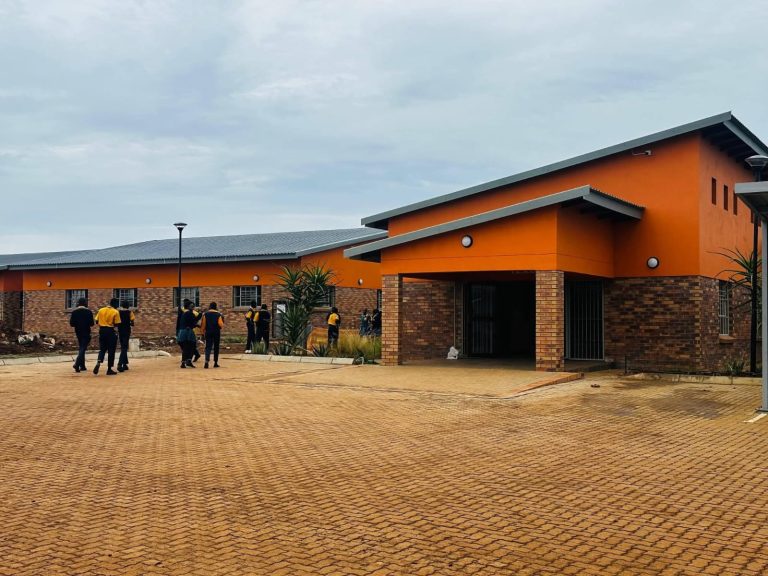
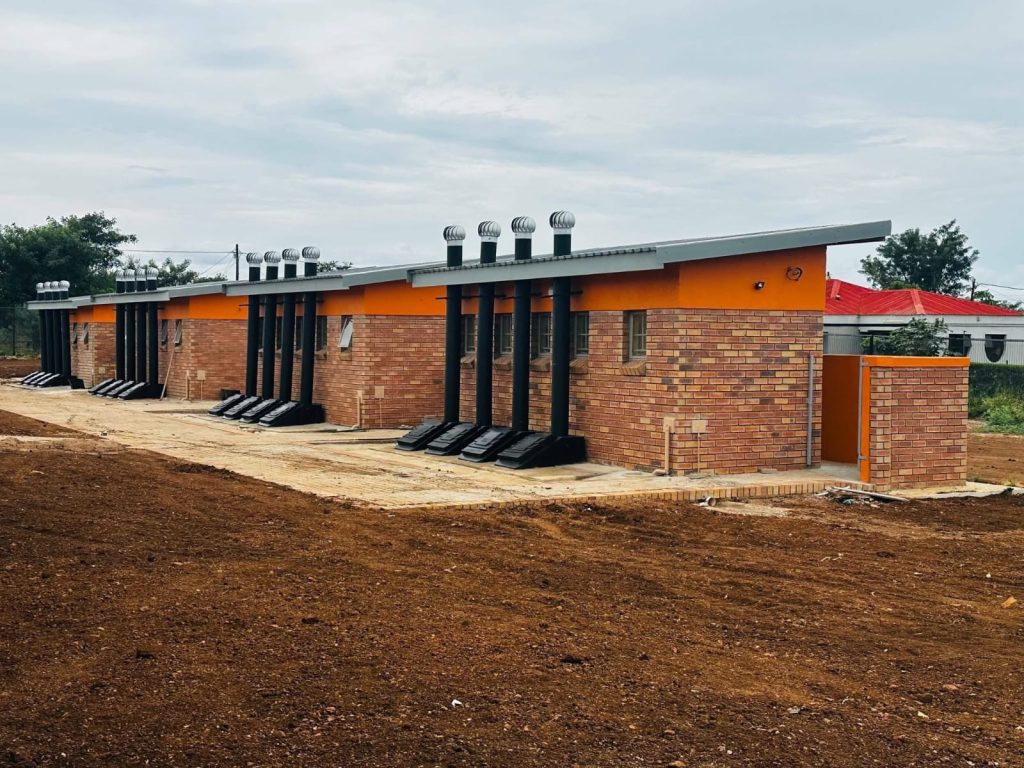
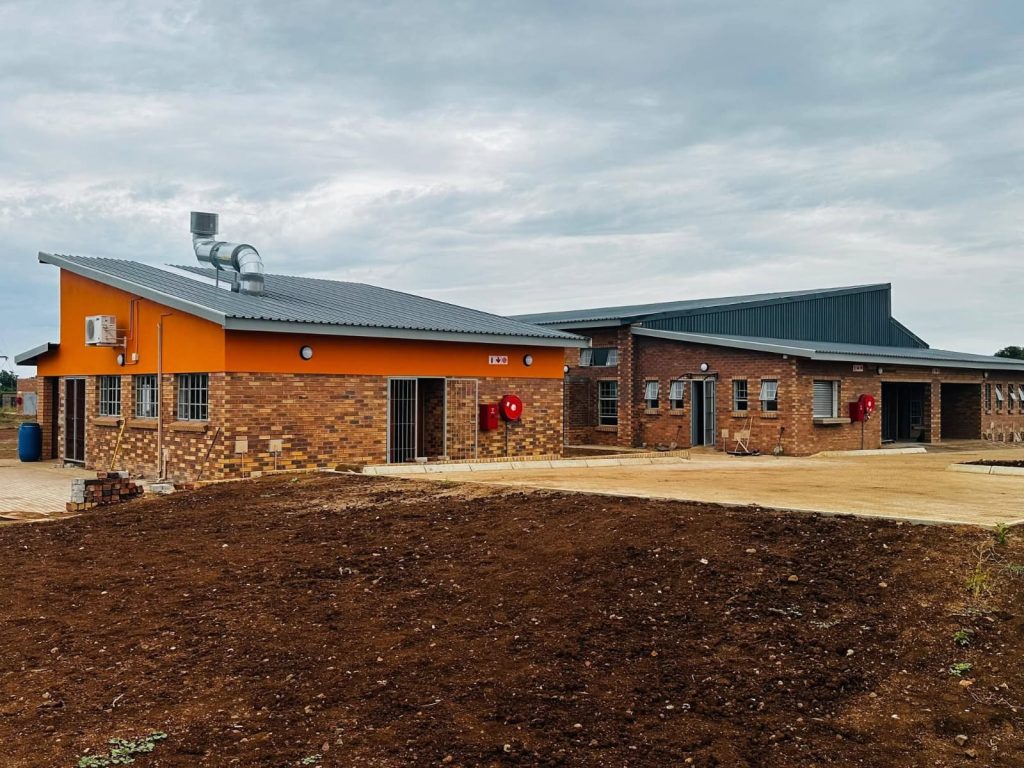
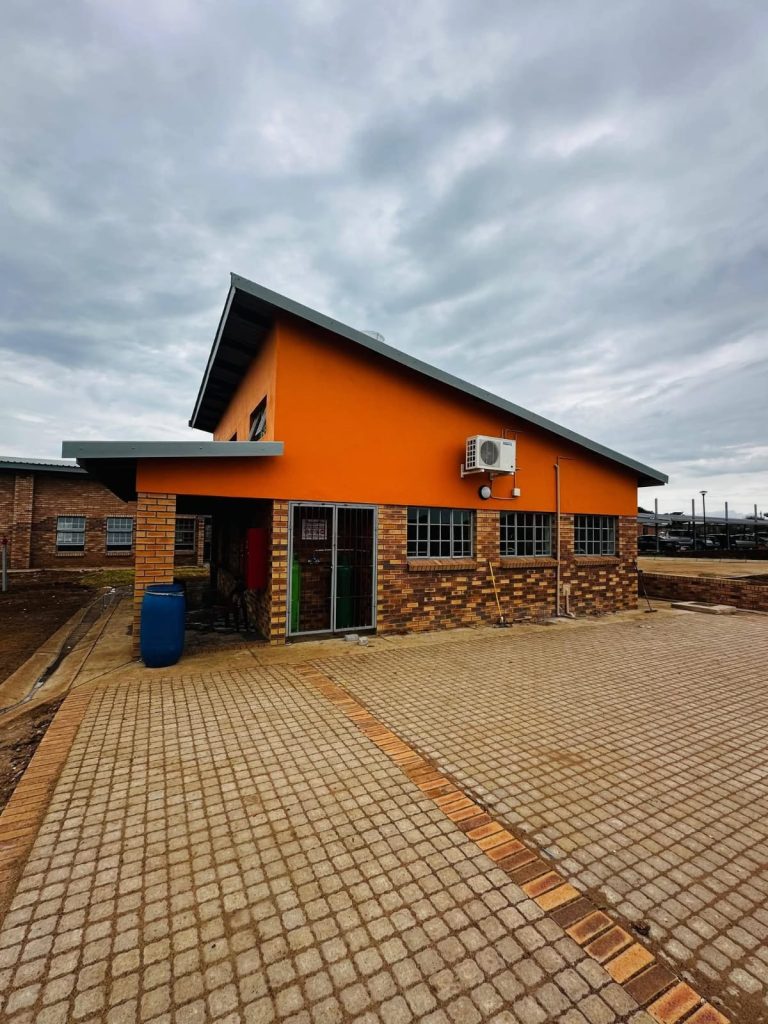
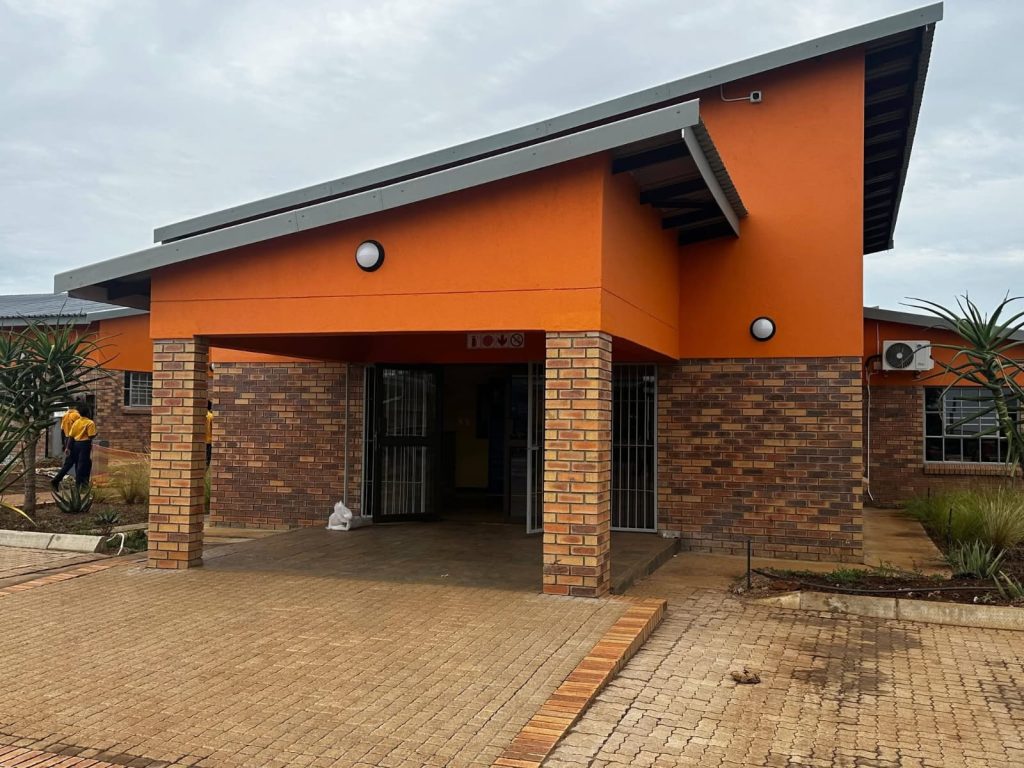
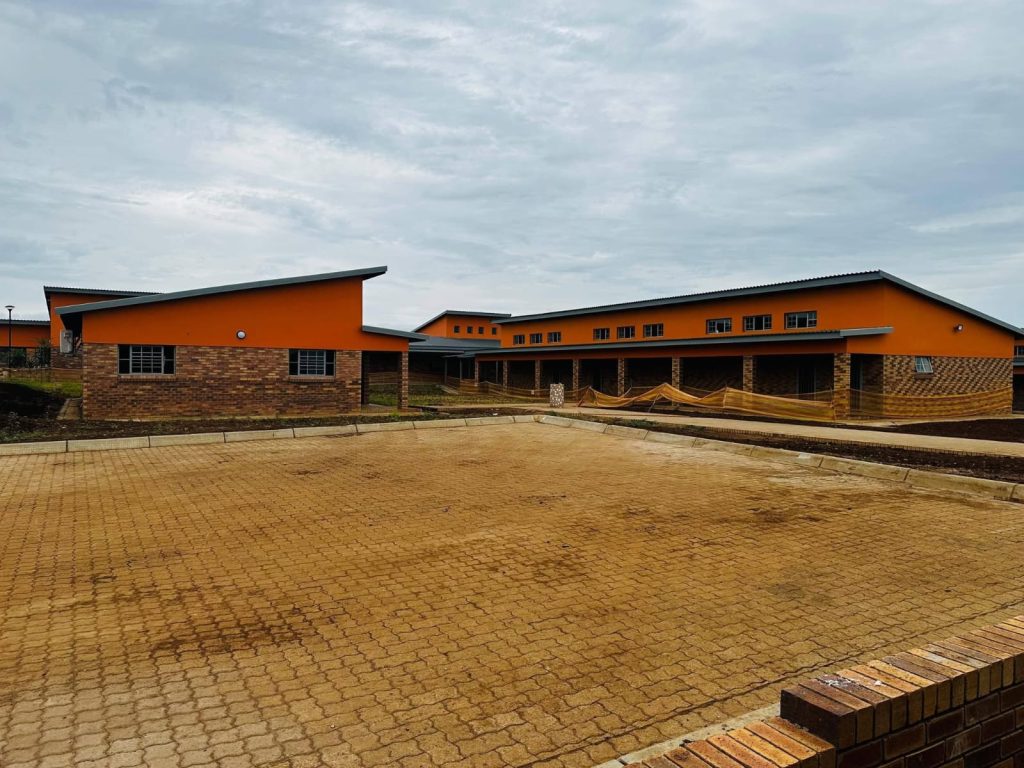
The Mpumalanga Department of Education has unveiled Silulu Secondary School in KaMaqhekeza, delivering a modern new campus aimed at improving access to quality education in the growing community.

The school includes 28 classrooms, an administration block, computer centre, science laboratory, library, multi-purpose hall, and sports facilities.

Silulu Secondary School in KaMaqhekeza

It also has a fully equipped kitchen, 22 enviro-loo sanitation units, reliable water and electricity supply, a guard house, security fencing, ramps and rails for accessibility, sheltered parking, and a paved assembly space for learners.

Mpumalanga MEC for Education Linda Masina said the establishment of the school was driven by the rapid growth of surrounding communities and rising demand for accessible education.

“Silulu Secondary School was established in response to the rapid growth of surrounding communities and the rising demand for accessible, quality education,” Masina said.

“What began as a vision has today become a confirmation of government’s commitment to the needs of the people.”

Masina said learners and educators had previously been temporarily accommodated at nearby Mjokwane Secondary School while the permanent facilities were under construction.

“During this time, the school community demonstrated resilience, patience and an unwavering commitment to learning,” she said.

“Despite the challenges they faced, learners and educators continued to believe that one day they would have a school they could call their own.”

She said the province had taken the decision to build a permanent facility so that learners could study in a safe and dignified environment.

“Today we are proud to say that teaching and learning can now take place in a fully equipped, state-of-the-art institution that has been officially declared ready for occupation,” Masina said.

Masina said the infrastructure was designed to create a safe and conducive learning environment.

“Education infrastructure is not just about buildings, it is about creating spaces where learners can grow, dream and reach their full potential,” she said.

The school also has three sports facilities — a tennis court, netball court and a soccer field, which is nearing completion.

It has been equipped with learner desks and chairs, educator tables and chairs, office furniture, cabinets and other essential equipment.

While the computer centre and library are already operational, additional learning resources will be provided during the next phase of development.

“Our goal is to ensure that learners in rural and developing communities have access to the same quality facilities as those in urban areas,” Masina said.

“This school symbolises restored dignity, stability and hope for the young people of KaMaqhekeza.”

She said the school would play a vital role in shaping the future of the community.

“Within these classrooms, the dreams of a new generation will be nurtured, and the future leaders of this country will be shaped.”

INSIDE EDUCATION

KZN education wins big with salary relief, Grade R, and infrastructure boost

0

Akani Nkuna

The KwaZulu-Natal education department will receive additional funding over the next three years to cover salary costs, support teacher assistants, and strengthen school infrastructure, MEC Francois Rodgers said on Tuesday while tabling the 2026/27 budget.

The amount allocated to education is R71.193 billion, accounting for 42.4% of the total R168.2 billion provincial budget.

ALSO READ: R5 million in prizes up for grabs in Gauteng innovation challenge

Rodgers said the department would receive R647.3 million in 2026/27, R676.5 million in 2027/28 and R697.6 million in 2028/29 “towards addressing the existing budget pressures in compensation of employees in the department, which were largely caused by significant historic budget cuts”.

Rodgers also announced additional funding for Grade R teachers as the province continues to bring their pay in line with the rest of the basic education system. The department will receive R29.8 million in 2026/27, R59.5 million in 2027/28 and R101.6 million in 2028/29 for “the progressive equalisation of the remuneration of Grade R teachers”.

“Grade R is now part of the compulsory phase of basic education and the teachers should be remunerated accordingly. These funds are therefore added to our budget to progressively increase these teachers’ salaries,” he said.

ALSO READ: Champions Sundowns storm into Gauteng Development League season

The budget also retains support for school-based employment through the Presidential Employment Stimulus.

Rodgers said the department would receive R70.1 million in 2026/27 for the Teacher Assistants Programme.

“These funds are aimed at providing work and livelihood opportunities, particularly for youth and women,” he said.

ALSO READ: KZN can’t approve retirement, exit applications

Rodgers said the Education Infrastructure grant would receive an incentive increase of R41.5 million in 2026/27 after the department met required milestones.

The phased merger of the Education Infrastructure grant and the School Infrastructure Backlogs grant would result in an aggregate increase of R505.3 million in 2026/27, he said.  

INSIDE EDUCATION

R5 million in prizes up for grabs in Gauteng innovation challenge

0

Staff Reporter

A R5 million national prize pool is being offered to help scale South African clean-tech ventures globally as the Technology Innovation Agency (TIA) and its partners launch the Gauteng instalment of the National CleanTech Innovation Challenge (NCIC) 2026, focused on smart mobility.

The challenge also includes a R1 million provincial prize that will be awarded to one winner in each of the nine provinces to support diffusion and piloting for regional economic development.

The national prize will go to the top challengers, with first prize set at R3 million and second prize at R2 million. In addition, 30 semi-finalists will receive advanced acceleration through a specialised UNIDO Global Cleantech Innovation Programme (GCIP)-aligned intervention across TIA’s regional Cleantech Hub network.

Organisers said a minimum of R5 million in direct blended funding would also be made available for real-world technology demonstrations and pilot programmes with corporate partners, supplemented by GCIP investment.

The TIA, in partnership with the NGIN, Start-Up Culture and Wits University’s Tshimologong Digital Innovation Precinct, said the Gauteng challenge invites South Africa-based innovators, entrepreneurs, SMMEs and university research teams to submit scalable clean-tech solutions aimed at transforming how Gauteng’s 15 million residents and the country’s freight move through the province.

Applications close on 21 April 2026.

Gauteng, South Africa’s economic heartland and busiest transport corridor, loses billions of rand each year to traffic congestion through lost productivity, increased fuel consumption and environmental degradation.

The NCIC 2026 Smart Mobility challenge supports the Gauteng provincial government’s Smart Mobility 2030 vision by seeking innovations that can move from pilot stage to real-world deployment.

The challenge covers electric and alternative-fuel vehicles, intelligent transport systems, last-mile delivery solutions, ride-sharing and multi-modal platforms, non-motorised transport, fleet management and logistics optimisation, transport data analytics, and commuter safety technologies.

“Gauteng’s transport challenges are immense, but so is the innovation potential in this province. NCIC 2026 is designed to find and accelerate the smart mobility solutions that can get Gauteng moving cleaner, faster, and more inclusively,” said Vusi Skosana, interim head of GCIP SA PMU.

NCIC is part of the Global Cleantech Innovation Programme, which is backed by the United Nations Industrial Development Organization (UNIDO) and the Global Environment Facility (GEF). Organisers said the GCIP pipeline has supported a number of South African ventures through structured acceleration and post-acceleration support since 2014.

Other support for successful applicants includes project funding to advance their smart mobility solution, incubation services with dedicated technical and business mentors, access to investors and industry partners in the mobility and transport sector, intellectual property specialist guidance, and a pathway to pilot and deploy solutions on Gauteng’s roads.

The Gauteng Smart Mobility challenge is one of nine provincial NCIC 2026 challenges, each focused on a specific regional clean-tech priority. Other provinces are tackling issues including waste-to-value, regenerative agriculture, clean energy, mining land rehabilitation and clean port logistics.

“Gauteng is a high-density testing ground for the future of sustainable urban mobility. Through NCIC 2026, we are surfacing world-class cleantech solutions. From EV infrastructure to intelligent data analytics that address the universal challenge of decarbonising rapid urbanisation,” said Mark Harris, CEO of Wits University’s Tshimologong Digital Innovation Precinct.

“This challenge gives mobility innovators a structured pathway to go from idea to impact and from pilot to pavement, while also positioning South African ingenuity as a vital contributor to the global green economy,” he said.

Applicants must be South Africa-based and have scalable smart mobility solutions aligned to Gauteng’s transport priorities. Applications must be submitted online at https://ncic-sa.org/gauteng/ by 21 April.

INSIDE EDUCATION

Ohio State University’s president resigns after reporting ‘inappropriate relationship’

0

Ohio State President Walter “Ted” Carter Jr. resigned on Monday after disclosing “an inappropriate relationship” with a woman seeking public resources for her private business.

Carter, 66, said in a statement that he had resigned voluntarily after informing the university’s board of trustees of his error. He did not elaborate on the nature of the relationship and said he was leaving with his wife, Lynda.

“For personal reasons, I have made the difficult decision to resign from my role as president of The Ohio State University,” he said. “I disclosed to the board of trustees that I made a mistake in allowing inappropriate access to Ohio State leadership.”

Ohio State is the nation’s sixth-largest university, with more than 60,000 students, over 600,000 living alumni and a highly ranked football team and medical center. Carter oversaw a fiscal year 2026 budget totaling $11.5 billion in revenues and $10.9 billion in expenditures.

The university brought Carter on board in 2023 from the University of Nebraska system. He is also a former superintendent of the U.S. Naval Academy and holds the national record for carrier-arrested landings with over 2,000 mishap-free touchdowns.

He filled a vacancy at Ohio State left by the mid-contract resignation of President Kristina Johnson, which went largely unexplained.

The engineer and former undersecretary of the U.S. Department of Energy had been chancellor of New York’s public university system before she joined the Buckeyes as president in 2020.

AP

Champions Sundowns storm into Gauteng Development League season

By Johnathan Paoli

The 2026 Gauteng Development League season got underway with a flurry of goals across the Under-19 division this weekend, with defending champions Mamelodi Sundowns opening their title defence in emphatic fashion.

Sundowns thrashed Rockevfs 5-0 in the standout result of the opening round, with Tebogo Moreri scoring a first-half hat-trick after Liano Snyders had opened the scoring inside the first 10 minutes. Kgaogelo Monanyane was also on target as the champions made an early statement.

Moreri grabbed his first in the 23rd minute before adding two more before the break, while Sundowns’ strong start underlined why they will again be among the teams to beat this season.

Kathorus Hyper Academy also began the new campaign with a win, edging Africa School of Excellence 4-3 in one of the weekend’s highest-scoring encounters.

Gift Muyambo opened the scoring, Sizwe Sidu added another, and Esethu Witvoet converted from the penalty spot as Kathorus held off a spirited fightback.

Remember Elite Sport Academy, runners-up in last weekend’s Top 8 final, also opened with a victory, beating Panorama 3-2 in a closely contested match. Bandile Sithole scored twice, Nceba Jozela added the other goal, and Brian Molefe supplied all three assists in a decisive contribution.

Elsewhere, Siwelele FC beat Jomo Cosmos 2-0, Randburg AFC overcame newly promoted Prestige Football Development Academy 2-1, and Joburg City FC secured a 3-1 win over the University of Pretoria. Wits Junior also claimed an impressive 1-0 victory over Highlands Park.

One of the most anticipated fixtures of the opening weekend, between Kaizer Chiefs and Seven’s Academy, was called off because of waterlogged fields at Chiefs Village in Naturena.

The new league season followed Kaizer Chiefs’ 1-0 win over RESA in the Under-19 Top 8 final the previous weekend, and the opening round suggested another fiercely competitive campaign lies ahead.

INSIDE EDUCATION

KZN can’t approve retirement, exit applications

0

By Lebone Rodah Mosima

The KwaZulu-Natal Department of Education said on Sunday it could not currently approve applications under the Incentivised Early Retirement Programme and Voluntary Exit Programme because it lacked the financial capacity to absorb related costs from its existing baseline budget.

The department said it acknowledged cabinet’s decision to introduce the Incentivised Early Retirement Programme without penalisation of pension benefits, as well as the Voluntary Exit Programme, for public service employees. The decision was approved at a special cabinet meeting on 10 April 2024.

ALSO READ: WorldSkills conference opens as government warns of skills gap threat

The Department of Public Service and Administration issued a formal determination in October 2025 setting out the framework and procedures for implementing the programmes across government departments. The determination provided for financial incentives to qualifying employees, with certain costs, including the waiving of pension penalties and incentive payments, funded by National Treasury.

However, other associated costs, including pro-rata service bonus payments, capped leave, unused annual leave and resettlement expenses where applicable, had to be funded from the baseline budgets of individual departments.

“Given the current fiscal constraints faced by the department, the KwaZulu-Natal Department of Education regrettably does not have the financial capacity at this stage to absorb the additional costs that must be funded from its existing baseline budget,” the department said.

It said approval of applications under the programmes was not automatic and that departments were required to assess applications against specific criteria, “including ensuring that service delivery is not negatively affected, that critical skills are not lost, and that the financial implications remain sustainable within departmental budgets”.

ALSO READ: Vodacom invests R2m in Daveyton special needs school

It said that while employees retained the right to apply, it was “presently unable to approve applications under the current phase, particularly in circumstances where the departure of employees may create service delivery gaps that cannot immediately be addressed”.

The department said its position did not oppose or undermine cabinet’s decision or the DPSA determination, but reflected “a responsible and transparent approach” to communicating its financial and operational realities while remaining aligned with national policy directives.

INSIDE EDUCATION