Home Blog Page 92

WSU residence manager nabbed after student shot dead

By Thapelo Molefe

A Walter Sisulu University (WSU) residence manager accused of fatally shooting a student on Tuesday has been arrested

Eastern Cape Police spokesperson Brigadier Nobuntu Gantana confirmed on Thursday that the 54-year-old man was arrested and faces charges of murder and attempted murder.

He is expected to appear in court on 22 April.

“While this arrest is a critical step, the investigation remains active,” Gantana said.

“No further details will be released to preserve the integrity of the case.”

Sisonke Mbolekwa’s death has triggered widespread outrage and protests across the campus.

On Thursday, tensions escalated into violent confrontations between students and private security personnel.

Videos circulated on social media showing guards entering the KTC residence and pulling students out of the building. In another video, security personnel were seen being pelted with stones by a group of students.

According to the Student Representative Council at least 20 students were hospitalised and several more injured.

The clashes came after the university issued an eviction notice to students, which the SRC has strongly opposed, citing unresolved grievances related to campus living conditions.

“There was a confrontation between students and the security company deployed by management,” SRC leader Themba Zikhali said.

“We are rejecting the eviction. We want justice for Sisonke and better conditions for all students.”

He also expressed concern over how the university leadership handled the situation.

“They must not run away from their issues. These residences are managed by them. They must come and account. They must come and manage their residences,” he said.

Zikhali added that the SRC and broader student body would not back down.

“We are not going anywhere until our demands are met. We want what we want. We are demanding our rights.”

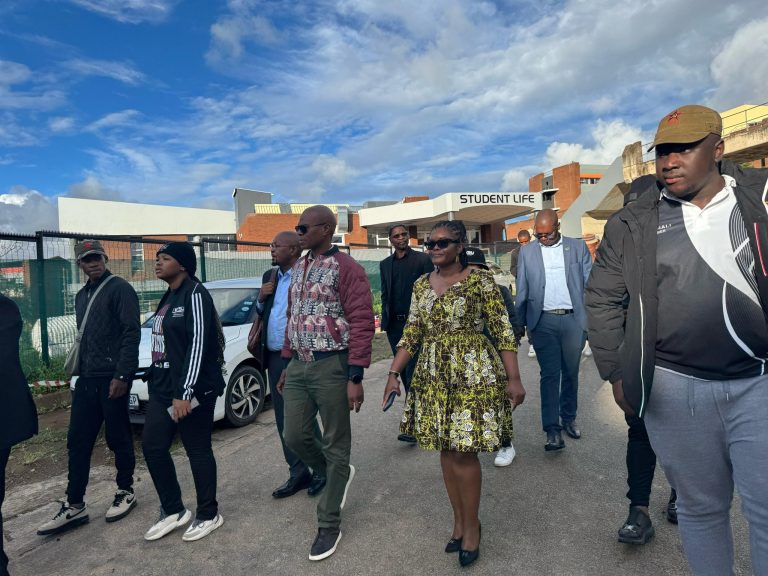
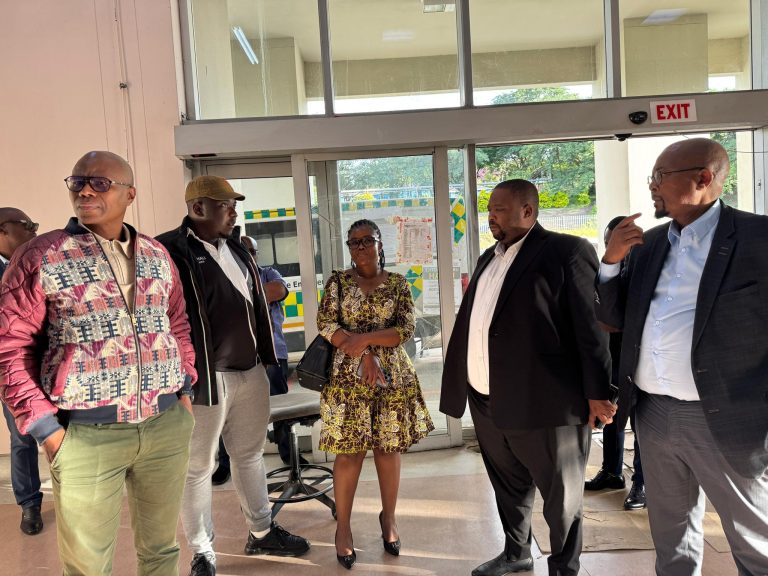
He also commented on the involvement of Higher Education Minister Nobuhle Nkabane, who visited the campus on Wednesday and met Mbolekwa’s family on Thursday.

While acknowledging the minister’s engagement, Zikhali said the university had misrepresented the situation.

“We told the minister everything. She said she is committed to addressing the issues, but the management has been lying to her claiming they are fixing things when they’re not,” he said.

The EFF Student Command condemned the university’s use of private security and raised alarm about human rights violations on campus.

“Security personnel are reportedly shooting and holding students hostage in their own rooms. There is a serious crisis unfolding at Walter Sisulu University. Students’ lives and safety are being threatened.”

All academic activities have been suspended at WSU’s Mthatha campus amid the unrest.

The minister travelled to Tsepisong village in Matatiele to convey condolences to the Mbolekwa family.

“I am heartbroken by this loss. No parent should have to bury their child under such circumstances,” she said.

The university’s council held an emergency meeting on Wednesday in response to the crisis.

In a statement, the council confirmed that the SRC had presented the students’ concerns, which included the poor state of some self-catering residences and a lack of basic appliances such as stoves, kettles and laundry equipment.

Council members also reviewed earlier complaints about alleged heavy-handed behaviour by the current security company during past protests.

As a result, the council resolved to end the existing security company’s contract which had already lapsed and confirmed that a newly appointed company would take over immediately.

“Council took several resolutions for immediate implementation by executive management,” the statement read.

INSIDE EDUCATION

South Africa ranks second in literacy in Africa

By Levy Mssiteng

The government has welcomed the country’s ranking as the second most literate nation in Africa, with an adult literacy rate of 95%. 

Acting government spokesperson Nomonde Mnukwa said the research measured literacy based on the percentage of South Africans aged 15 and above who could read and write.

“This remarkable achievement stands as a testament to the effectiveness of the government’s progressive education policies and programmes implemented since the advent of democracy in 1994.” 

She said the key factors contributing to this success included progressive education policies, teacher development and Early Childhood Development (ECD). 

“These initiatives are underpinned by strategies focused on teacher development, access to quality learning materials and cultivating a culture of reading from an early age,” Mnukwa said.

“In the 7th administration, government continues to prioritise literacy development in the foundational years of education.” 

The government expressed its appreciation for the hard work of previous education ministers, including Angie Motshekga, and wished the current Basic Education Minister Siviwe Gwarube, success in continuing to improve foundational education and expand the teaching of indigenous languages.

“Government takes pride in this achievement and is committed to addressing remaining gaps and accelerating efforts toward achieving universal literacy.” 

According to the latest findings from Intelpoint, Seychelles tops the list at 95.9%, and Sao Tome and Principe are third at 94.8%.

INSIDE EDUCATION

Nkabane confirms slain WSU victim was a student, demands action

By Thapelo Molefe

Higher Education and Training Minister Nobuhle Nkabane has confirmed that the student who was shot dead at Walter Sisulu University on Tuesday is a registered student, which directly contradicts the university’s earlier press statement.

“According to our NSFAS (National Student Financial Aid Scheme) record that I have here with me, the last payment of disbursement of funds to the university and to the students was at the end of last year. So, I can affirm today that indeed he was a student,” Nkabane said during a visit to the institution’s Mthatha campus on Wednesday.

Her confirmation comes after WSU issued a statement on Tuesday claiming that the deceased, who was killed during protests by students over living conditions at the university, was not registered.

The claim sparked outrage among the student body, which insisted the young man was actively attending classes and participating in campus life.

Nkabane said the error stemmed from a failure to verify the information provided by university management.

“Yes, I saw the university statement, but after we issued our own statement as the department. When I saw this trending on the news, I called Prof. Songca (the WSU Vice-Chancellor) to urgently brief me. She told me the student was not registered,” said Nkabane.

“The unfortunate part is that as the department, we issued a statement without doing due diligence or a quality check. But in the evening, after noticing contradicting views around the matter, I tasked the director-general to verify, and we confirmed he was indeed registered.”

Nkabane said she was “broken” by the incident and would be visiting the family of the student in Matatiele. 

“I can’t even speak. I don’t know how I’m going to face the family,” she said. “As a mother, I’m broken, to be honest.”

The minister’s visit comes amid growing criticism of campus safety and the university’s handling of the situation. 

The Student Representative Council has also demanded the immediate removal of KaMyaluza Security, which it accuses of multiple past incidents of violence, including firing at students and physically assaulting female students.

The residence manager, who allegedly shot Sisonke Mbolekwa, is now missing. Police confirmed that his phone is off.

Nkabane condemned what she described as a “new emergency in our institutions of weaponising and militarisation”. She said she would invoke Section 42 of the Higher Education Act to formally notify the university council to investigate the matter.

“We are not going to leave any stone unturned in ensuring that the case is attended to,” she said. “There will be consequence management.” 

The incident has also reignited scrutiny of WSU’s long-standing issues with violence, particularly in the context of student protests. 

In May 2023, the SA Human Rights Commission held an inquiry into the university, investigating claims of targeted violence against protesting students. The final report is yet to be released.

In addition to safety concerns, students have also raised issues about basic services, including poor water supply and inadequate accommodation.

Nkabane said she had discussed the matter with the campus president and promised an oversight visit to assess conditions and enforce compliance with national standards.

As the investigation into the fatal shooting continues, students and civil society groups are calling for swift justice and meaningful reforms to ensure such incidents are not repeated.

INSIDE EDUCATION

Gang violence disrupts learning at Orange Farm schools

By Lungile Ntimba

Gauteng education MEC Matome Chiloane has condemned the recent incidents of gang-related violence that have affected Thetha Secondary School and Vulanindlela Secondary School, in Orange Farm.

“We call on all parents, guardians and community members to work with the Department to instil discipline and support efforts to protect the future of our learners. Our learners deserve an environment free from fear and violence,” Chiloane said in a statement on Wednesday.

This comes after a Grade 11 learner from Vulanindlela Secondary School was stabbed and rushed to the clinic on Wednesday morning, after an altercation with other learners.

A Grade 10 perpetrator was apprehended by school patrollers and is currently in police custody. 

In a separate incident at Thetha Secondary School, a series of events was triggered by a stabbing incident in the community on Friday, involving a learner and a known gang member.

The department said this appeared to be an act of retaliation, with gang members targeting the same learner at the school premises on Monday morning.

“No fatalities of school learners who may have been involved in both incidents were reported,” said the MEC.

“However, the department is working closely with law enforcement agencies to verify all reported incidents and suspects to ensure the safety of all learners and educators.” 

Schooling has been disrupted in the area due to the heightened tensions and ongoing safety concerns.

Chilone said the department and the SA Police Service have taken steps to stabilise the situation by increasing police visibility.

Employee wellness and psychosocial support teams have been deployed to provide necessary support to learners and educators affected by these incidents.

The MEC also said that the governing bodies of both schools would suspend and initiate disciplinary processes against identified learners.

Pupils have been encouraged to return to class as police have committed to patrolling their schools.

“Indeed, we unequivocally condemn all acts of violence and gang-related activity on and around school premises. We are committed to ensuring that our schools remain safe spaces for learning and development,” Chiloane said.

“Any learner found to be involved in gang-related violence will be suspended with immediate effect and subjected to formal disciplinary proceedings.”

INSIDE EDUCATION

KZN releases flood management directions for schools

By Alicia Mmashakana

The KwaZulu-Natal education department has issued guidelines for the management of schools during storms or flooding.

In the last week, the province has experienced continuous rain, which has led to localized flooding.

While there are currently no formal reports of damage to schools, the department has advised teachers and staff to exercise caution, especially as the rain is expected to let up anytime soon.

“It is imperative that schools and offices must adhere to specific guidelines in the event of extreme rainfall, wind or any other natural disaster which may threaten the lives of learners, teachers, and officials,” KZN education HOD Nkosinathi Ngcobo said on Wednesday.

“It is significant to note that any damage to road infrastructure may render learners and educators unable to make their way to schools. This includes delivery of food items necessary for the feeding of learners.”

According to Ngcobo, principals were responsible for developing curriculum catch-up plans and ensuring that learners were always engaged, whether at home or at school.

The following guidelines were issued for principals, circuit managers and all other responsibility managers:

  • School principals must always communicate with parents of learners to ensure that they take extra caution before sending their children to school in the morning.
  • Should the situation be completely unfavourable, the principal is responsible for advising parents to keep their children at home.
  • If learners are already at school, principals must observe the severity of the rainfall and decide either to keep them in school for their safety or immediately release them before the situation worsens. 
  • Any damage to school infrastructure or roads leading to the school, which affects learners and educators, must be reported immediately to the education department. 
  • Other responsibility managers must also advise staff members on the possible

safety precautions based on updated weather reports

According to the KwaZulu-Natal economic development, tourism and environmental affairs department, the eThekwini metro has been hit the hardest in terms of household destruction and people affected.

The SA Weather Service issued a level five warning for KwaZulu-Natal on Wednesday.

“The department cannot afford to lose any lives due to flooding of bridges and destruction of offices or classrooms,” Ngcobo said.

INSIDE EDUCATION

Sadtu to stage mass protest over austerity measure

By Akani Nkuna

Teachers’ union Sadtu will embark on national protest to the Treasury, and departments of Basic Education and Higher Education and Training in Pretoria this week against budget cuts.

“This mass action is in protest against the austerity measures that are undermining public service delivery – particularly in education – and threatening the constitutional right to equality in education, especially for children from poor and working class backgrounds,” Sadtu general secretary, Mugwena Maluleke said in statement on Wednesday.

Wednesday’s march aligns with the global call by Education International under the theme “Go Public! Fund Education”.

The union aims to spotlight the severe impact budget cuts are having on South Africa’s education system, affecting teachers, learners and communities.

Mugwena said overcrowding in schools was growing and thousands of posts had been left vacant.

He said the Western Cape had frozen over 2000 posts, while other provinces have failed to expand staffing to match increasing enrolment numbers.

“… schools do not receive their funding for norms and standards timeously, forcing principals to cover basic operational costs from their own pockets. Educators and learners are also facing growing safety concerns, with violence in schools on the rise,” Mugwena added.

“Yet little is being done to strengthen security or to provide adequate psychological support. The lack of investment in teacher wellbeing continues to strain and already overstretched workforce.”

A recent Satu survey reveals the harsh impact of budget cuts on education, including overcrowded classrooms, poor infrastructure and shortage of staff. Grade R practitioners face exploitative wages, while scholar transport payments lag.

The union blames these issues on the harmful neoliberal policies that it says must end.

INSIDE EDUCATION

WSU and students disagree on identity of dead man

By Thapelo Molefe

Walter Sisulu University (WSU) has sparked fury among its student body after claiming that the person killed in a shooting on its Mthatha campus is not a registered student — a statement that student leaders have condemned as an attempt to erase the victim’s identity and deflect accountability.

The university released a statement saying that protests had erupted “without prior notice” and escalated into a violent home invasion at a staff residence on campus on Tuesday. 

During the incident, WSU said two students were injured and later discharged from hospital, while one individual was fatally shot.

The university said the individual who died was “not a registered student nor a staff member”, a declaration that student leadership have slammed as a “disrespectful and dishonest” attempt to distance the institution from taking account.

Both the Institutional Student Representative Council (ISRC) and the Mthatha campus SRC have rejected that version of events, identifying the deceased as Sisonke Mbolekwa, a student and activist on campus. 

They accuse the university of using deregistration tactics to strip the slain student of his dignity and to protect the alleged perpetrator, who is a residence manager.

“The university’s attempt to dehumanise Sisonke by denying his student status is not only inhumane but a direct assault on the student body,” said the Mthatha Campus SRC in a strongly worded statement. 

“He was one of us. A brother. A comrade. A student.”

According to the ISRC, four students were shot, not two, in the early hours of Tuesday morning while protesting against poor residence conditions and alleged misconduct by the residence manager. 

The students say that university officials had long been warned about the manager’s “mafia tendencies” and dismissive attitude toward student welfare.

“This was not an isolated incident,” the ISRC declared. “We raised concerns repeatedly about (the residence manager), but they were ignored. Now a student is dead.”

The university’s statement focused on the violence of the incident, noting that the residence manager’s wife was seriously injured during the confrontation and had to be hospitalised while the staff member and children were rescued by police. 

WSU also condemned the unrest and urged students to use “established internal channels” for resolving grievances.

“We urge the university community to rely only on official statements,” said WSU spokesperson Yonela Tukwayo.

But student leaders argue that peaceful efforts have failed, and that systemic issues with security, residence management and university responsiveness have pushed them to the brink. 

They also demanded the immediate removal of KaMyaluza Security, a company they accuse of multiple past incidents of violence, including firing at students and physically assaulting female students.

“This is the third confrontation with KaMyaluza, and in every case, they have instigated violence. Yet the university remains silent,” the ISRC stated. 

“We call for their immediate removal from campus.”

In honour of the deceased, students gathered on Tuesday night for a candlelight vigil outside the administration block, all dressed in black. 

Meanwhile, the Mthatha Campus SRC has declared a complete shutdown of the campus and the town until their demands are met and justice is served.

“We will not be silenced. This is not just about Sisonke — it is about the soul of this university,” read the SRC’s rallying call. 

“No lectures, no administration, no compromise. We want justice.”

WSU said investigations were underway and urged the community to await verified information from official sources. 

However, trust between students and management appears to be at a breaking point.

Higher Education and Training Minister Nobuhle Nkabane has confirmed that she urgently engaged WSU Vice-Chancellor Prof. Rushiella Nolundi Songca for a full briefing and has requested a comprehensive report on the incident.

The minister also announced plans to visit the university in the coming days to meet with stakeholders and ensure that appropriate measures are taken to protect the academic community. 

“No student should ever be harmed while accessing their right to education,” Nkabane stated. 

“This must be the last time we are forced to respond to such a tragedy at our institutions.”

As tensions rise and protests intensify, the university faces mounting pressure to account for its actions and inactions in the events leading up to the fatal shooting and how it has responded to a grieving and outraged student body.

INSIDE EDUCATION

Further protests threatened after student shot dead at WSU

By Lungile Ntimba 

The Economic Freedom Fighters is going to mobilise students across campuses following a fatal shooting at the Walter Sisulu University’s Mthatha campus on Tuesday.

A student was shot dead and two others injured during a protest over residence-related issues, including maintenance. It is alleged that a residence manager used live ammunition to disperse the students.

Police say the administrator was attacked at his house by protesting students.

“The EFF will be mobilising together with the Youth Command structures across all campuses to ensure that justice is not only demanded, but delivered,” the EFF in the Eastern Cape said in a statement.

“Should our calls be ignored, the EFF will not hesitate to engage in further action in defence of our students and the right to safe, fair and humane learning environments.”

It has been a rocky start to the academic year, with students protesting at higher education institutions across the country over various issues.

Political parties have condemned the latest incident and called calm at the university.

DA MPL Yusuf Cassim said the incident should not be viewed in isolation, but rather as the most recent outcome in long-standing pattern of instability, poor oversight and unchecked escalation at the institution.

“This tragic shooting comes less than a month after the university shut down all campuses due to violent protests and raises serious questions about what steps, if any, were taken in the interim to address the causes of unrest and restore safety,” he said in a statement.

“In March, those protests escalated into violent actions, including the intimidation of non-striking students, the forced evacuation of staff and security personnel, vandalism of university property and the suspension of academic operations across campuses.”

Operations at the campus have been suspended.

“Clearly, there is a breakdown in communication, and university management appears incapable of managing the situation,” Cassim said.

The DA and the GOOD Party want a full investigation into the shooting.

“I will call on the premier to immediately deploy an interdisciplinary team to the campus, including SAPS, community safety, Social Development and other role players to stabilise the situation and support students on the ground,” Cassim added.

Student Representative Council (SRC) president Themba Zikhali has demanded that the university addresses grievances and justice for the dead student.

He said students have been protesting since the beginning of this academic year about the issue regarding residences, residence appliances, the visitors’ policy, water, curtains and WI-FI.

The GOOD Party said that tensions have been escalating at universities in recent years, and it was deeply alarming that pursuing education had come at a cost.

“The university experience should be one of intellectual growth, cultural exchange and empowerment – not fear and trauma,” it said in a statement.

“Instead, the south African reality for many students is marred by financial exclusion, accommodation crises and administrative inefficiency. These issues must not be normalised.”

Cassim has urged provincial leaders to get in contact with Higher Education and training Minister Nobuhle Nkabane to facilitate a coordinated response. 

This should include ensuring that the university’s management is held accountable and that systemic issues are addressed at the highest level, he said.

Higher Education and Training Minister Nobuhle Nkabane has engaged with the university’s Vice-Chancellor, Prof. Rushiella Nolundi Songca, to get a full briefing and offer the department’s support.

The minister has also requested that the university furnishes her with a comprehensive report on the incident as a matter of urgency.

She will visit the university in the coming days to engage with stakeholders, assess the situation on the ground and ensure that appropriate measures are taken to protect the university community.

“Dr Nkabane is resolute that no student should ever be harmed while accessing their right to education. This must be the last time we are forced to respond to such a tragedy at our institutions of higher learning,” her department said.

INSIDE EDUCATION

Visitors get closer to the science that has defined the Sterkfontein Caves

By Alicia Mmashakana

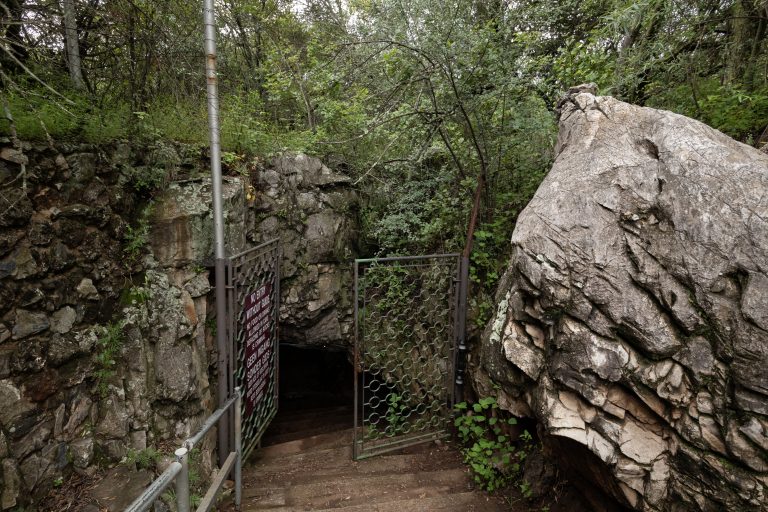
The University of the Witwatersrand is making science more accessible to the public with the reopening of one of the world’s most important palaeontological areas, the Wits Sterkfontein Caves, under a new management structure.

“This reopening represents a significant evolution in how we share the story of human origins. Visitors now have unique opportunities to engage with active live science and research, all happening in real time,” Wits Faculty of Science Dean, Prof. Nithaya Chetty said on Tuesday.

Located within the Cradle of Humankind Unesco World Heritage Site near Johannesburg, the caves have yielded some of the most important hominin fossil discoveries including the iconic “Mrs Ples” (1947) and “Little Foot” (1997) in addition to the hundreds of other fossils of human relatives.

These discoveries have been crucial to informing the global understanding of human evolution and the origins of humanity.

Under the new management structure, Dr Job Kibii will serve as the head of the Wits Sterkfontein Caves, overseeing daily operations and visitor experiences. Prof. Dominic Stratford will continue to lead research activities as the research permit holder.

The university said in a statement that while previously serving primarily as a tourist destination and attracting thousands of international and local visitors, the reimagined Wits Sterkfontein Caves would offer a more immersive research and educational experience. This would bring visitors closer to the science that has defined the site for nearly 100 years.

Visitors will have direct interactions with scientists and students conducting research, behind-the-scenes access to fossil preparation laboratories and guided tours of the caves with enhanced scientific context.

There will also be education programmes focusing on human evolution and paleoanthropology, as well as other scientific disciplines in Earth Sciences, such as Climate Science and Geosciences, and exhibits showcasing the latest discoveries and research findings.

Inside the Wits Sterkfontein Caves Museum. Photo By: Brett Eloff.

Wits Vice-Chancellor Prof. Zeblon Vilakazi said: “The reopening of the Wits Sterkfontein Caves represents an exciting opportunity to bridge the gap between cutting-edge research and the public’s understanding of science. By making science more accessible, we hope to inspire the next generation of researchers while helping everyone connect more deeply with our shared human story.”

The university said the reopening was consistent with its commitment to excellence in research and education, building on the legacy of renowned Wits paleoanthropologists such as the late Prof. Phillip Tobias and Prof. Ronald Clarke, whose work at the caves fundamentally advanced the understanding of human origins.

INSIDE EDUCATION

Learners benefit from Telkom ICT programme

By Johannah Malogadihlare

A total of 362 learners recently graduated from the Telkom Foundation’s information and communications technology learnership programme, bringing the total number of certified learners to 1077 in Mpumalanga and the Free State.

The foundation has partnered with Afrika Kids Code to drive digital skills education among young people.

“We believe that technology is a great equaliser. This is all about giving every South African child a fighting chance to compete, create, and contribute to a better future,” said the head of the Telkom Foundation, Judy Vilakazi.

Learners from Qhubulwazi and Methula high schools in Mpumalanga, as well as Tiisetsang and Kgolathuto high schools in the Free State were equipped with a wide range of coding and robotics skills.

“It has been humbling to watch these students grow, not just academically but personally too. They enter the programme shy and uncertain, but they leave confident, curious and innovative,” said Afrika Kids Code founder Mangaliso Mokoape.

Mpho Majola from Tiisetsang High School said: “Technology skills will be the key to success in the Fourth Industrial Revolution. I now have a head start in life. The sky is the limit.”

The programme is certified by IBM and IC3. It offers certain areas of specialisation including technical support, systems development and business analysis.

Each participant completed four months training that was followed by work placement at host employers for experiential learning.

“What a touching experience this was watching learners being exposed to the world of technology; a world they otherwise would never have seen. The programme helped them improve academically as well,” Vilakazi said in a statement.

The programme also offered entrepreneurship development, financial literacy, design thinking, 4IR awareness, personal branding and work readiness.

The ICT learnership is an accredited programme by the Media, Information and Communication Technologies Sector Education and Training Authority.

INSIDE EDUCATION