Home Blog Page 94

Minister must deal with broken promises by NSFAS

By Edwin Naidu

How long should the National Student Financial Aid Scheme (NSFAS) be given to get its act together?

On Freedom Day, the Minister of Higher Education and Training, Dr Nobuhle Nkabane, had to accept another apology from the troubled student funding scheme over delayed payment of Technical Vocational Education Training (TVET) student allowances originally scheduled for 25 April.

Due to a system glitch related to the size of the batch files, these payments were processed on Saturday, 26 April, and have been reflected in all student accounts as of 27 April.

NSFAS is actively collaborating with its financial services institution to resolve this issue and prevent any recurrence in the upcoming months.

Around 800 students at a specific institution experienced challenges transferring funds, which the scheme committed to fixing this by Wednesday.

Promises! Promises! While that was the title of a 1983 song by British pop band Naked Eye, referring to a relationship, this is also a relationship that is not working for the country and requires desperate intervention.

The song goes:

“You made me promises, promises
Knowing I’d believe
Promises, promises
You knew you’d never keep.”

The love affair between NSFAS, the tertiary sector and the students it is meant to serve, is sorely tested despite an inexperienced new board and a wet-behind-the-ears interim CEO who, despite his excellent qualifications, seems to have no experience or clue, let alone standing, in the higher education sector.

Waseem Carrim, the former CFO and CEO of the National Youth Development Agency (NYDA), was appointed acting CEO on 5 March, firmly committed to tackling the crisis. More than a month later, it is not a great start.

NSFAS cannot seem to function without falling into dysfunction. While some problems predate the new brooms in charge, NSFAS has outstanding amounts from 2024 owed to students and accommodation providers.

The scheme is currently working on communication to outline the way forward regarding the outstanding amounts of 2024, which will be released by the end of April.

What is needed is people who can do their job and process payments efficiently, not communication, which was the style of Nkabane’s predecessor, Professor Blade Nzimande, who seemed to believe public relations would erase the corruption and the scandals prevalent at NSFAS and indeed many Sector Education Training Authorities under his watch.

Nkabane needs time to fix the mess Nzimande left. It is a monumental task, especially considering the shenanigans at some of the Setas. That’s for another day.

Concerning NSFAS, Nkabane ought to invest in a review of the state of higher education in South Africa to understand the funding crisis, the curriculum transformation, the success and failure rate, and most importantly, whether the country is getting bang for its buck regarding its investment in the sector.

Of course, the suggestion of a review is old news, made more than a year ago, but Nzimande did not listen to anybody because he thought he had all the answers.

The results of many failures in higher education are glaring.

Professor Jairam Reddy, one of the architects behind the founding vision of tertiary education in the post-apartheid era, called for a review of the state of higher education.

Having chaired the National Commission on Higher Education (NCHE) in 1995 during the tenure of the country’s first democratic minister of education, Professor Sibusiso Bengu, Reddy said that the time was ripe for a new commission.

This commission should swiftly review the state of higher education and propose urgent changes. Unlike the NCHE, which he chaired for 18 months, Reddy suggested this should be a shorter exercise – perhaps six months – and involve about five experts on higher education, including one international expert.

The NCHE report’s proposals were used to draft the post-apartheid White Paper on Higher Education, which provided the policy outline for the Higher Education Act. A new review would certainly guide the needs of the future.

Reddy, a former council chair at the Durban University of Technology, also called on the department to review the standard institutional statutes regarding university councils and leadership suitability, given the changes in the higher education environment during the past 15 years.

He said the DHET task force, of which he was a member, examined the university councils and made recommendations, among them reducing the number of council members from 30 to 24 or 20 for each university and reducing ministerial nominees from five to three.

Of course, if you want to flood these councils with cronies, you would ignore such a suggestion. New brooms sweep clean, and Nkabane is committed to ensuring that higher education serves all people, not just hers.

Reddy’s call for a review of the tertiary system is premised on identifying the strengths and weaknesses of higher education and critically evaluating the effectiveness of certain institutional mergers that were initiated by the late Professor Kader Asmal, the minister of education, and were implemented by him and his successor, Naledi Pandor. The mergers took place in 2004 and 2005.

The funding of the higher education system needs to be looked at again, too—is it adequate and equitable, and what is the efficacy of the NSFAS, the government’s bursary scheme for students who have been struggling to overcome a myriad of problems?

Reddy said the NCHE in 1995 recommended a well-thought-out funding model for students in tertiary education in which students who could afford university fees were not to be funded; a second category, which comprised most of the incoming black students, previously denied university education and mostly from poor backgrounds, were to be given bursaries; a third category in the middle who could afford partial fees were to be given loans to be repaid on graduation and entering the world of work.

He told me this model worked well for a few years despite the very low loan repayment rate. However, this model was turned on its head during Jacob Zuma’s presidency and the #FeesMustFall campaign. Most students are expected to be fully funded, which is simply unaffordable despite a considerable increase in NSFAS funding.

Reddy, a former vice-chancellor of the University of Durban-Westville (which merged with the University of Natal to become the University of KwaZulu-Natal), said the funds were initially transferred to universities and dispersed according to their student requirements.

Then, at some point, the dispersing of NSFAS funds was centralised. He said this has led to ongoing problems, including the current issues related to the fund.

In his view, if the funding is outsourced to individual universities, they are better positioned to disperse the funds. In some cases, universities will need assistance, which can be easily provided.

“The whole model of NSFAS funding, as currently administered, needs to be revisited,” he said.

Nobody listened.

The ongoing troubles at NSFAS indicate a need to consider what the education and civil society experts propose as a reasonable way forward, per Reddy’s suggestion. Otherwise, Nkabane will constantly entertain excuses from the sorry NSFAS without finding a way forward that benefits South Africa.

Access to education is not just a privilege; it is a fundamental right that facilitates personal and national growth,” the minister said on Monday.

“This statement is meant to address two critical matters that are at the heart of my commitment to supporting our students in their pursuit of educational excellence: the timely disbursement of TVET allowances and the NSFAS appeals process are paramount towards a streamlined and transparent funding process that ensures that no student is left behind.”

Promises! Promises! The minister should act on NSFAS’s broken promises, given her noble intentions. A fresh review could provide better solutions than being hostage to the ongoing NSFAS ineptitude.

Edwin Naidu is the Editor of Inside Education.

INSIDE EDUCATION
Riverlea school appeals for help after 230 learners affected by fire

By Amy Musgrave

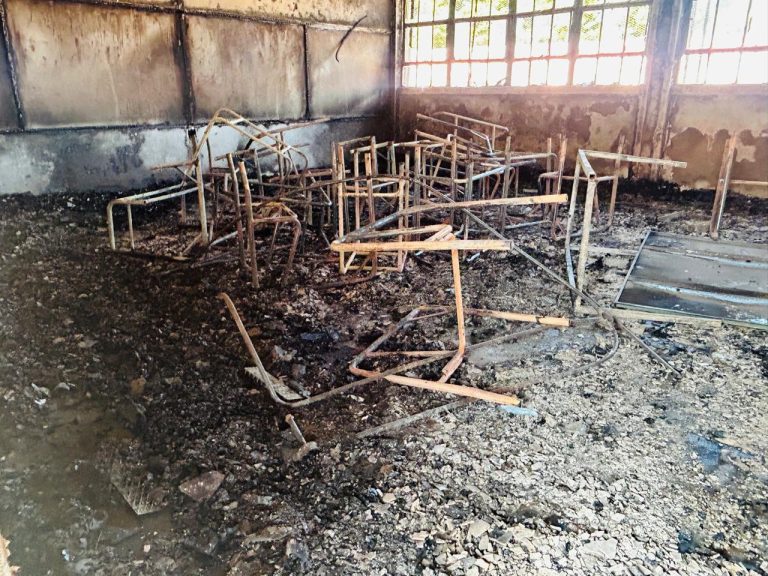
The Gauteng education department is urgently working on a plan to ensure that schooling is not disrupted at Riverlea High School, south of Johannesburg, following a blaze that gutted 11 classrooms and furniture on Sunday night.

The department said on Monday that according to preliminary reports, the fire started in an unused classroom and rapidly spread, destroying a block of 11 classrooms and all the boys’ toilets.

It said four of the classrooms were currently being used by Grade 8 learners and the remainder were unoccupied.

Schooling resumes next week on Monday.

“A temporary plan has been put in place to use the school hall for affected learners while arrangements are being finalised for the delivery of four mobile classrooms, fully furnished, to replace the lost classrooms,” the department said in a statement.

“Approximately 230 learners are directly impacted by the aftermath of this fire, and every effort is being made to normalise the situation swiftly.”

The rest of the school’s infrastructure remained intact and operations for other grades would continue without significant challenges.

Education MEC Matome Chiloane has warned that those responsible for the blaze would be dealt with.

“We condemn this senseless act of destruction in the strongest possible terms. An attack on a school is an attack on the future of our country and acts of this nature must be treated with the utmost seriousness,” said Chiloane.

He appealed to anyone information to come forward and assist the police with their investigations.

Meanwhile, the school’s governing body told Newzroom Afrika that security was an issue, with guards and wardens only in place from Mondays to Fridays.

It said it had reached out to the department on numerous occasions to assist the school with security and upgrading facilities.

The SGB welcomed the mobile classrooms, but said it was not enough. It appealed for the entire school to be rebuilt as infrastructure was in desperate need of an upgrade.

No one was hurt in the blaze.

INSIDE EDUCATION

Sexual predators at school: why South African law is failing to protect children from teachers

0

By Cecile de Villiers

Schools should be a safe environment, a place of learning where children can develop their potential. In South Africa, many public schools aren’t like this. Instead, they are hothouses for teachers’ poor performance, financial mismanagement, assault and sexual misconduct.

When cases of misconduct in schools emerge, they tend to follow the same pattern: public outcry, media involvement and political promises.

What often follows is inaction. Teachers are not always held accountable.

One reason is a fragmented legislative framework applicable to teachers. This can be explained using sexual misconduct as an example.

As a labour law researcher, I analysed legislation, statistics and 137 arbitration awards involving teachers, and found that fragmentation in legislation results in a lack of co-ordination between key role players on two levels. First, in preventing sexual misconduct by teachers at schools, and second, in addressing it once it has occurred.

The lack of co-ordinated legal obligations means that it’s left to a few diligent role players in the education system to ensure prospective teachers are suitable to work with children, and to pursue discipline in the case of sexual misconduct.

Key role players

The South African Council for Educators is the professional body in education responsible for maintaining ethical and professional standards. All teachers in South Africa must be registered with the council.

Their continued registration depends on their conduct. Anyone is allowed to lodge a complaint against a teacher. If a teacher seriously breaches the code of professional ethics, their name can be removed from the register. The effect is that they are prohibited from working at any school in the country (provided their prospective employer checks their registration status).

On the other hand, the relevant provincial department of education (employer) is responsible for dealing with teacher misconduct in terms of the Employment of Educators Act. This may attract a number of sanctions, including dismissal.

The Council for Educators Act applies to all teachers, whereas the Employment of Educators Act applies only to those employed by the department. The general rules of the Labour Relations Act apply to the employment of teachers appointed by school governing bodies.

Sexual misconduct is a breach of the code of professional ethics and it is also misconduct in an employment sense. This means the roles of the council and of the department overlap.

But there are gaps which have implications for the safety of learners.

For example, in the Dempers case, a teacher with a history of assault, who had received sanctions short of dismissal, was eventually dismissed for serious assault. His dismissal did not remove him from the school system because he secured a governing body position at a different school.

This raises questions about whether the council and the department have statutory obligations to exchange information, and whether they should both have to “vet” teachers before registration and employment.

Preventing sexual misconduct

There are other laws that establish lists of names of persons against whom children must be protected. The Children’s Act establishes the National Child Protection Register. The Criminal Law (Sexual Offences and Related Matters) Amendment Act establishes the National Register for Sex Offenders.

The sex offenders register lists persons convicted of sexual offences. But it is currently (and controversially) not publicly available. The child protection register throws the net broader to include persons unsuitable to work with children. Evidence is needed, but a conviction is not required. Still, this register is underutilised.

Different pieces of legislation regulate the employment and registration of teachers. Further legislation provides registers that have the potential to protect children.

But a lack of co-ordination means that information important for the safety of children can be missed. For example, a police clearance certificate will not indicate whether the person is listed on the child protection register.

The solution, I suggest, is to amend legislation to include clearly defined obligations on key role players. It should also include cross references between the different pieces of legislation. The sexual offenders register should be made public, and the child protection register should be used better.

Obstacles to accountability

Education legislation requires that the council and department share information. But there are gaps in accountability.

Firstly, a teacher who resigns following sexual misconduct will not trigger the reporting obligations in the Council for Educators Act and Employment of Educators Act. It will also not trigger the regulations that prohibit dismissed teachers from future employment at public schools.

Secondly, where teachers are charged with sexual misconduct, they are not always placed on precautionary suspension pending an investigation. The effect is that the learner continues to face the perpetrator who continues to have contact with children.

Third, even when a teacher is suspended, disciplinary proceedings tend to take a long time. Between 2014 and 2022, the average time teachers were suspended in the Eastern Cape province was 208 days. This is despite legislation prescribing a maximum suspension period of 90 days.

Lastly, presiding officers at internal disciplinary inquiries are not allowed to make findings on the suitability of teachers to continue working with children (as it is not a forum recognised by the Children’s Act). In other words, the names of teachers dismissed following serious misconduct will not be in the child protection register.

Solutions

There has been some progress. A collective agreement at the Education Labour Relations Council (bargaining council) signed in 2018 requires an “inquiry by arbitrator” in the case of any form of sexual misconduct. This means the internal disciplinary inquiry is replaced by a so-called pre-dismissal arbitration, presided over by an Education Labour Relations Council panellist with experience in dealing with sexual misconduct.

This is a forum recognised by the Children’s Act, so panellists may make findings on the suitability of teachers to continue working with children. And the removal of teachers’ names from the register may also be recommended to the council.

The collective agreement has, to an extent, integrated different pieces of legislation. But its effectiveness relies on adequate reporting.

More needs to be done in other areas.

Firstly, the fact that a teacher who resigns following sexual misconduct will not trigger the reporting obligations in the Council for Educators Act and Educators Act nor the regulations that prohibit dismissed educators from future employment at public schools needs to be fixed.

This gap can be addressed if the department finalises disciplinary action during the teacher’s notice period.

The department should also lodge a complaint with the council to pursue disciplinary steps (which is not dependent on an employment relationship).

Cross-departmental, legal, administrative and bureaucratic processes obstruct the flow of information in the school system.

And finally, all teachers should be subject to the same rules. And a legislative obligation should be placed on all authorities to check teachers’ suitability before employment at schools or registration by the council.

Cecile de Villiers is Lecturer of Labour Law, University of Cape Town.

The Conversation

More funding needed to boost qualification credibility: Umalusi

By Akani Nkuna

Umalusi, which is responsible for overseeing education quality in South Africa, warns that without sufficient resources, the credibility of the country’s certification framework could face serious challenges.

It said this week that as educational demands continued to evolve, increased funding was critical to maintain the integrity of the country’s qualifications.

“Adequate funding is essential to expand quality assurance to strengthen the credibility of the qualifications that we are offering on our sub-framework. Inadequate budget allocation makes it difficult for Umalusi to attract and retain competent and qualified employees,” Umalusi CFO Hendrik van der Walt told the Basic Education Portfolio Committee.

Umalusi and the South African Council for Educators presented their budget review to the parliamentary committee, outlining financial plans and priorities for the coming year.

The briefing highlighted key challenges, resource allocation and efforts to maintain education quality and professional standards. Members engaged with the presenters, seeking clarity on budget implementation and oversight measures.

Van Der Walt highlighted that Umalusi faced financial constraints due to operating from a single national office, limiting its capacity to oversee education quality effectively. He further noted that budget shortfalls restricted large-scale quality assurance, resulting in reduced monitoring.

Only 317 of 6933 exam centres and 30 of 183 marking centres were sampled for verification.

The limited sizes, according to Van Der Walt, were not truly representative of the overall totals, underscoring the significant impact budget constraints had on the regulatory body’s ability to fulfil its mandate effectively.

“Umalusi is also inundated with a lot of applications from private schools and colleges, which require more personnel to be able to address all of these matters,” he added.

Umalusi operated with an approved budget of R208 million for the 2024/25 financial year. Looking ahead, the council anticipates a 5% increase in funding for the 2025/26 period.

According to the proposed budget allocations, 46% of the upcoming financial year’s budget would be dedicated to administrative functions. A total of 14% was set aside for qualifications and research, and 40% would go towards quality assurance and monitoring activities.

“It is clear that we are greatly dependent on the grant that we receive from the Department of Basic Education as it makes about 80% our annual income that funds the operation of Umalusi in total,” Van Der Walt said.

Accreditation fees are projected to be the second-largest source of internal revenue for Umalusi, with expected earnings to be around R8 million for this financial year.

Interest income is forecast to remain relatively stable compared to the previous year.

Umalusi said it would issue the financial statements from 2024/2025 financial at the end May and make them accessible to the public.

INSIDE EDUCATION

SA’s Pulane Moloi top scorer at CAF U-15 derby for girls

By Staff Reporter

The CAF African Schools Football Championship continental finals were held over the weekend, with Ghana’s U-15 Girls team and Tanzania’s U-15 Boys team being crowned champions at the University of Ghana in Accra.

According to CAF, Ghana’s U-15 Girls delivered a spirited performance in front of an electrified home crowd, defeating Uganda 2-0 to lift the continental title in their debut appearance at the finals.

Their victory marks a proud moment for Ghanaian youth football, showcasing the nation’s bright future on the African stage.

Tanzania’s U-15 Boys successfully defended their title, overcoming a strong Senegal side in a penalty shootout after a fiercely contested 0-0 stalemate.

The tournament, held over four days, brought together the best young talent from across the continent, celebrating excellence, unity and the transformative power of football.

The conclusion of the competition marked its third successive season and was attended by CAF president Patrice Motsepe and Ghanaian President John Dramani Mahama.

CAF said the Ghana Boys U-15 also secured a podium finish after overcoming Uganda in the third-place play-off, while former champions in the girls’ division, South Africa also secured a bronze medal after edging Morocco 2-1.

“Saturday’s final marks yet another successful season of Africa’s largest schools football competition and continues to form a key component to achieving CAF President, Dr Motsepe’s bold vision of making African football globally competitive and self-sustaining,” it said.

CAF African Schools Football Championship Ghana 2025 Individual Awards:

Girls:

Top Scorer: Pulane Moloi (South Africa)

Goalkeeper of the Tournament: Precious Akenguwie (Ghana)

Player of the Tournament: Jennifer Awuku (Ghana)

Fair Play Team: Morocco 

Boys:

Top Scorer: John Andor (Ghana), Ingatus Cyril Acquah Hagan (Ghana)

Player of the Tournament: Souleymane Commissaire Faye (Senegal)

Goalkeeper of the Tournament: Rajabu Manyelezi (Tanzania)

Fair Play Team: Tanzania

INSIDE EDUCATION

State-of-the-art campus rises in Sandton

By Levy Masiteng 

The Independent Institute of Education (The IIE) has officially broken ground on its new state-of-the-art campus in the heart of Sandton’s central business district.

The campus is set to house The IIE’s Varsity College Sandton and IIE-Vega School Johannesburg. 

According to the ADvTECH group, the new campus will cater to approximately 9000 students, providing them with cutting-edge resources and world-class facilities.

It said in a statement that one of the standout features of the campus was the state-of-the-art indoor sports centre, designed to promote a well-rounded academic and extracurricular student experience. 

“Within close proximity to public transport, including the Sandton Gautrain station, students will have easy access to a vibrant, dynamic learning environment,” it said.

Louise Wiseman, the managing director of The IIE’s Varsity College, IIE-Vega, and IIE-MSA, said the new campus was part of the institution’s drive for university status. 

“The IIE has become the institution of choice for quality higher education,” she said.

“We are thrilled to ensure that thousands more students will benefit from the opportunities that will arise from the development of our new mega-campus.”

Wiseman said The IIE’s commitment to student-centred learning and industry engagement was evident in its emphasis on small lecture groups, interactive facilitation techniques and the use of modern technology in the educational space. 

She said lecturers were actively engaged in their respective professional fields and brought industry experience into the learning environment.

The opening of the Sandton campus will be in January 2026.

INSIDE EDUCATION

Namibia will offer free university education starting in 2026

By Associated Press

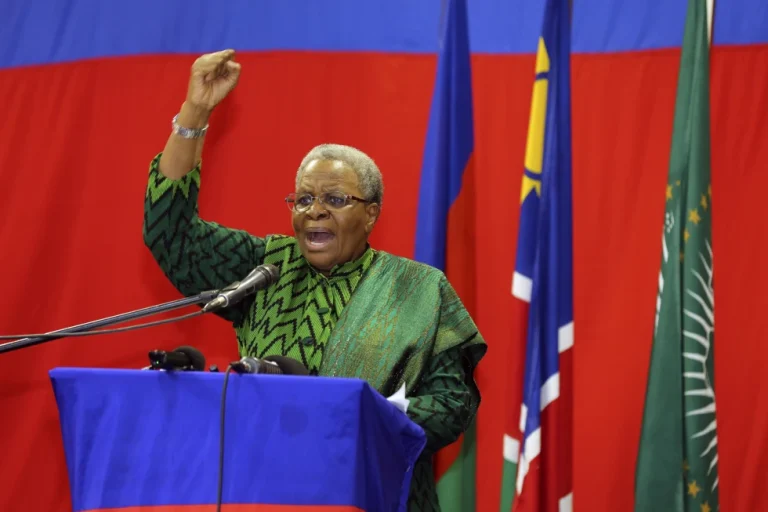
New Namibian President Netumbo Nandi-Ndaitwah has announced that her government will introduce free higher education at state universities and technical colleges starting next year.

Nandi-Ndaitwah, who was sworn in as Namibia’s first female leader last month, made the announcement while delivering her State of the Nation speech to Parliament.

“I am pleased to announce that from the next academic year, commencing 2026, tertiary education will become 100% subsidized by the government,” she said.

Namibia already provides free education in public elementary and high schools, though parents still typically have to pay for school uniforms, stationery, books and hostel fees.

The new policy would remove tuition and registration fees at universities and colleges. There have been calls for years for all levels of education to be subsidized by the government in the country of around 3 million people in southern Africa.

“We have heard your cries,” Nandi-Ndaitwah said. She said the policy was aimed at improving opportunities for young people amid problems of youth unemployment and poverty. Around 2.1 million Namibians are under the age of 35, according to official figures.

Two of Namibia’s seven universities are state run and will offer free education under the policy. All of its seven vocational training centers are government-run and will also no longer charge tuition fees.

AP

Science, technology, innovation strengthened between SA and Cuba

By Amy Musgrave

South Africa and Cuba have agreed that the science, technology and innovation (STI) agreement between the two countries must be formally renewed by the end of the year.

Science, Technology and Innovation Minister Blade Nzimande led a senior delegation to the island in the Caribbean this month, mainly to renew and explore opportunities to strengthen the existing STI deal that was first signed in 2001.

The delegates were from the Council for Scientific and Industrial Research, the National Research Foundation and the Technology Innovation Agency.

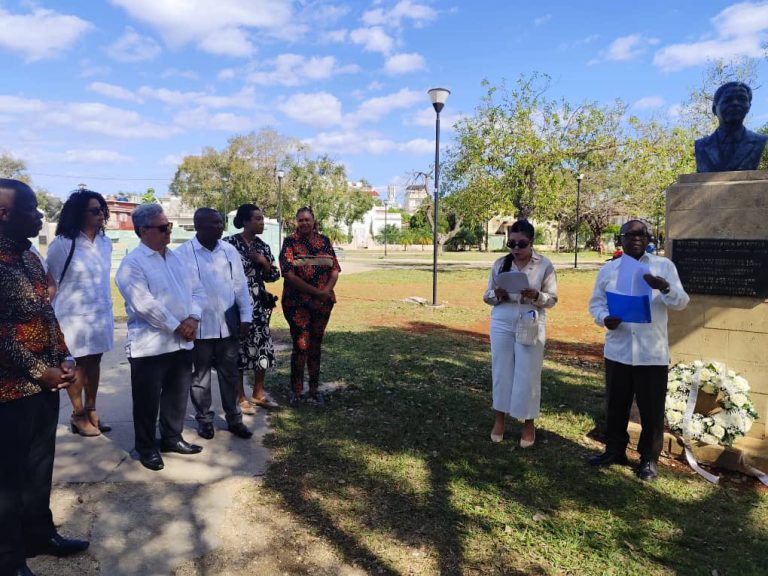
Speaking at the signing of the Statement of Intent to renew the agreement and expand areas of cooperation, Nzimande expressed the importance of the visit.

“Our visit to Cuba and the engagements we held further solidifies the long-standing collaboration based on mutual respect, solidarity and a shared goal of inclusive and transformative growth through scientific advancement,” he said.

As the minister responsible for science, technology, and innovation, I am championing the mantra of positioning science, technology, and innovation at the centre of government, education, industry and society in South Africa.

“It is only through investments in science, technology, and innovation that any nation in the world can succeed and realise its full potential of socio-economic development and competitiveness.”

Nzimande and his Cuban counterpart, Cuban Armando Rodríguez Batista, have committed to strengthening friendship, and exchange and cooperation in the field of science and technology.

They further acknowledged that science and technology were essential tools in a knowledge-based society and recognised that cooperation in various science and technology disciplines would increase the economic and social development of both countries.

Nzimande also held discussions with the Cuban Ministers of Education, Energy, Foreign Affairs and Public Health to explore cooperation in areas prioritised by South Africa such as the joint training programmes at master’s and PhD level, renewable energy technologies such as hydrogen economy, joint research in nuclear medicine, cancer treatment and joint training programmes in specialised fields in medical sciences.

He emphasised the importance of continuing institution-to-institution engagement such as the discussions between South Africa’s Technology Innovation Agency and Cuba’s Centre for Genetic Engineering and Biotechnology. This was intended to, amongst others, forge meaningful biopharmaceutical sector alliances.

Nzimande and Batista agreed to establish a regular science and technology policy dialogue where the two countries could exchange ideas and cross benchmark their respective national systems of innovation.

Batista indicated that Cuba was in the process of developing legislation for its science system. Through the Ministry of Science, Technology and Innovation, South Africa intends to undertake a similar process soon.

Batista emphasised the importance of jointly funded research projects in such key areas as pharmaceuticals, biotechnology and ICT, which formed part of the research priorities of both countries.

On the way forward, Nzimande said: “As we work towards renewing our existing agreement to be signed before the end of 2025, as an immediate response to this visit, the senior officials and experts should immediately develop a joint Programme of Action outlining our goals, timelines, and expected outcomes on the various areas of cooperation which we discussed.”

He said that the partnership with Cuba embodied the essence of global scientific and technological collaboration driven by the needs of the citizens of the countries.

INSIDE EDUCATION

South Africa and Lesotho forge stronger ties in education 

By Levy Masiteng

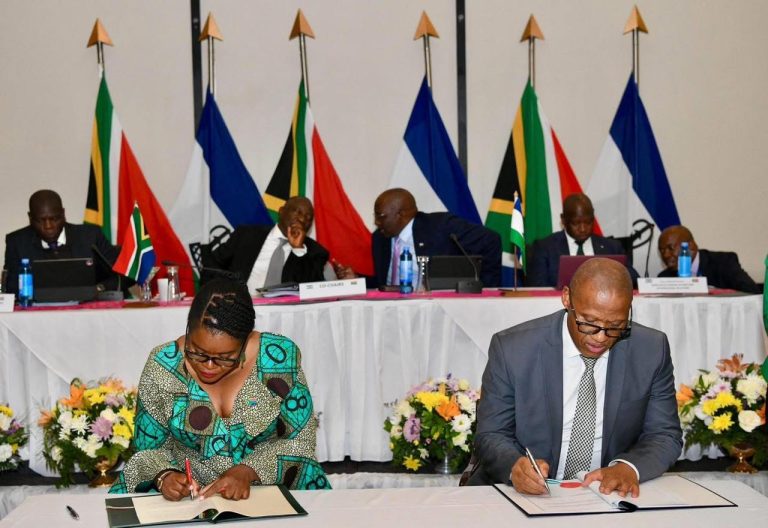
In a step towards strengthening bilateral relations in education, Higher Education and Training Minister Nobuhle Nkabane and her Lesotho counterpart, Ntoi Rapapa, have signed a memorandum of understanding.

It outlines key areas of cooperation, including strengthening teacher development, expanding technical and vocational education, and promoting joint academic programmes between the two nations. 

President Cyril Ramaphosa and Cabinet members were in Lesotho for the second session of the South Africa-Lesotho Bi-National Commission (BNC).

The commission, co-chaired by Ramaphosa and Prime Minister Sam Matekane, aimed to enhance cooperation in various sectors, including education, economic development and cross-border security.

“This historic agreement cements bilateral cooperation in higher education and training, with commitments to student and academic exchanges, mutual recognition of qualifications, collaborative research and innovation, and the advancement of Sustainable Development Goal 4 on quality education,” Nkabane said. 

The department said Nkabane’s presence underscored South Africa’s commitment to advancing higher education collaboration and skills development in support of regional integration.

In addition to the higher education MoU, another agreement was signed on basic education between ministers Siviwe Gwarube and Ntoi Rapapa.

The BNC provides a platform for both countries to discuss and address key issues, fostering a stronger partnership and promoting regional integration.

At least six MoUs were signed by the two governments.

INSIDE EDUCATION

School of government must improve upskilling and education for public servants

By Staff Reporter

There has been very little visible improvement in the performance of public servants despite training and upskilling programmes, according to the Portfolio Committee on Public Service and Administration.

During a briefing from the Public Service and Administration Department and its entities, committee members expressed concern about ethics and the prolonged disciplinary processes in the public service. They questioned whether lifestyle audits and disciplinary investigations translated into accountability.

Members believe finalising disciplinary cases still takes too long, eroding public trust.

“The department acknowledged the delays in finalising disciplinary cases. It informed members that a new national database system for disciplinary cases is underway, which will help identify and reduce bottlenecks and financial losses due to prolonged suspensions,” the committee said in a statement.

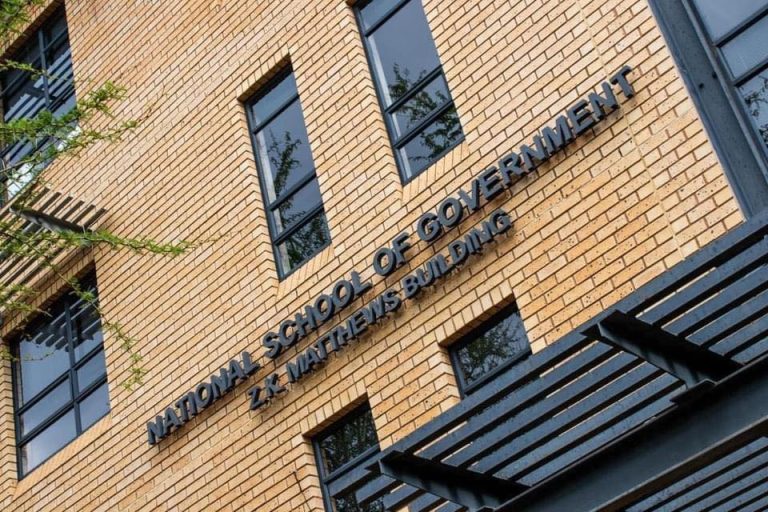
The entities attending the briefing included the Public Service Commission (PSC), the National School of Government (NSG), the Government Employee Medical Scheme (and the Centre for Public Service Innovation.

They discussed their performance plans for the 2025/26 financial year and strategic plans for 2025 – 2030. Government departments submit these plans to parliamentary committees to ensure accountability, transparency and effective resource management.

This enables committees to scrutinise departments’ performance and spending and hold them accountable to the public.

Committee chairperson Jan de Villiers reminded the meeting that during the State of the Nation Address, President Cyril Ramaphosa reaffirmed the government’s commitment to the seventh administration’s priorities, including building a capable, ethical and developmental state and strengthening the role of the PSC.

The department said that its top policy priorities were improving government credibility through effective discipline management and the speedy resolution of suspensions, enforcing lifestyle audits and modernising service delivery systems using e-government.

The department was interrogated about the implementation of the professionalisation framework and if compliance monitoring was happening across the board.

Several members questioned the effectiveness of public sector training, especially training provided by the NSG and ongoing professionalisation efforts.

“The committee questioned the return on investment in training and upskilling, given the limited visible impact on service delivery or employee accountability, particularly in light of the high number of disciplinary cases across the public sector,” the statement read.

“Members emphasised the need for more effective mechanisms to measure the impact and improvement in performance following these training programmes.”

The PSC reports are meant to inform training interventions, especially in building an ethical and professional public service.

Some committee members highlighted career progression issues in the public sector, noting the frustrations of public servants with extensive workplace experience, but no formal qualifications, who were often overlooked for promotion.

The committee wanted to know how the NSG could support recognition of prior learning, especially for older employees with substantial experience. It called on the NSG to centrally coordinate tracking education levels, upskilling and productivity in the public service.

The department undertook to provide written responses to all questions.

INSIDE EDUCATION