



Prega Govender
A total of 760 unemployed matriculants will be employed as education assistants in a bid to improve the literacy, numeracy and reading skills of pupils in rural schools.
The Department of Basic Education confirmed this month that it was granted R87.5-million in European Union funding by National Treasury to conduct the three-year project which will be piloted in three provinces.
At least 253 education assistants will be hired to work at schools in the Alfred Nzo East and OR Tambo Coastal districts in the Eastern Cape, while the same number will be employed in the Ilembe and Umzinyathi districts in KwaZulu-Natal.
A further 254 will work in Limpopo’s Sekhukhune and Mopani districts.
At least 40% of those participating in the initiative, which forms part of the department’s rural education assistants project (REAP), will also be “targeted for teacher training qualifications”.
While the education assistants will help to improve the quality of education of pupils in grades R to 9, at the same time, through REAP they will be “empowered with skills that will increase their chances of finding permanent employment and becoming entrepreneurs”.
Troy Martens, spokesperson for the Department of Basic Education, said the education assistants could “hopefully” be attracted into the teaching profession.
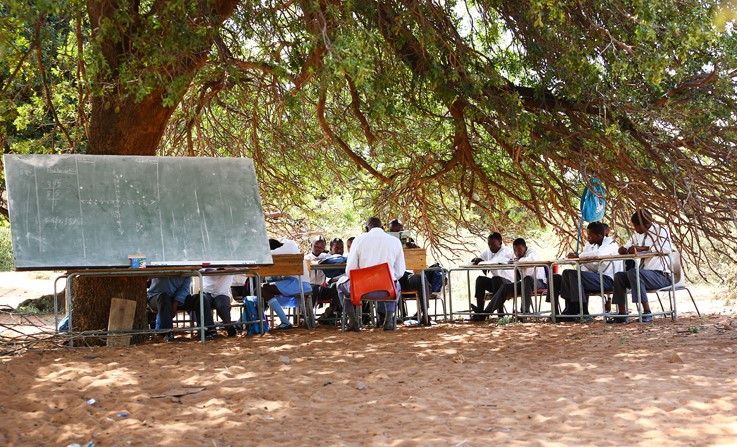
In 2016, a total of 11,252 out of the 23,719 state schools in the country were in rural areas. At least 86% of schools in Limpopo, 69% in KwaZulu-Natal, 40% in Free State, 36% in Western Cape and 33% in Eastern Cape are rural schools.
According to the department’s latest annual performance plan, the unemployed matriculants will assist with a variety of “in-class and co-curricular support, particularly improving numeracy, literacy and reading skills”.
They will also be roped in to oversee homework clubs, maths clubs, reading clubs, creative arts clubs and agricultural clubs.
“This type of support is within the capacity of matriculants. It will not be expecting more than what is possible considering the skill levels,” the document stated.
It stated that research showed that “developing a child holistically by striking a balance between curriculum, learner teacher support material and also co-curricular activities improves learner performance”.
Martens said the pilot project was aimed at researching and evaluating the use of education assistants in the GET phase [grades R to 9] “for improving the quality and equity of education in rural schools”.
She said the research findings would assist in the development of a framework for rural education assistants and a strategy for teacher recruitment for rural schools.
In January, Basic Education Minister Angie Motshekga gazetted the rural education policy for public comment which also alluded to the recruitment of young people, including matriculants.
The policy acknowledged that it was difficult “to recruit, retain and develop qualified teachers” in rural areas because of the long distances between schools and towns, poor infrastructure and limited service delivery.
The policy stated that addressing this challenge required creating a package of teacher incentives that did not only include monetary compensation but also teacher development, transport, accommodation, recreation and other essential services.
The Eastern Cape, KwaZulu-Natal and Limpopo education departments did not respond to media queries that were e-mailed to them on Wednesday.
This article was first published here