
By Johnathan Paoli
As the 2026 academic year approaches, the Higher Education and Training Department is intensifying its national campaign against bogus colleges.
According to a register of private higher education institutions provided by the department, there are more than 100 bogus colleges across the country. They thrive for a number reasons, including a desperation for affordable education and a lack of awareness amongst students and parents.
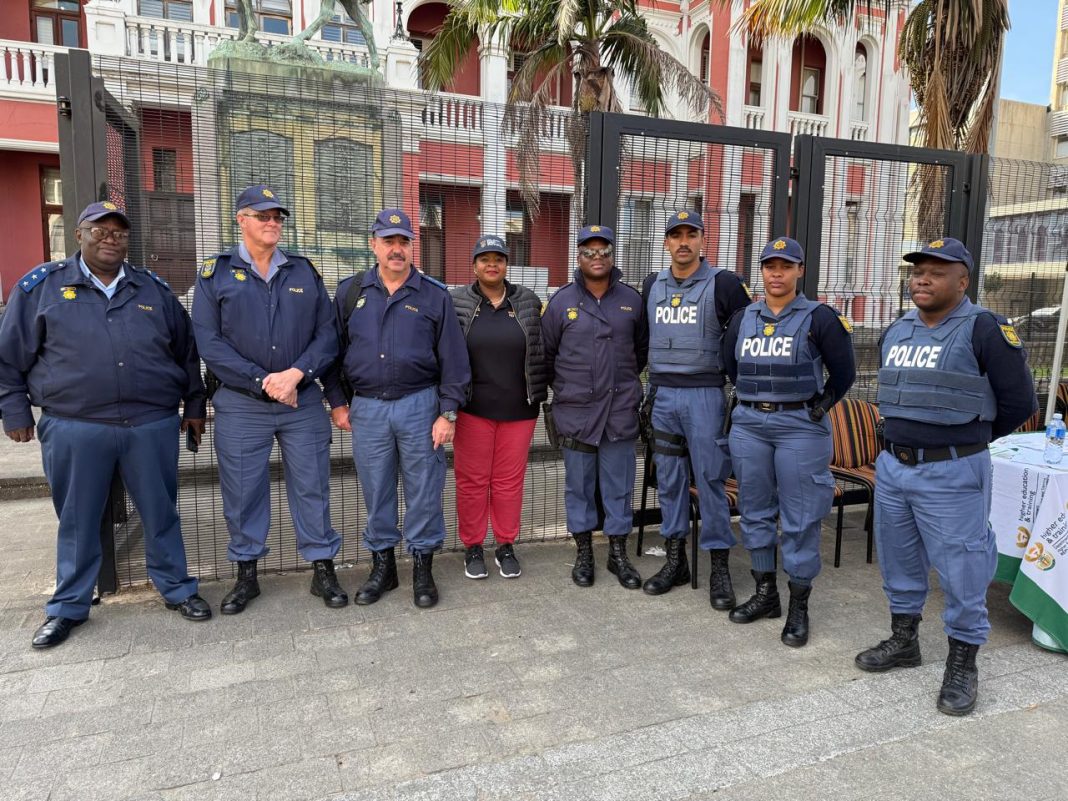
This week, Higher Education and Training Deputy Minister Mimmy Gondwe is in the Buffalo City Metropolitan Municipality in the Eastern Cape where she is leading a multi-stakeholder intervention aimed at rooting out illegal institutions exploiting unsuspecting students.
“These illegal colleges not only rob students and their families of their hard-earned money, but they deny them the opportunity to attain legitimate qualifications. We are acting decisively to end this exploitation,” she said on Monday.
“That is why we have involved law enforcement agencies like SAPS (SA Police Service) and the NPA (National Prosecuting Authority), as well as quality assurance councils such as Umalusi and SAQA.”
Buffalo City, which is home to Walter Sisulu University, various TVET colleges and numerous private institutions concentrated in the East London city centre, has emerged as a hot spot for fraudulent colleges.
It is for this reason that the metro has been identified as the latest focus area of the bogus colleges’ awareness campaign, which was launched by the department earlier this year.
Joined by representatives from the SAPS, the NPA, Umalusi, SAQA, the Department of Home Affairs, and the Department of Employment and Labour, Gondwe and her team visited four private colleges.
At three of these institutions, they uncovered serious concerns related to infrastructure and programme accreditation.
Gondwe announced that the department was in the process of signing a Memorandum of Agreement (MOA) with the SAPS to formalise collaboration in identifying and shutting down bogus institutions. It is expected to be signed by the end of the year.
“The MOA will also support our efforts to address gender-based violence on campuses and improve student safety. We cannot do this alone. We need the full support of government institutions to clean up the higher education space,” she said.
Gondwe said that complaints from students and parents were often the first indication of fraudulent activity.
Once flagged, the department investigates the institutions and hands over a list of suspected illegal operators to SAPS, which then conducts background checks and initiates profiling.
Non-compliant colleges are first issued a formal warning to comply. If they continue to operate unlawfully, legal proceedings are initiated.
“Our partnership with SAPS dates back to April 2025 when I met with the National Commissioner, General Fannie Masemola, to discuss collaboration on this issue. We’re now building on that commitment to act against those who undermine the credibility of our education system,” Gondwe said.
While private institutions were welcomed in South Africa’s higher education sector, they must comply with the Higher Education Act of 1997 and the Continuing Education and Training Colleges Act of 2006, she said.
Also, public and private colleges must be registered with the department and offer qualifications accredited by recognised quality assurance bodies, including Umalusi, the Council on Higher Education (CHE) and the Quality Council for Trades and Occupations (QCTO).
Their programmes must align with the National Qualifications Framework (NQF) of 2008.
“At the start of this year, our public system of 26 universities and 50 TVET colleges could not meet the demand for placements. Private colleges help close that gap, but they must operate legally and uphold standards,” Gondwe said.
According to the department, the institutions inspected included the Academy of Business and Computer Studies, now renamed Academic of Training and Development, which allegedly no longer offered National Certificate Vocational (NCV) qualifications previously approved by the department.
The Cyber College of Business and Technology was allegedly offering matric rewrite programmes without the required accreditation.
The department and its partners have pledged to follow up on non-compliance issues and initiate enforcement actions where necessary.
The bogus colleges awareness campaign was launched in Johannesburg in February and extended to Durban in March.
INSIDE EDUCATION