
By Johnathan Paoli
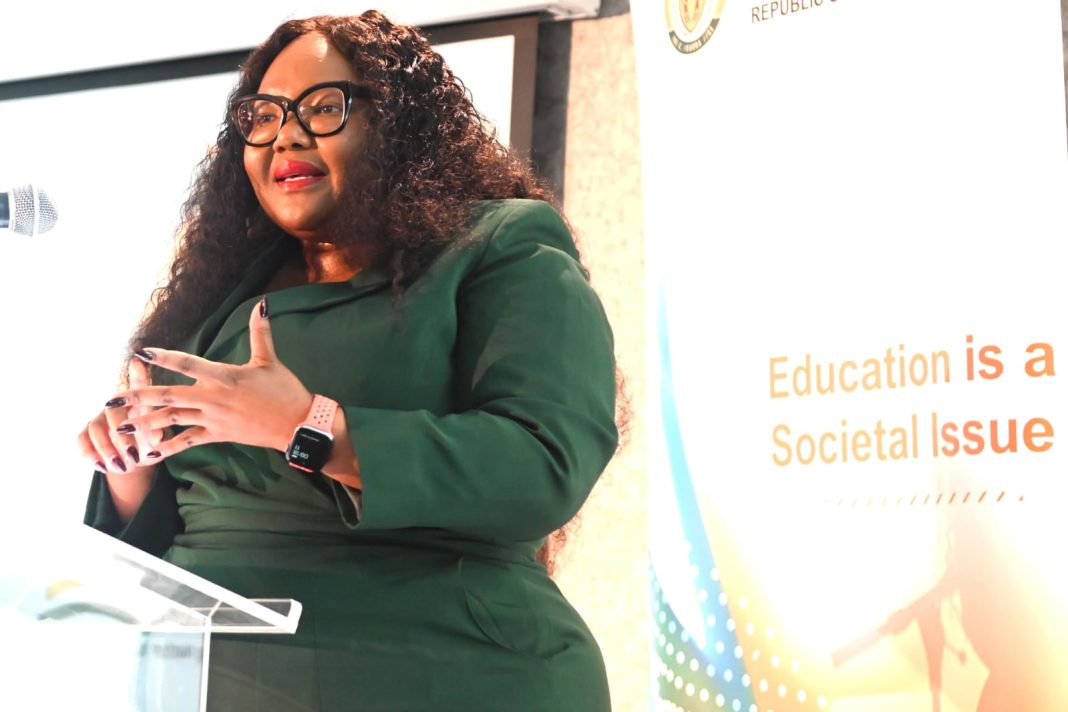
Basic Education Minister Siviwe Gwarube has called for calm and urged political leaders to resist politicising the Basic Education Laws Amendment Act following criticism over the recently gazetted draft regulations.
Gwarube reportedly defended the process, emphasising that the regulations were not designed to rewrite the Act, but to ensure its smooth implementation.
“There are still leaders in the country who are hellbent on politicising this piece of legislation – a piece of legislation that’s going to help us bring coherence in the school system and our education system,” Gwarube said.
The department echoed the minister’s sentiment, strongly rejecting allegations that the regulations stemmed from any private political agreements.
Department spokesperson Elijah Mhlanga told Inside Education that the minister’s approach had consistently prioritised learners’ interests above all else.
“The minister has been consistent with her position that we should all participate in the BELA processes without losing focus on the interest of the children,” Mhlanga said.
The dispute arose after Parliament’s Portfolio Committee on Basic Education chairperson Joy Maimela expressed concern that the regulations could dilute the intent of the BELA Act, which seeks to make Grade R compulsory and overhaul school admission and language policies.
Maimela argued that publishing only two sets of draft regulations instead of the full package weakened coherence and risked undermining Parliament’s goal of building a more inclusive education system.
She warned that clauses referring to the “surrounding community” and introducing “feeder zones” could revive exclusionary practices Parliament intended to dismantle.
However, criticism has not been limited to Parliament.
GOOD Party secretary-general Brett Herron accused Gwarube of using the regulations to “intentionally weaken” the BELA Act by reintroducing wording allegedly linked to a previous bilateral agreement with trade union Solidarity and lobby group AfriForum.
Herron warned that phrases such as “surrounding community, including language preference” could be used to defend historic exclusionary practices, particularly around Afrikaans-medium schools, undermining the Act’s intent to broaden access.
He said his party was prepared to challenge the regulations legally if they were not amended.
The BELA Act, which was signed into law last year, represents one of the most significant education reforms since 1994.
By making Grade R compulsory, it aims to strengthen early childhood education, while changes to admissions and language policies seek to reduce disparities that persist across the public school system.
Gwarube has repeatedly stated that the public comment process, open until 5 September, is central to ensuring the regulations reflect the nation’s diversity and constitutional commitments.
She urged parents, teachers, advocacy groups and learners to study the draft documents and submit their views.
Maimela, despite her criticisms, has also encouraged broad participation, pledging that the committee would exercise “robust” oversight to ensure the Act dismantles inequality rather than reinforces it.
For the department, the path forward is ensuring the debate is grounded in the needs of learners rather than in political rivalries.
With tensions high and stakeholders from across the political spectrum weighing in, the regulations are becoming a focal point for broader debates on transformation, equity and language in education.
As the deadline for public submissions approaches, the coming weeks will determine whether consensus can be built around regulations that balance the Act’s transformative goals with the practical realities of the school system.
INSIDE EDUCATION