


By Johnathan Paoli
The Maharishi Invincibility Institute (MII) has outlined an ambitious plan to reshape education and urban development in Johannesburg, combining holistic, consciousness-based learning with demand-driven skills development and community transformation.
Speaking at the institute’s breakfast, MII CEO Dr. Taddy Blecher, emphasised the urgent need to rethink education in a rapidly changing economy where traditional degrees are no longer sufficient to guarantee employment.
“Today, a B.Com. or a computer science degree isn’t enough. The world is moving too fast and is too specialized. Employers care most about the quality of the human being they’re empowering. Attitude is everything. If a person can put their heart and soul into work, they can grow quickly, and that’s what we nurture here,” he said.
The institute’s approach integrates a combination of curriculum components, all crafted to directly meet the requirements of large employers and includes amongst other elements local and international industry exams.
Students gain practical work experience for at least three years, participate in entrepreneurship programs, and often start their own businesses, even if they do not plan to become entrepreneurs, ensuring graduates are adaptable and highly employable.
The results have been striking.
Through its partnership with Bryte, MII has achieved a 100% job placement rate for graduates in the insurance sector, with Bryte already employing the first 250 graduates, and committed to employing a total of 1,000 graduates.
Blecher cited other programs, including the Cybersecurity Academy and the Human Interface Academy, together with ABSA bank, which combine work experience, technical training, and leadership development to produce highly skilled professionals ready to enter critical sectors.
Research shows that at least one year of quality work experience triples a young person’s chances of securing employment.
MII extends this further, ensuring students have access to three years of structured work experience, mental health support, remedial education, nutrition, physical activity, and meditation.
Published research, including a British journal study, has shown that daily transcendental meditation over 60 days significantly reduces PTSD and depression among students, transforming both their well-being and their learning outcomes.
Financial accessibility remains central to the institute’s philosophy.
While students pay only R200 a month, MII operates a “Learn and Earn” system, where students contribute to funding bursaries for their peers.
Last year, this model generated nearly 15 million rand, with projections close to 20 million rand in 2025.
Coupled with perpetual maintenance and bursary funds, the institute is working to ensure it can educate future generations sustainably..
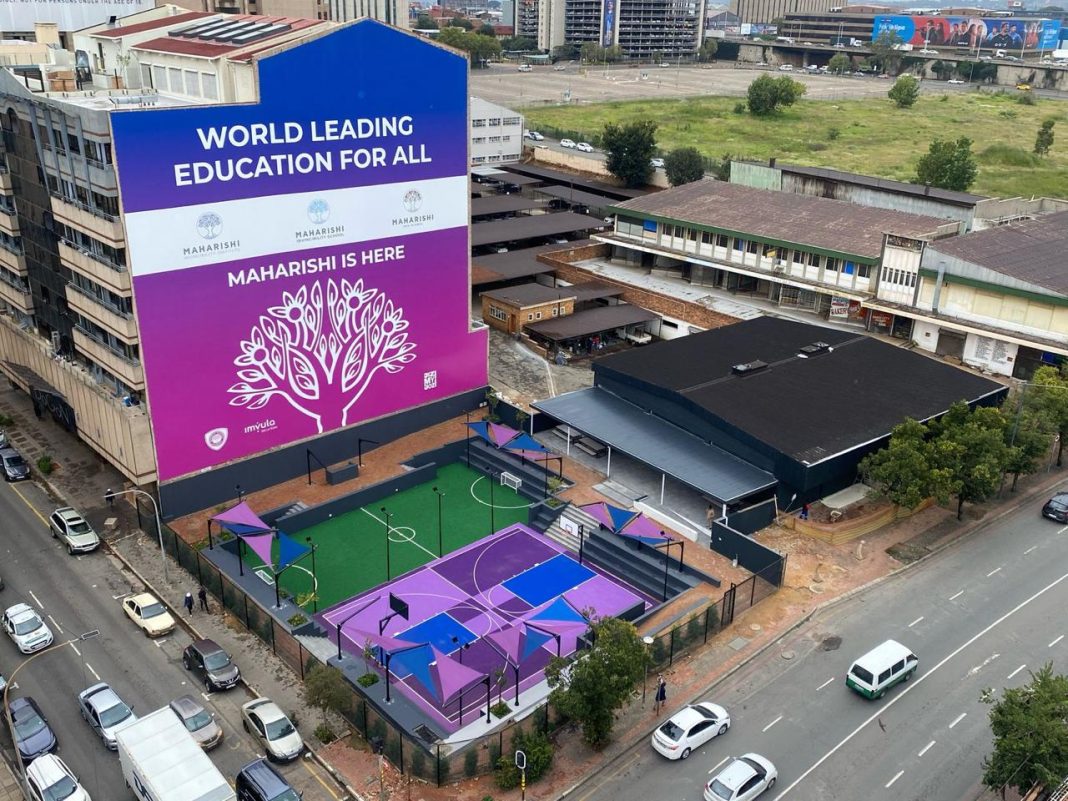
Dr. Blecher also highlighted MII’s role in urban revitalization through what it calls the “Michelangelo Principle”—removing what is not essential to reveal the inherent beauty of Johannesburg’s CBD.
Projects include the Jozi Field of Dreams, the city’s first full-size soccer field, launching in November, and the redevelopment of buildings into multi-purpose sports and cultural centres.
These initiatives provide safe, functional, and inspirational spaces for students and the community.
Safety and professional development are reinforced through a three-year Security Mastery Academy developed with CAP Security, training students to commander-level security positions rather than short-term certifications.
Other urban improvements include solar-powered streetlights and public space upgrades, enhancing both safety and sustainability.
MII aims to establish an “Education Town” that will eventually host over 10,000 students by 2031–2034, forming a cluster comparable to Boston’s higher education ecosystem.
By integrating institutions such as Wits Business School and the University of Johannesburg, the city could support 150,000 students, positioning Johannesburg as Africa’s leading education and trading hub.
International recognition reinforces the institute’s innovative model.
Stanford University cited MII in its 2025 publication, Reimagining Higher Education, as one of the twelve most innovative educational institutions globally, and one of only two from Africa.
Locally, MII has leveraged Black Economic Empowerment policies to integrate youth into the economy, assisting partner companies in achieving level-one BEE status while fostering graduate employment.
Dr. Blecher concluded with a vision that combines social impact and economic transformation.
Through holistic education, practical skills, entrepreneurship, urban revitalization, and community engagement, the Maharishi Invincibility Institute is positioning itself as a transformative force in South Africa, redefining how young people learn, work, and contribute to society.
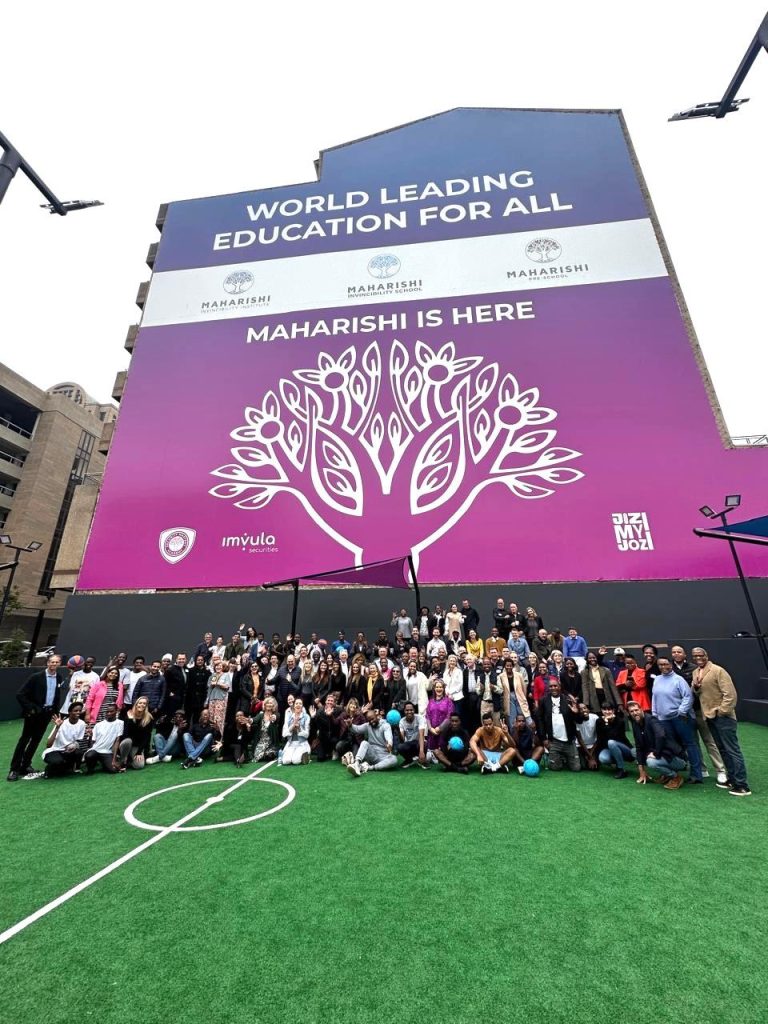
PHOTO: Supplied
INSIDE EDUCATION