
By Lebone Rodah Mosima
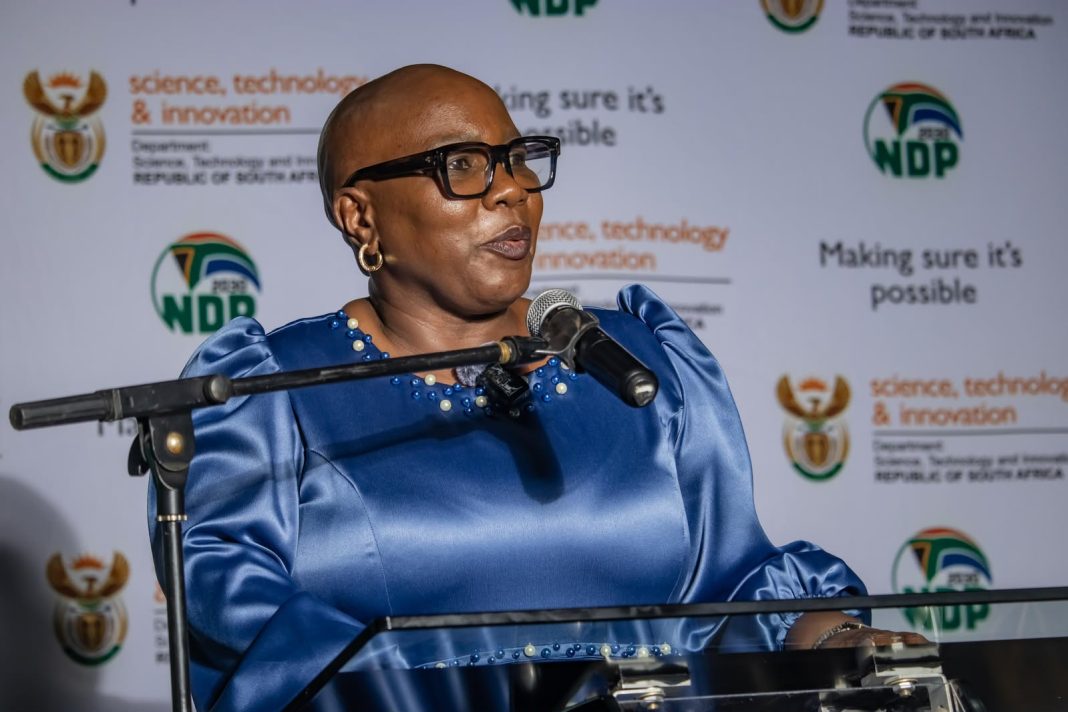
Deputy Minister of Science, Technology and Innovation Nomalungelo Gina has called for stronger institutional support to advance women into research leadership, warning that gains in representation have not translated into equal opportunities for career progression, funding and commercialisation.
Speaking at the launch of the Women in Research Initiative for Growth and Transformation (WRIGHT) at Mangosuthu University of Technology (MUT) in Durban on Wednesday, Gina said women remained under-represented in senior research positions despite making up nearly half of South Africa’s research workforce.
According to the 2023/24 National Survey of Research and Experimental Development, women account for 47.7% of the country’s research workforce, 52% of the academic workforce and 62.6% of university enrolments.
They also account for about 45% of scientific publication authorship.
“Yet presence in the system is not the same as influence over it. The barriers that remain are barriers of system design, not of individual ability,” Gina said.
She said the participation of women among National Research Foundation (NRF)-funded researchers had increased from 17% in 1999 to 47% in 2025.
The proportion of women receiving NRF postgraduate bursaries had also risen from 40% to 60% over the same period.
However, women remained under-represented in research leadership, engineering, computer science and mathematics-related fields, which are increasingly important in shaping emerging technologies.
Gina said women accounted for 35% of NRF-rated researchers, with Black women particularly under-represented.
She also highlighted the unequal distribution of research funding and infrastructure, heavy workloads facing early-career academics and difficulties translating research into commercial products.
She said about 63% of NRF funding went to the 10 universities with the highest research output, while 83% of Research Chairs were hosted at those institutions.
National spending on research and development stood at 0.61% of gross domestic product, below the National Development Plan target of 1.5%, she added.
Gina said the Department of Science, Technology and Innovation’s 2018 study of emerging researchers, known as the Silent Majority study, had identified heavy teaching loads, administrative demands, limited research time and increasing supervision responsibilities as challenges facing early-career academics.
“Academic staff numbers are growing more slowly than postgraduate enrolments, which adds to that pressure,” she said.
She also warned that female-owned technology enterprises faced difficulties accessing venture capital, limiting opportunities for women to commercialise their research and establish businesses.
Gina said addressing these barriers was essential to strengthening South Africa’s research and innovation capacity and fulfilling its science policy commitments.
The 1996 White Paper on Science and Technology committed the country to redressing gender disparities, while the 2019 White Paper on Science, Technology and Innovation reaffirmed the importance of inclusion and transformation.
“That cannot be achieved if half of society is under-represented in directing the effort,” she said. “When women are placed at the centre, the whole national system of innovation is strengthened.”
Gina said government support extended across the research pipeline, from postgraduate students and emerging academics to established researchers.
Ministerial guidelines introduced in 2013 require at least 55% of postgraduate bursaries to be allocated to women and 80% to Black students. These guidelines were incorporated into the 2020 Postgraduate Funding Policy, which also introduced full-cost-of-study support.
“In 2025/26 the Department supported 6 246 postgraduate students with bursaries,” Gina said.
For emerging researchers, programmes such as Thuthuka, the Black Academics Advancement Programme, the New Generation of Academics Programme, postdoctoral fellowships and the Advancing Early Career Researchers and Scholars programme provide opportunities to develop research records, mentorship and professional networks.
She said 1,644 emerging researchers were supported in 2025/26, including 708 Black women, and that the target for supporting Black women emerging researchers had been increased for 2026/27.
For established researchers, support includes the South African Research Chairs Initiative, Centres of Excellence and NRF researcher ratings.
As of April 2026, women held 104 of the 198 operational Research Chairs, while women accounted for 51% of the 3,355 researchers supported during 2025/26, Gina said.
She added that 41 new Research Chairs had been awarded to historically disadvantaged institutions, universities of technology and new universities at the beginning of this year.
Between 2020 and 2024, the number of NRF-rated researchers increased by 57% at universities of technology and 48% at historically disadvantaged universities, compared with 45% at comprehensive universities.
Gina also highlighted the Innovation Fund’s role in leveraging more than R1.3 billion for venture capital partnerships, technology-based enterprises and small, medium and micro enterprises. The Technology Innovation Agency provides seed funding, incubation and venture capital support for female-led technology businesses.
However, she cautioned that awards and recognition alone were insufficient to establish whether women were progressing through research careers or advancing into leadership.
“An award tells us that something is possible,” she said, adding that institutions needed evidence showing whether women were being retained, promoted and given opportunities to lead.
Gina proposed a framework for WRIGHT built around three priorities: recognition, representation and retention. She said the framework was intended for discussion rather than adopted policy.
Recognition would ensure women’s contributions were acknowledged, while representation would assess their presence in research ratings, Research Chairs, management and leadership.
Retention would focus on whether women remained in research, progressed between career stages and translated their knowledge into intellectual property, products and enterprises.
She urged WRIGHT to connect women researchers at MUT with existing national support programmes and outlined four priorities for the initiative: alignment, evidence, connection and impact.
These would include linking researchers to government and NRF programmes, tracking career progression, strengthening mentorship and professional networks, and ensuring research reached industry, public services and communities.
“Research must travel from the laboratory into industry, public services and communities,” she said.
Gina said government had a responsibility to sustain a pipeline through which women could enter, develop and advance in research, while universities needed to ensure their internal systems supported career progression through fair workload allocation, protected research time and clear promotion pathways.
“Mentorship is most effective when it is supported by fair workload and protected research time,” she said.
She said she hoped that within five years more women at MUT would have established independent research profiles, secured funding, supervised postgraduate students, led multidisciplinary projects and moved into positions where they could shape institutional priorities.
Gina also welcomed MUT’s commitment of R2 million to research initiatives for first-time researchers, as well as plans for a multidisciplinary research journal, a research conference and the “MUT in Research” programme.
“These are the building blocks of a research institution,” she said, adding that WRIGHT could help women build lasting research careers and become leaders.
She urged the university to integrate the initiative into its core operations, build partnerships and share lessons with the wider research sector.
“No nation can reach its true potential if it excludes its women and girls from opportunities in science, technology and innovation,” Gina said.
“To the women researchers at MUT: your work matters, and you should be able to pursue excellence without overcoming avoidable barriers at every step.”
INSIDE EDUCATION