
By Lebone Rodah Mosima
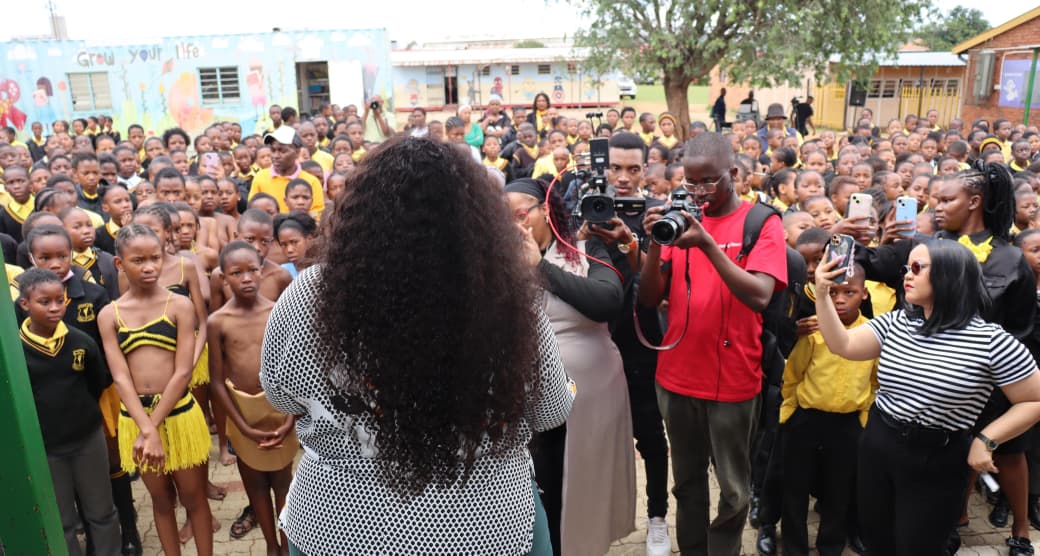
South Africa has embraced modern, water-efficient and off-grid sanitation technologies developed to ensure safe and dignified sanitation in schools, Minister of Basic Education Siviwe Gwarube said during her visit to Tsholetsega Public School in Kagiso to commemorate World Toilet Day 2025.
Gwarube visited the school to reflect on the progress made through the Sanitation Appropriate for Education (SAFE) Initiative, which aims to eliminate unsafe and undignified sanitation in all schools.
Alongside Gauteng West District Director Vusumzi Rajuile, ward councillor Motsamai Taunyane, DBE infrastructure officials and education partners, Gwarube said on X that World Toilet Day serves as a reminder of the “dignity, safety and learning” that begin with something as basic as access to proper sanitation.
“In this school, partnering with Waterloo, we have embraced modern, water-efficient and off-grid sanitation technologies,” she said.
She noted that facilities built in schools are sustainable and responsive to climate resilience.
The minister said these technologies are particularly useful in communities that still struggle with reliable running water, especially in deep rural areas.
“We saw how this worked well in Venda and in the rural Eastern Cape when I visited those sites earlier this year,” she said.
According to the DBE, it has reached 98% of its target for sanitation infrastructure — a “milestone” in its commitment to replacing unsafe facilities.
Gwarube stressed that the government will not tolerate contractors who fail to comply with project requirements.
“These delays rob our children of a basic right to safe and adequate sanitation at schools. We are strengthening accountability measures, and contractors who cannot deliver will be blacklisted by Treasury,” she said.
She reaffirmed the department’s commitment to “building safe, dignified spaces for every learner and educator” grounded in protection and integrity.
Rajuile expressed appreciation for the minister’s “steadfast commitment to enhancing sanitation and learning conditions in schools”.
World Toilet Day, an annual United Nations observance, calls for global access to safe sanitation, equitable services and responsible hygiene.
“For the DBE, the occasion provides a platform to reflect on advancements made through the SAFE Initiative, acknowledge collaborative infrastructure efforts and reaffirm its dedication to delivering secure, dignified, learner-focused sanitation in schools,” the department said.
Under the global tagline, “We will always need the toilet”, the South African Human Rights Commission (SAHRC) said the day underscores the essential role of sanitation in ensuring dignity for all.
The Commission said World Toilet Day serves as a moment to reflect on South Africa’s progress — and persistent challenges — in guaranteeing sanitation access.
It noted that “safe, hygienic, adequate sanitation is essential to living a dignified life”, and that the right to sanitation is recognised internationally as fundamental to the enjoyment of life.
The Sustainable Development Goals (SDGs) underscore this through Goal 6, which calls for adequate and equitable sanitation and hygiene for all by 2030, with particular attention to the needs of women, girls and vulnerable groups.
“South Africa has demonstrated significant progress in ensuring access to safe, hygienic and adequate sanitation,” the SAHRC said.
Statistics South Africa’s General Household Survey 2024 shows that access to improved sanitation (flush toilets and ventilated pit latrines) increased from 61.7% in 2002 to 83.1% in 2024. However, the figure has remained stagnant at 83% since 2018.
Despite progress, the SAHRC warned that millions still live without access to dignified sanitation.
Many continue to rely on unsafe practices such as open defecation and the bucket toilet system.
A recent SAHRC investigative report found that residents in several North West municipalities are forced to use toilets that deny them dignity due to a lack of basic sanitation — despite compulsory national water and sanitation standards requiring a functional toilet and hand-washing facility in every household yard.
The newly released 2025 School Readiness Monitoring Report also identifies poor sanitation — including the continued use of pit latrines — as one of the top five systemic issues affecting schools nationwide.
The Commission said it continues to receive complaints about inadequate sanitation for women and girl children, exposing them to heightened health and safety risks.
The SAHRC called on government and all sectors of society to intensify efforts to expand access to safe and dignified sanitation.
INSIDE EDUCATION