


By Johnathan Paoli
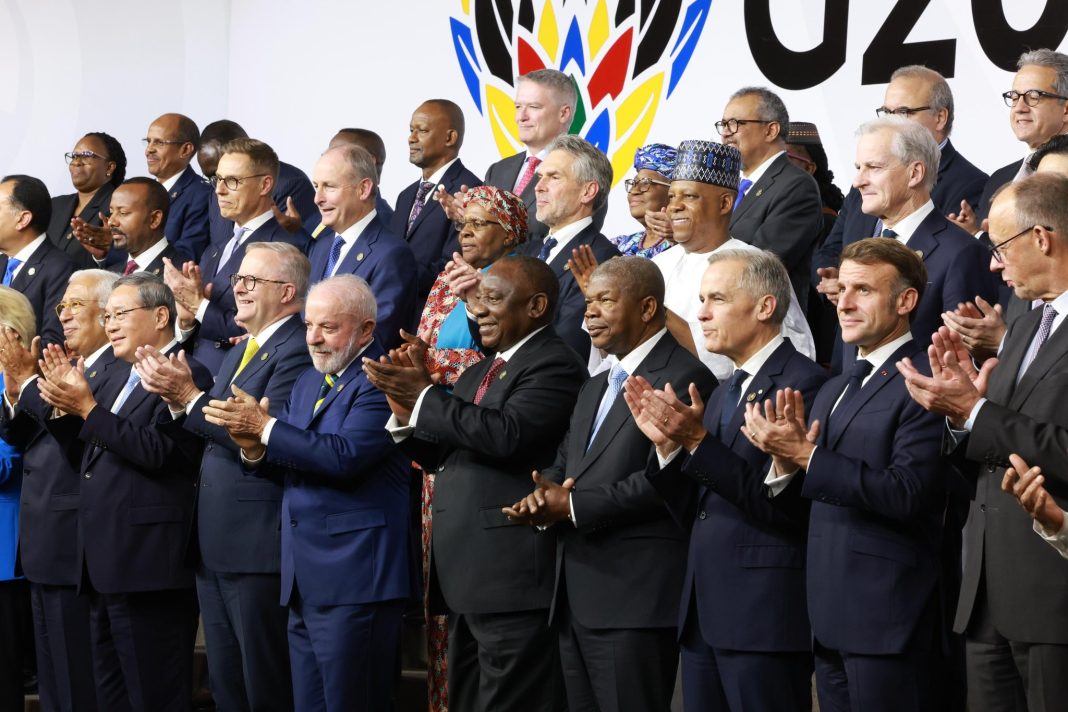
South Africa’s 2025 G20 presidency has placed education firmly on the global agenda, with the Leaders’ Declaration outlining ambitious commitments to transform the early learning environment and strengthen international cooperation in higher education.
The declaration emphasises that Early Childhood Care and Education (ECCE) and the recognition of qualifications across borders are foundational to building equitable, future-ready societies.
Early Childhood Development (ECD) emerges as a key pillar of the G20’s education priorities, and the world leaders endorsed a comprehensive approach to ECCE policy development that draws on both government and community values.
The declaration stresses that investment in early learning is essential not only for children’s cognitive and social development, but for countries’ long-term economic resilience.
It commits G20 members to strengthening the ECCE workforce, improving professional recognition and confronting persistent teacher shortages, especially in early and basic education.
This focus aligns closely with the country’s domestic education agenda, where foundational learning has been prioritised as the most effective intervention to reverse learning losses and improve long-term outcomes.
By supporting the integration of 21st-century teaching competencies and updated pedagogies, the declaration reinforces the need to empower early-years practitioners with the tools required to prepare learners for an increasingly complex world.
Technology inclusion is another major theme, with leaders warning that without decisive action, digital divides will continue to undermine educational equity.
The declaration calls for expanded connectivity, appropriate digital infrastructure and inclusive access to learning technologies.
For ECCE, this means ensuring that even the earliest learning environments benefit from age-appropriate digital tools, while safeguarding equity across rural and low-income settings.
Beyond foundational learning, the G20 has also sharpened its focus on higher-education cooperation.
Clause 111 of the declaration reaffirms global support for the UNESCO Global Convention on the Recognition of Qualifications concerning Higher Education, urging greater cohesion among regional and international frameworks.
Leaders commit to advancing mutual recognition processes during the 2025–27 work programme, subject to national standards and regulations.
For South Africa, whose G20 education themes include Mutual Recognition of Qualifications, this commitment is significant.
It positions the country to champion a more coherent global qualifications ecosystem, enabling South African graduates to access international study and employment opportunities more easily, while attracting foreign talent to local institutions.
The declaration’s combined emphasis on early childhood development, educator professionalisation, digital inclusion, and qualifications mobility reflects the interconnected nature of modern education systems.
As South Africa concludes the G20, its presidency is expected to translate these high-level commitments into coordinated global policy actions.
With foundational learning, teacher development and higher-education alignment now embedded in the G20’s shared agenda, many hope the coming year offers a pivotal opportunity to reshape the global architecture of learning, beginning in the earliest years and extending across borders.
INSIDE EDUCATION