


By Johnathan Paoli
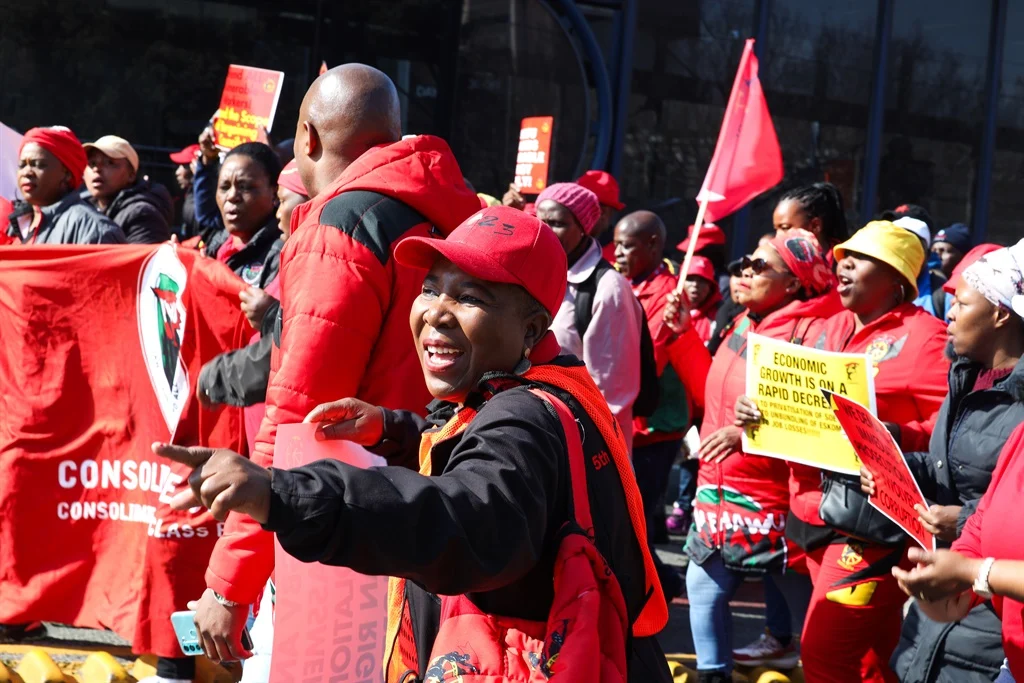
The Congress of South African Trade Unions (Cosatu) has come out strongly against a proposed 4.1% salary increase for politicians and other public office bearers, describing the recommendation as “tone-deaf”, morally indefensible and dangerously disconnected from the daily struggles of ordinary South Africans.
In a statement issued on Sunday, Cosatu Parliamentary Coordinator Matthew Parks rejected the Independent Commission for the Remuneration of Public Office Bearers’ recommendation, which would see salary increases for members of Cabinet, Parliament, provincial legislatures, municipal councils, government commissions and the judiciary for the 2025/2026 financial year.
Parks said the proposed increase sends a damaging signal to an increasingly frustrated public, reinforcing perceptions of a political elite insulated from the economic hardship facing millions.
“It is beyond shameful that in the same year the government claimed it had no money and imposed a VAT hike on working people, this Commission could propose such a generous increase for politicians,” Parks said.
He further criticised the timing of the recommendation, noting that Finance Minister Enoch Godongwana had recently warned Parliament that further tax hikes may be unavoidable in 2026.
According to Cosatu, the proposed increase would cost the state an additional R536 million, a figure it described as unjustifiable amid deepening austerity and collapsing public services.
Parks was particularly scathing about the inclusion of more than 9,300 local government councillors, arguing that many municipalities are in financial distress and failing to pay salaries, pensions, medical aid contributions and statutory taxes.
“If the government has spare funds, these should be used to hire doctors, nurses, teachers, police officers and other frontline workers who are desperately needed in working-class communities,” he said.
While Cosatu rejected the overall proposal, it expressed support for Minister Godongwana’s differentiated approach.
The finance minister had reportedly suggested a 4.1% increase for judges and magistrates, while recommending a more modest 3.5% adjustment for public representatives.
Parks said judges and magistrates should be treated separately due to their specialised skills and experience, warning that failure to do so could worsen skills shortages and strain an already overburdened judicial system.
However, he argued that public representatives should receive no increase at all and said politicians should lead by example, particularly at a time when the government has failed to adjust income tax brackets for inflation for two consecutive years, effectively increasing the tax burden on low- and middle-income earners.
Cosatu also called for reforms to the remuneration-setting process, arguing that the Commission should be required to submit its proposals for public comment before they are forwarded to the President for approval.
Parks urged the government to link salary increases to the performance of public representatives and the institutions they oversee, calling on President Cyril Ramaphosa to reject the current proposal and instead approve an inflation-linked 3.5% increase for members of the judiciary, alongside a performance-based 0% increase for public representatives.
The controversy follows the publication of the Commission’s recommendation in a government gazette earlier this week.
If approved, the proposed 4.1% increase would see the President’s annual salary rise by approximately R137 000 to about R3.4 million.
The Deputy President would earn nearly R130 000 more, taking his salary to around R3.1 million, while Cabinet ministers could see increases of about R110 000, bringing their annual earnings to roughly R2.8 million.
The proposed hikes come amid mounting financial pressure on households, with rising debt levels, food insecurity, high interest rates and unstable employment leaving many South Africans struggling to meet basic needs.
INSIDE EDUCATION