


By Lebone Rodah Mosima
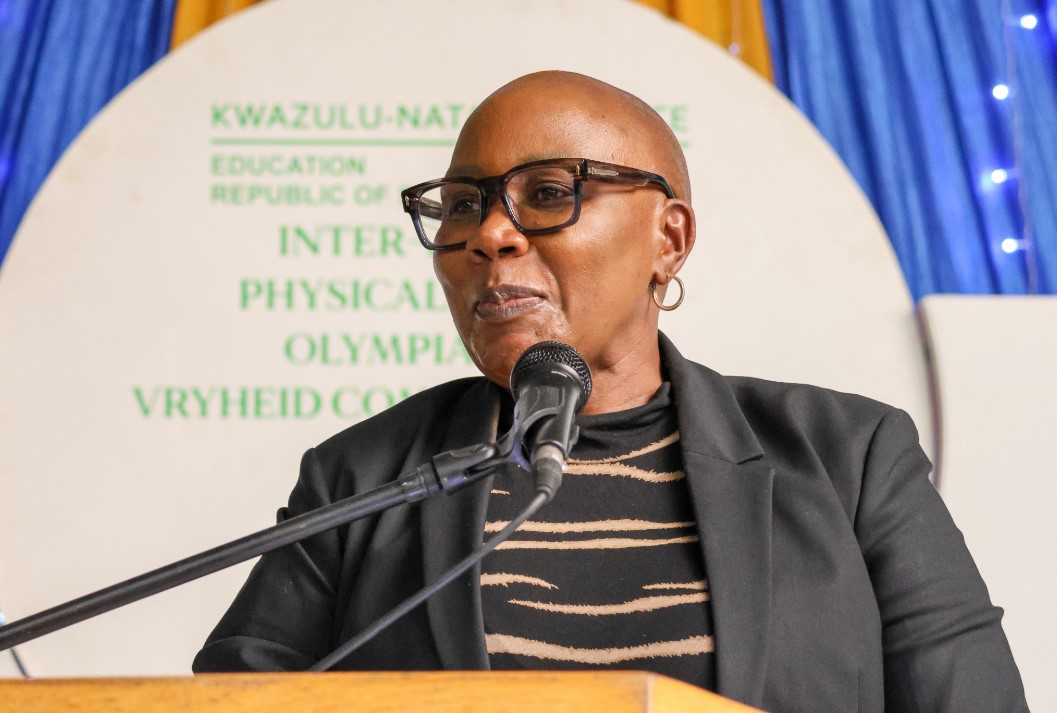
Deputy Minister of Science, Technology and Innovation, Nomalungelo Gina, says government wants more girls and women to enter and lead in science, technology, engineering and mathematics (STEM), particularly in rural and township communities where resources and career guidance are scarce.
“Our goal as the department is an inclusive, equitable, and globally competitive innovation system where women stand as equals,” she told Inside Education during an interview.
Gina said that women remain underrepresented in senior STEM jobs and decision-making roles, with progress slowed by structural inequities in career pathways, limited mentorship, work–life balance pressures, and entrenched institutional cultures and stereotypes.
“My experience as a teacher has profoundly shaped my approach to gender transformation in science. In the classroom, I witnessed both the immense potential of young women in STEM and the subtle barriers that discourage their participation”, she said.
Gina was appointed Deputy Minister of Science and Technology in June 2024, after serving as Deputy Minister of Trade, Industry and Competition from 2019.
Before entering national executive leadership, she worked as an educator for more than 15 years in KwaZulu-Natal’s uThungulu District and held leadership roles in the South African Democratic Teachers Union (SADTU).
She completed a PhD in Leadership and Management in December, awarded by the University of Gideon Robert in Zambia, focused on challenges faced by local authorities implementing information and communication technology.
“The thesis developed a strategic ICT planning and implementation framework that aims to equip local authorities with the necessary tools and strategies to overcome challenges and enhance service delivery, citizen engagement, as well as governance,” Gina said.
“This journey has reinforced that evidence-based leadership matters, and that science, technology and innovation must be deliberately positioned to strengthen the state and improve the lived experience of our people.”
The DSTI programmes target the full talent pipeline — from school learners and postgraduate students to early-career researchers and senior scientists — and are increasingly focused on whether women move into leadership.
“Success in increasing women’s participation in STEM is measured not only by rising enrolment and employment numbers, but by the extent to which women advance into leadership, research management, and decision-making roles,” Gina said.
“We track indicators such as equitable representation in postgraduate studies, research grant awards, senior appointments, and national recognition platforms such as SAWISA and National Science and Technology Forum (NSTF).”
Gina said monitoring bodies also mattered in determining whether transformation was real. She said that the National Advisory Council on Innovation (NACI) plays a crucial role in tracking whether transformation is real or merely rhetorical.
The department has consolidated programmes that include postgraduate funding policies aimed at ensuring women receive 55% of bursaries, including the South African Women in Science Awards (SAWISA), National Research Foundation (NRF) instruments to advance black and women academics, and international exposure initiatives such as the Lindau Nobel Laureate Meetings and the L’Oréal-UNESCO For Women in Science awards.
More recently, it introduced the Women in Technology and Innovation Programme (WTIP), providing gender-responsive funding, incubation and mentorship for women innovators and entrepreneurs.
“Achieving this transformation requires the active involvement of industry, civil society organisations, and academia, working in partnership with government to expand opportunities, break systemic barriers, and embed gender equity across the entire innovation ecosystem,” Gina said.
“Women in South Africa have significantly improved access to research grants, postgraduate funding, and innovation incentives, but equity is not yet fully achieved.”
At school level, Gina said preparing girls for STEM careers remained a national priority, with outreach targeted at rural and township schools.
“The department remains committed to ensuring that every girl receives the skills and confidence to thrive in science and innovation, in line with our mantra of placing science, technology and innovation at the centre of government, education, industry and society,” she said.
“I want to instil a sense of desire in rural and township girls and boys, where there are not enough science and computer laboratories, that they too can become our future nuclear scientists, space science professionals, computer engineers, chemical and mechanical engineers.
“I will want to see more rural girls getting into these STEM-related professions. With our NRF bursary and scholarship programme, I am delighted at the number of women growing through leaps and bounds in pursuing these studies.
“For science month, we mobilise school learners to expose them to opportunities. I am steadfast on the emphasis to target rural and township schools where career guidance is non-existent,” she said.
INSIDE EDUCATION