
By Lebone Rodah Mosima
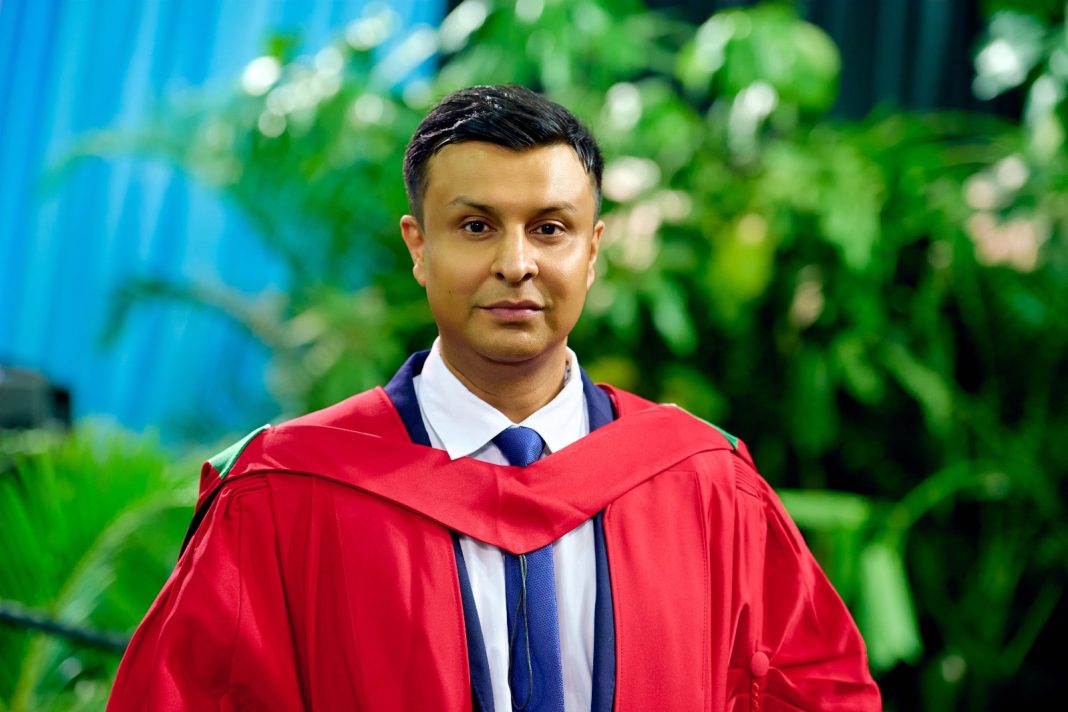
Durban-born researcher Dr Sahil Tulsi has provided important new insights into how genetic differences among South Africans may influence responses to TB treatment.
Tulsi, who earned his Doctor of Philosophy in Virology from the University of KwaZulu-Natal, examined how genetic variation affects the way patients process anti-TB medication in his study, Influence of Drug Transporter Gene Polymorphisms on Pharmacogenetic and Treatment Outcomes in African Mycobacterium tuberculosis Cohorts.
His research highlights a critical gap in global health science — the underrepresentation of African genetic data in studies that inform treatment approaches.
“South African patients may respond differently to TB treatment because of their unique genetic makeup,” Tulsi said.
“Understanding these differences moves us closer to more personalised treatment for TB and HIV rather than a one-size-fits-all approach.”
Tulsi’s work highlights how genetic diversity can influence drug absorption, distribution and elimination.
Analysing data from 1,407 black South African participants in KwaZulu-Natal, he identified specific genetic variants that affect how the body processes moxifloxacin, a key anti-TB drug.
One variant in particular was linked to reduced drug concentrations, suggesting that some patients may metabolise the drug more rapidly than others.
While these variants were not directly associated with TB susceptibility, HIV infection or recurrence, further genome-wide analysis revealed additional understudied genetic markers linked to HIV and TB co-infection, as well as TB recurrence, with notable differences compared to non-African populations.
“These findings show that understudied genetic variants unique to African populations potentially influence treatment outcomes,” Tulsi said.
“Future studies may help to validate the potential of these variants to serve as biomarkers to guide dosing strategies and improve treatment success.”
Professor Veron Ramsuran, who supervised Tulsi’s study, said the implications were significant.
“By paving the way for precision medicine approaches tailored to African populations, the research could help reduce treatment failure and relapse rates, ultimately strengthening healthcare outcomes in communities hardest hit by TB,” Ramsuran said.
Tulsi said completing his PhD was a rewarding achievement.
“I feel a great sense of pride in having achieved this personal goal and in contributing, even in a small way, to the advancement of science,” he said.
Tulsi completed his undergraduate and postgraduate studies at UKZN.
Inspired by early exposure to infectious disease research during his time with the Medical Research Council TB Unit and the Centre for the AIDS Programme of Research, Tulsi developed a passion for understanding the intersection of microbiology and human health.
He credited his success to the support of Ramsuran, as well as funding from GlaxoSmithKline and Novartis, and encouragement from his wife, Nazley Tulsi.
Currently a Senior Genomics Sales Specialist at Illumina, Tulsi works across Southern and East Africa, supporting advanced genomic technologies, including next-generation sequencing and microarray workflows.