
By Akani Nkuna
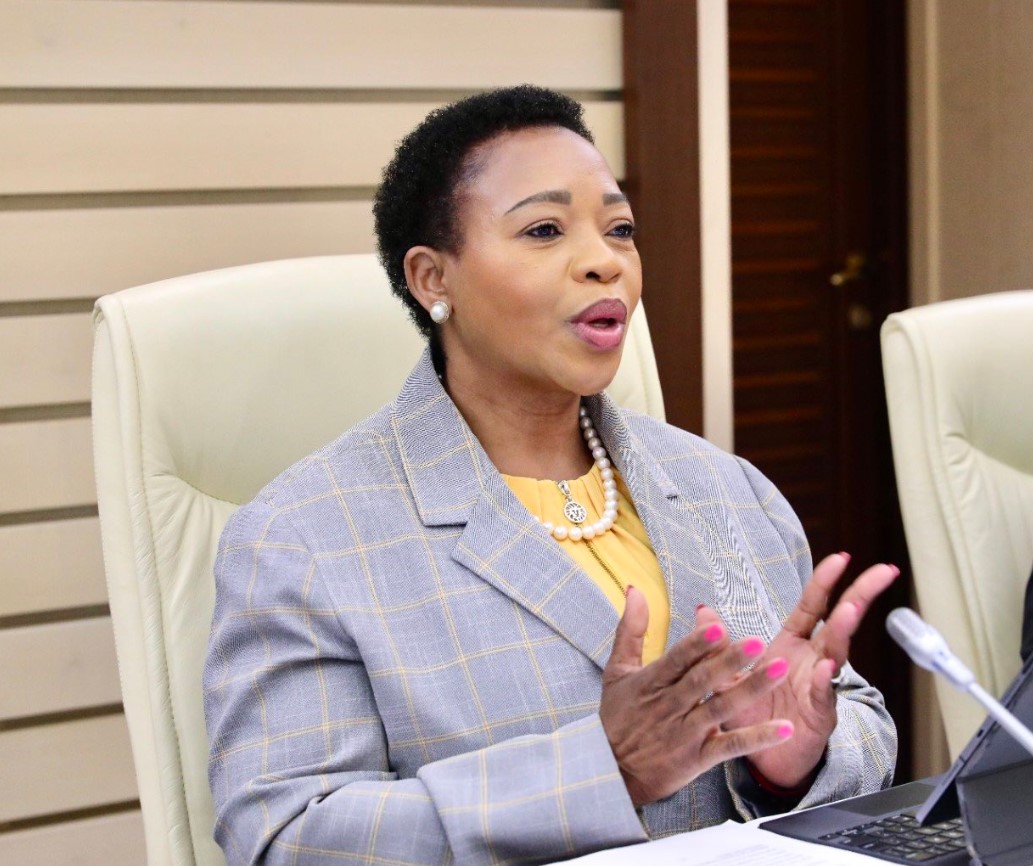
Deputy Minister of Higher Education and Training, Nomusa Dube-Ncube, has joined iStore Education and iSchoolAfrica for the launch of the iSchoolAfrica Coding and Robotics Centre at Igugu Primary School in Soweto, calling for equal access to 4th Industrial Revolution tools across the country.
Dube-Ncube said the centre was a significant step towards advancing digital literacy and equipping learners, especially those from township schools, with future-ready technological skills while helping to address the country’s digital divide.
ALSO READ: OPINION| How SA nurses are becoming their own bosses
“Coding is a language. Robotics is a language. Artificial Intelligence is a language. These are the dialects of the Fourth Industrial Revolution. And just as our forebears refused to be excluded from learning in Sesotho, isiZulu, Setswana, isiXhosa — we refuse to allow our children to be excluded from the language of the future,” she said on Tuesday.
“For too long, digital literacy, coding skills, and access to technology have been the exclusive privilege of children in Model C schools. Children whose parents could afford tablets, whose schools had fibre internet, whose classrooms had smartboards.”
The centre seeks to empower education leaders, teachers and learners by helping schools and other institutions integrate Apple technology into their learning environments and strengthen digital education.
DHET said the launch was in line with South Africa’s 4IR skills agenda, aimed at preparing the country to meet global digitalisation standards by taking digital skills into under-resourced schools.
The deputy minister said the centre formed part of a skills revolution, with a focus on the foundation phase to ensure future-ready skills are introduced to learners at an early stage.
ALSO READ: Malema tells EFF youth to drive voter registration
“The 4IR is transforming every single industry. It is changing how we manufacture, how we farm, how we heal the sick, how we move from place to place, and yes — how we learn. Countries that prepare their young people for this revolution will thrive. Countries that don’t will be left behind,” said Dube-Ncube.
She told learners, parents and community leaders at the launch that a “new world” shaped by technology was emerging, and urged pupils to become active and positive participants in it.
She said electric vehicles, artificial intelligence, data science, renewable energy and the green economy, drones and aerospace were among the strategic areas of the new economy in which young people should seek to participate.
Dube-Ncube said the department was committed to ensuring that teacher and lecturer development matched the standards required for digital skills, while also strengthening NSFAS to ensure students were afforded opportunities.
She said the department had also renewed its commitment to investing in digital infrastructure at schools and colleges, warning that isolated coding centres would not be effective if they operated in silos.