


Staff Reporter
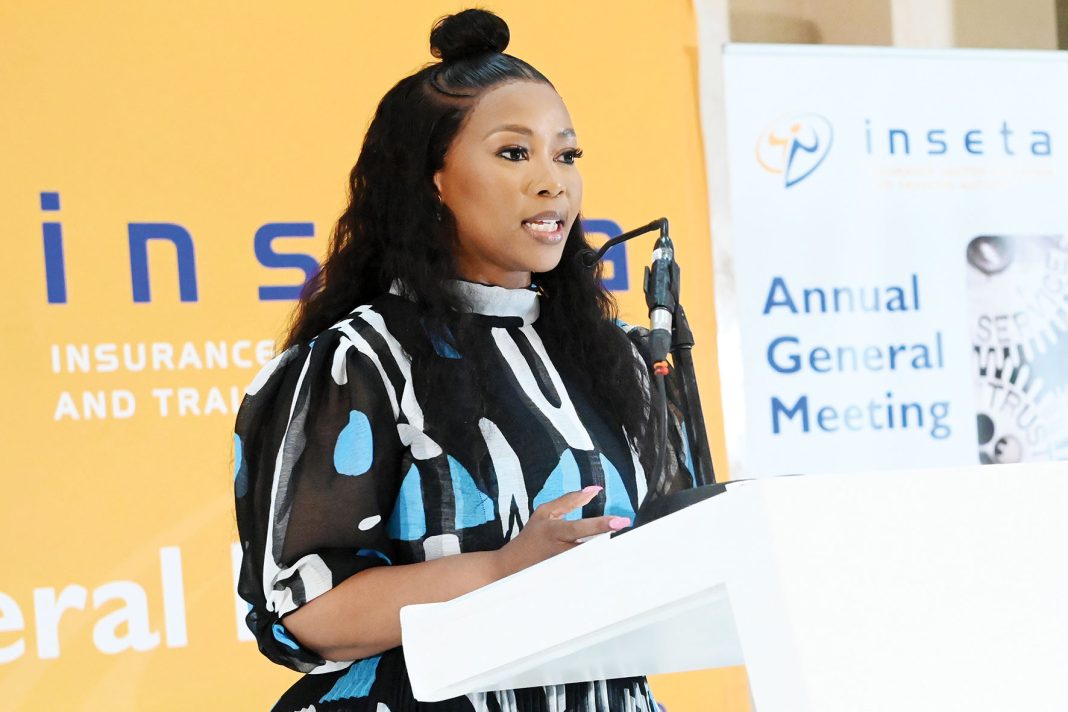
The Organisation Undoing Tax Abuse (OUTA) said on Tuesday that the suspension of Insurance Sector Training Authority (Inseta) CEO Gugu Mkhize should trigger a forensic investigation into governance, procurement and financial management concerns at the public entity.
OUTA has for several years raised concerns about governance, procurement, transparency and accountability at Inseta.
The organisation said the suspension should mark the beginning, rather than the end, of efforts to establish the full extent of any maladministration or wrongdoing at the SETA.
The Sunday Times reported that Mkhize had been placed on precautionary suspension over failures regarding a multimillion-rand tertiary education bursary funding scheme, which had left hundreds of students unpaid for the first five months of the year.
According to the report, 879 vulnerable beneficiaries faced threats of eviction, food insecurity and possible academic exclusion after Inseta paid Mabophe Business Solutions almost R70 million in March, but the funds did not reach students, universities or accommodation providers.
The Sunday Times said that Inseta later made a direct emergency payment of R4.6 million during the week of 21 May, while Inseta said the suspension was a procedural step and “not a finding of wrongdoing”.
Inseta manages billions of rands collected through skills development levies and is responsible for advancing skills development within South Africa’s insurance sector. OUTA said those public funds must be managed with the highest levels of integrity, transparency and accountability.
“For years, serious questions have been raised about governance, procurement, and transparency at Inseta,” said Wayne Duvenage, OUTA CEO.
“A suspension is not accountability. It is the start of a process. South Africans now need assurance that these concerns will be investigated thoroughly, independently, and without fear or favour.”
OUTA is currently challenging Higher Education and Training Minister Buti Manamela’s decision to reappoint Mkhize for a further five-year term from 2025 to 2030.
It has instituted legal proceedings to review and set aside the decision to reappoint Mkhize to the Inseta Board, contending that the appointment process was procedurally flawed and failed to consider concerns relating to governance and accountability adequately.
During Mkhize’s tenure as the accounting authority, Inseta received qualified audit outcomes for five consecutive years.
OUTA said it had submitted numerous requests for information to Inseta over several years in terms of the Promotion of Access to Information Act, seeking records related to governance and procurement matters. Despite following the prescribed processes, it said the requested information was not provided.
After escalating the matter to the Information Regulator, OUTA said it continued to pursue all available avenues to obtain access to the information and remained committed to ensuring transparency and accountability at Inseta.
“Transparency is not optional in publicly funded institutions,” said Duvenage.
“When access to information is repeatedly denied, and concerns remain unanswered, public confidence is undermined. Accountability requires openness, particularly where public funds are involved.”
OUTA said any investigation should go beyond the immediate circumstances of Mkhize’s suspension and examine governance, procurement, and financial management concerns within Inseta.
“A credible investigation must follow the evidence wherever it leads,” said Duvenage.
“It should establish whether there was irregular or wasteful expenditure, whether procurement processes complied with the law, whether conflicts of interest existed, and whether any provisions of the Public Finance Management Act were breached.”
OUTA said the suspension represented an important development, but that accountability would ultimately be measured by the quality of the investigation and the consequences that followed if wrongdoing was uncovered.
“If misconduct is identified, appropriate disciplinary, civil, and criminal action must follow. South Africans deserve confidence that public institutions are governed in the public interest and not for the benefit of a few.”
INSIDE EDUCATION