


By Charmaine Ndlela
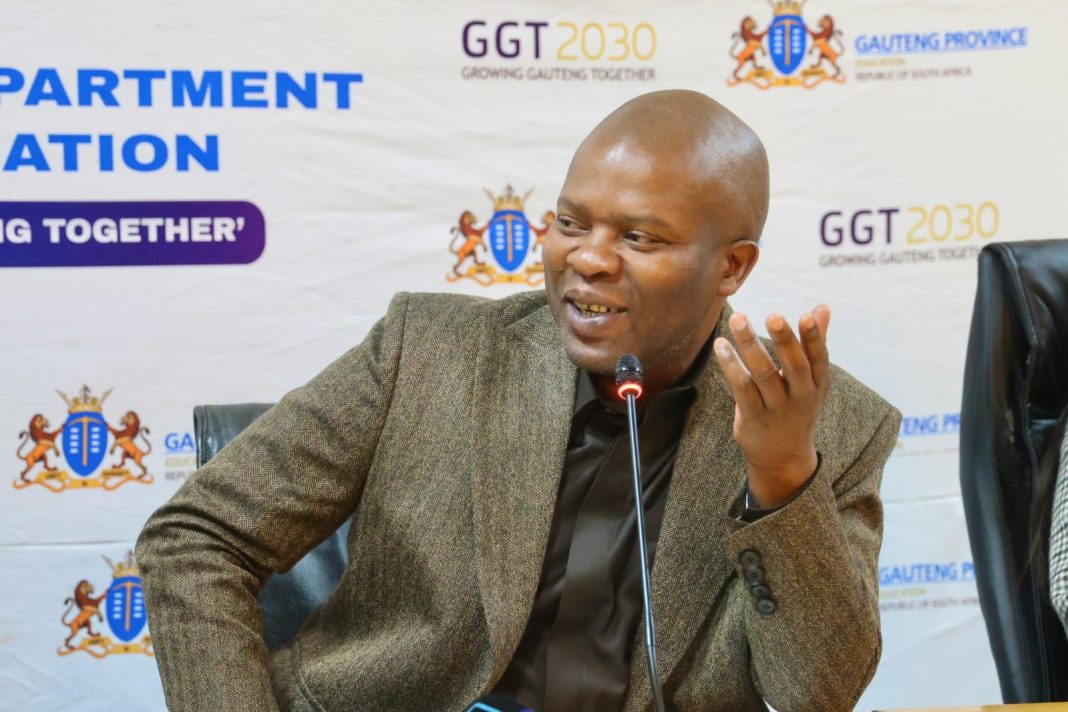
Gauteng Education MEC Lebogang Maile will push for criminal action against officials implicated in school financial mismanagement, saying dismissals are not enough where public money has been stolen.
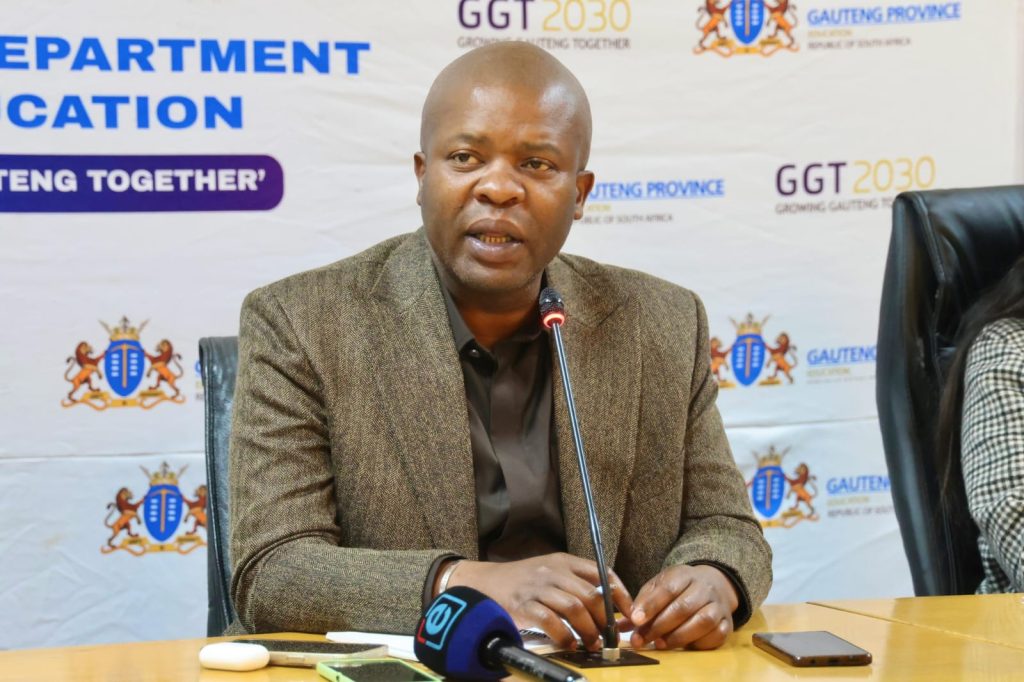
Presenting the Gauteng Department of Education’s R70.9 billion budget for the 2026/27 financial year at the provincial legislature on Tuesday, Maile said that the department had identified around 30 schools where financial mismanagement had been detected.
ALSO READ: Isuzu turns literacy project into long-term school support
“I don’t just want people to be fired, I want them to be arrested. Firing is not enough,” he said.
Maile said he intended engaging law enforcement agencies and prosecutors to ensure cases involving the theft of school funds were criminally investigated.
He cited one case involving a principal at a Katlehong school, who allegedly withdrew R400,000 from a school’s bank account.
“They just fired the principal. I said I want that principal arrested. We can’t have people stealing public money and simply walking away,” he said.
The warning came as Maile tabled a budget aimed at responding to overcrowding, learner support needs, school safety, infrastructure pressures and improving academic performance across the province.
The allocation represents a R2.9 billion increase from the previous financial year.
Maile said Gauteng continued to face significant challenges linked to rapid urbanisation, rising learner enrolment and overcrowding in schools.
The province currently serves more than 2.86 million learners across 3,320 schools.
According to the department, R54.6 billion of the total budget is allocated to employee compensation, with approximately R52 billion going towards educator salaries.
Addressing concerns over the shortage of social workers in schools, Maile said budget constraints made it impossible to place a social worker at every school in Gauteng.
ALSO READ: UCT remains Africa’s top university despite QS ranking drop
“There’s a lot of demands, but the resources are minimal. So it’s ideal that every school must have a social worker. We don’t have the money and the problem is that because sometimes we don’t explain, an impression is that the government has got a lot of money, the government must provide social workers, must provide, build everybody a house, unfortunately, that’s not the case,” he said.
“We are still able to provide psychosocial support through our districts, but it is not enough. We have more than 2,000 public schools. To place a social worker in every school would require resources we simply do not have,” he said.
Maile said the department continued to work with the Department of Social Development to provide support services to learners where possible.
To improve access to quality early learning, the department has allocated R994 million towards Early Childhood Development programmes.
A further R1.2 billion has been set aside for interventions aimed at improving learner performance in Mathematics, Science, Technology and literacy.
Infrastructure development will receive R2.7 billion, while R3.7 billion has been allocated to education modernisation initiatives, including school reorganisation and the expansion of specialised schools.
The MEC also reaffirmed the department’s commitment to supporting learners with special educational needs, saying dedicated funding had been allocated to programmes targeting vulnerable learners.
School safety and learner wellbeing remain key priorities, with R3.3 billion earmarked for learner wellness programmes, psychosocial support, anti-drug initiatives, school health services, sports, arts and cultural development.
In addition to the provincial allocation, the department will receive R3.9 billion in conditional grants to support infrastructure projects, school nutrition programmes, Early Childhood Development, Mathematics, Science and Technology initiatives, as well as services for learners with disabilities.
Maile also announced that the Gauteng Department of Sport, Arts, Culture and Recreation had been allocated R1.055 billion for the 2026/27 financial year.
The funding will support youth development, literacy programmes, talent identification and community participation in sport, arts and culture.
More than 400 schools will participate in the province’s Sport Wednesday programme, while sporting equipment and attire will be provided to 500 schools. The department said it would also support over 600 learners competing at provincial and national level.
Maile said the initiatives were aimed at identifying young talent while promoting discipline, social cohesion and educational development.
The province is also investing in literacy programmes, with R297.6 million allocated to library and archival services, including R194.8 million that will be transferred to municipalities to modernise community libraries.
An additional R5.1 million has been set aside for reading programmes across Gauteng communities as government seeks to improve literacy outcomes among young people.