
By Lebone Rodah Mosima
South African universities and colleges must give students greater workplace exposure because qualifications alone are no longer enough to secure employment in a rapidly changing digital economy, Deputy Communications and Digital Technologies Minister Mondli Gungubele has said.

Speaking at the Skills for the Economy and Industry Dialogue, Gungubele said South Africa faced a disconnect between employers reporting shortages of digital skills and young graduates struggling to find work.
ALSO READ: OPINION| World Skills Youth Day: SA has misunderstood what skills are
“Industry tells us there is a shortage of digital skills. Young people tell us they cannot find work. Educational institutions continue to produce graduates. Clearly, somewhere within this ecosystem, there is a disconnect,” he said.
He said work-integrated learning, including internships, mentorship, practical projects and exposure to employers, should become central to preparing students for employment.
“One of the greatest mistakes we can make is to believe that qualifications alone are enough,” he said.
“Increasingly, employers are asking a different question: Not only, ‘What qualification do you have?’ But also, ‘What can you actually do?’”
The dialogue brought together government, universities, technical and vocational education and training institutions, industry representatives and young people to examine how education could respond more effectively to the requirements of the digital economy.
Gungubele said young people needed opportunities to demonstrate their abilities in real workplaces through internships, innovation challenges and industry projects.
“They need the confidence that comes from solving real problems,” he said.
“This aligns perfectly with the Department’s vision of promoting a skills-first approach, where competence, creativity and innovation are recognised alongside formal qualifications.”
Participants were expected to produce an Industry Expectations Statement, Youth Transition Insights, an Action and Commitments Matrix and a mechanism to ensure that commitments made during the dialogue were implemented.
ALSO READ: Karabo Primary teacher remains in custody for alleged sexual abuse of learner
Gungubele said universities should not be judged only by the number of graduates they produced.
“Universities must not only produce graduates; they must also become centres of innovation where research is translated into practical solutions that grow the economy, create jobs and improve people’s lives,” he said.
He pointed to the Department of Communications and Digital Technologies’ partnership with the Tshwane University of Technology, which hosts one of the department’s Artificial Intelligence Innovation Hubs.
The hub focuses on the automotive sector and brings together students, researchers and industry to develop artificial intelligence solutions aimed at strengthening South Africa’s manufacturing capability.
Gungubele said artificial intelligence, cloud computing, cybersecurity, data science, software engineering, robotics and advanced manufacturing were transforming the economy and changing the skills employers required.
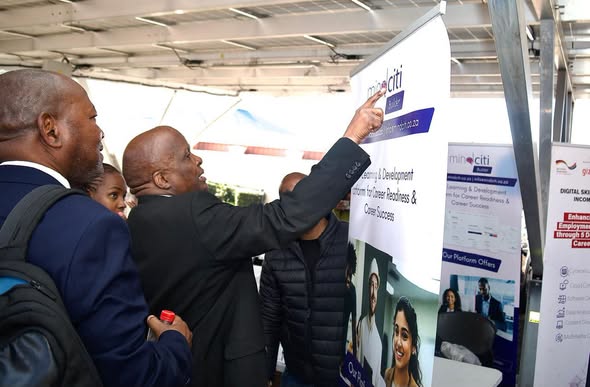
Young people attending the programme had participated in exhibitions, technology demonstrations and other practical activities before the formal dialogue. They also interacted with industry partners, innovators and entrepreneurs.
“That practical engagement is important, because learning cannot remain confined to the classroom,” Gungubele said.
“Young people must be able to touch technology, experience innovation, interact with employers and begin to see themselves as active participants in the digital economy.”
He said universities should identify where curricula needed to evolve, while employers should clearly state which skills were missing from the labour market.
Government, in turn, needed to respond through policy and programmes and include young people in discussions about the transition from education to employment.
“Too often we speak about young people. Today we must speak with them,” he said.
“We need to understand the barriers they experience when transitioning from learning into employment.”
ALSO READ: As schools reopen, Hammanskraal family still waiting for missing initiate
Gungubele said investments in broadband, digital public infrastructure, artificial intelligence and innovation would have limited economic value unless South Africa also developed people capable of using those technologies.
“A fibre network without skilled people creates limited value. A data centre without digital talent creates limited value. Artificial Intelligence without ethical, capable innovators creates limited value,” he said.
He called on government, educational institutions, industry and development partners to make clear commitments that young people could hold them accountable for.
Gungubele warned that technological change would continue regardless of whether South Africa’s education and training system was prepared.
“The only question is whether South Africa will produce the talent that leads this transformation, or whether we will simply consume innovations developed elsewhere,” he said.