


By Lebone Rodah Mosima
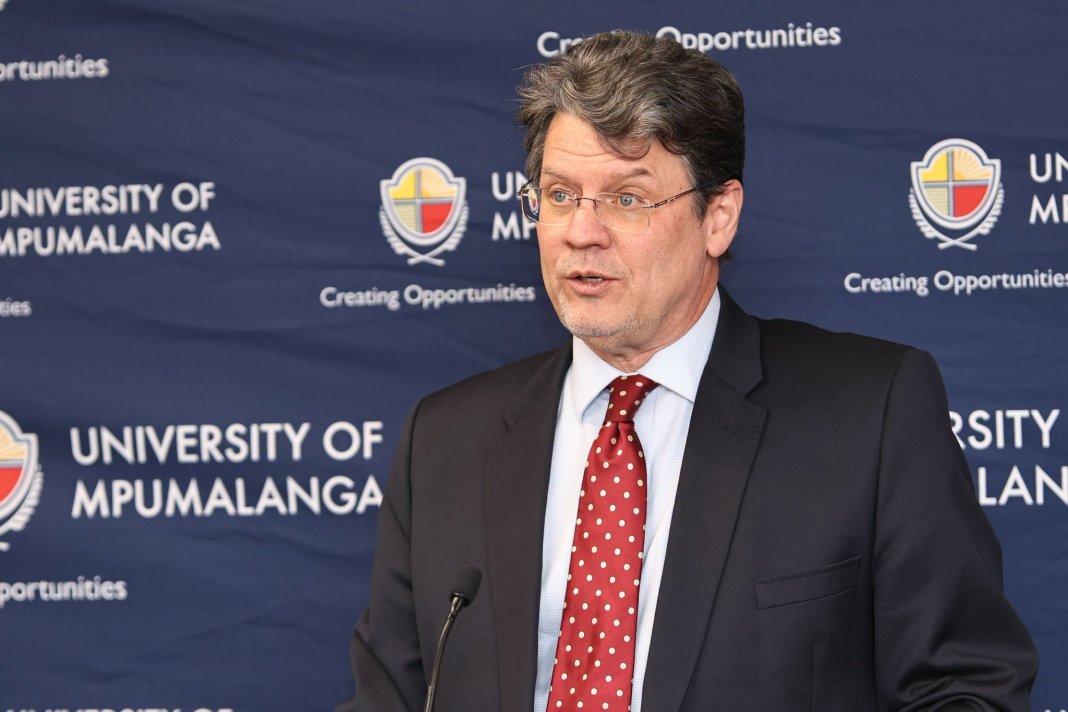
Deputy Justice and Constitutional Development Minister Andries Nel has called for South Africa to move beyond using indigenous languages only for court interpretation and instead develop them as languages of legal education, scholarship and judicial decision-making.
Delivering a public lecture on “Indigenous Languages and the Justice System” at the University of Mpumalanga on Tuesday, Nel proposed a five-year partnership between the university, the South African Judicial Education Institute (SAJEI) and the Brigitte Mabandla Justice College to expand multilingual justice, develop legal terminology and strengthen interpreter training.
“Interpretation remains indispensable. However, we must progress from interpreted participation towards multilingual production,” Nel said.
“A genuinely multilingual constitutional order therefore requires more than interpreted access. It requires participation in the production of jurisprudence itself.”
Nel said the Department of Justice should consider signing a memorandum of understanding with the University of Mpumalanga through the Brigitte Mabandla Justice College to establish a national centre of excellence for justice sector education, research and professional development.
He said Section 6(2) of the Constitution imposed a clear obligation on the state to promote indigenous languages.
“It recognises the historically diminished use and status of the indigenous languages of our people and imposes a positive duty upon the state to take practical and positive measures to elevate their status and advance their use,” he said.
“It requires action, not ceremonial recognition. It requires measures that are practical and positive, not promises that remain permanently aspirational.”
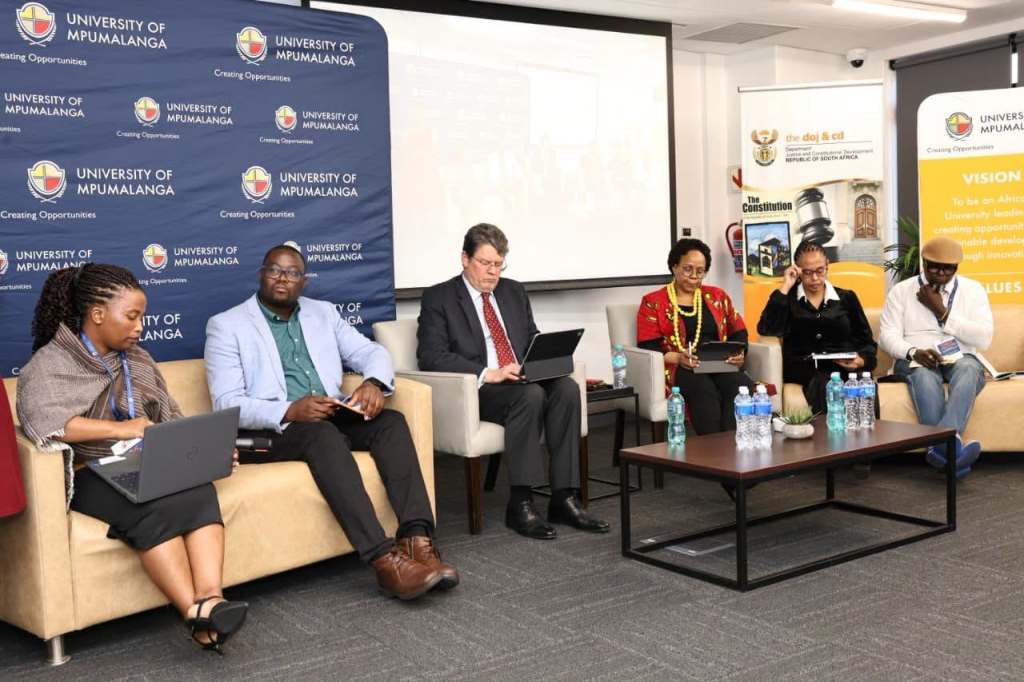
Nel acknowledged the irony of delivering a lecture on indigenous languages in English, noting that English continues to dominate legislation, court judgments, legal publishing, university teaching and professional practice.
“I use it today as a shared medium, but that convenience itself reflects the historical process this lecture addresses,” he said.
He argued that constitutional recognition of indigenous languages would remain symbolic unless government invested in legal terminology, translation systems, publishing programmes, teaching materials, digital language resources and dedicated funding.
“We proclaim that indigenous languages must be elevated, yet fail to build the terminology units, translation systems, publishing programmes, professional incentives, digital corpora, teaching materials and budgets required to do so,” Nel said.
He added that while litigants can participate in court proceedings in their own languages through interpreters, the legal system itself continues to operate largely in English.
“The relevant question is not whether isiNdebele, siSwati, Xitsonga, Sepedi, isiZulu, isiXhosa, Sesotho, Setswana or Tshivenda are capable of jurisprudence,” he said.
“The question is whether South African institutions will invest the sustained intellectual labour required to develop that capacity within the modern legal system.”
Nel challenged the University of Mpumalanga to play a leading role in developing multilingual jurisprudence rather than simply teaching the legal traditions inherited from the past.
He also warned that the future of indigenous languages would increasingly depend on technological development.
“Artificial intelligence, speech recognition, machine translation and digital government services all require quality language resources,” he said.
“Languages that are not developed digitally risk being left behind.”
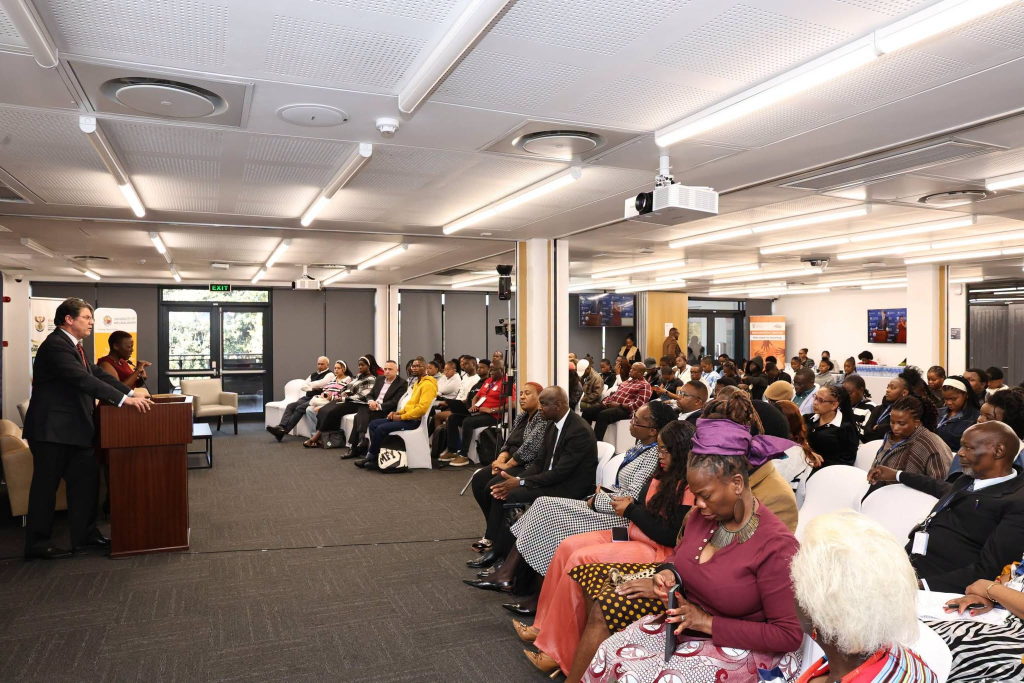
Highlighting the role of court interpreters, Nel said they remain among the most important yet least recognised professionals in the justice system.
He said South Africa employs about 1,900 permanent court interpreters and more than 500 ad hoc interpreters, with Shona being the most frequently requested foreign language in the country’s courts.
Nel also cautioned against calls to replace constitutional supremacy with parliamentary sovereignty and substitute Roman-Dutch law with an indigenous legal order.
“The grievance to which this proposal appeals is real. However, the proposed remedy, whilst radical in form, is reactionary in substance,” he said.
He argued that parliamentary sovereignty was the constitutional mechanism through which apartheid laws were enacted and said South Africa’s focus should instead be on implementing the Constitution’s multilingual vision.
“Thirty years after the adoption of the Constitution, our task is not merely to praise its multilingual promise but to build the institutions through which that promise can be realised,” Nel said.
“Let us ensure that every language of our people can become a language not only in which justice is heard but through which justice is imagined, reasoned and made.”
INSIDE EDUCATION