
By Lebone Rodah Mosima
The Department of Basic Education is using the classroom as a frontline in the fight against gender-based violence and femicide (GBVF), rolling out new Life Orientation and Life Skills textbooks aimed at equipping learners to navigate issues including consent, healthy relationships, safety, wellbeing and citizenship.
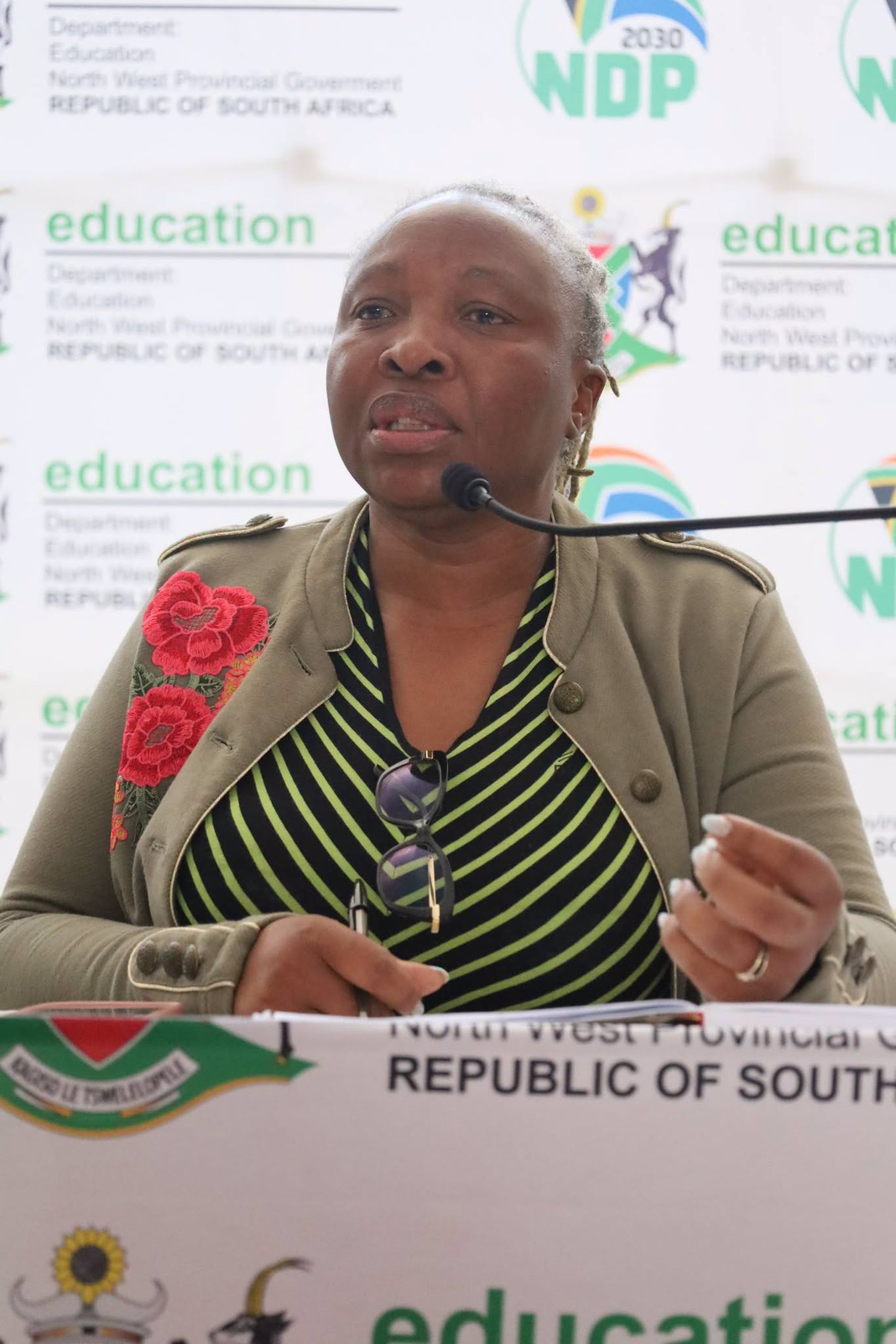
Deputy Basic Education Minister Reginah Mhaule and North West Education MEC Desbo Mohono on Thursday officiated at the At the Crossroads Life Orientation/Life Skills Textbook Activation Launch and Textbook Handover at Rutanang Primary School in the Boitshoko Circuit, Bojanala District.
Mhaule said the rollout includes 14,714 learner textbooks and 250 teacher guides, developed in line with the Curriculum and Assessment Policy Statement (CAPS) for Grades 4 to 12.
The materials will be distributed to 18 schools in the circuit and reach about 9,064 learners.
The Life Orientation textbook project began in 2017, but Mhaule said the Council of Education Ministers later undertook a review of the curriculum to determine whether it adequately reflected the realities faced by learners.
“The honest answer, at the time, was ‘No. Not fully.’ And so, the work began to change that,” Mhaule said.
She said the rollout marked the activation of a programme rather than the conclusion of a project.
“We officially launched the At the Crossroads textbook series nationally in June last year. What we are doing today, here in Bojanala District, is different and, in many respects, more important. We are moving from policy documents to the hands of a Grade 7 learner in Tantana, a Grade 10 learner in Boitekong, a teacher in Lerutlhware preparing tomorrow’s lesson,” she said.
Mhaule said the success of curriculum reform would ultimately be determined in classrooms rather than government offices.
“This is why the training of our Subject Advisors and Heads of Department matters so much. A textbook, however well written, is only as powerful as the educator who brings it to life,” she said.
Mhaule said GBVF was among the most serious threats to the safety, dignity and future of children, particularly girls, and that education had to form part of the response.
“We cannot legislate our way out of this crisis alone. We cannot police our way out of it either,” she said.
“We must educate our way through it, patiently and consistently, from the earliest grades, so that our learners grow up understanding consent, respect, healthy relationships and their own worth, long before those lessons are tested by the pressures of adolescence and adulthood.”
She said this was the purpose of the revised Life Orientation and Life Skills curriculum.
Mhaule thanked the GBVF Response Fund for supporting the programme, particularly the training of Subject Advisors and Heads of Department.
She also acknowledged the Eskom Development Foundation for supporting the printing and distribution of the textbooks, saying its Electricity Safety Awareness Campaign reflected the broader principle that child safety could not be confined to a single lesson or subject.
“Safety on our roads, safety around water, safety around electricity infrastructure, food safety in the school nutrition programme, safety within our relationships and safety with our own bodies,” she said.
“These are all part of the same conversation about protecting the well-being of a child.”
Addressing learners, Mhaule said young people should play an active role in shaping discussions around their safety and wellbeing.
She encouraged them to use the textbooks, ask difficult questions and speak out when they encountered wrongdoing.
“An educated learner who knows their rights is one of the strongest defences we have against gender-based violence, against unsafe choices and against the social ills that continue to threaten the promise of a better life for all,” she said.
Mhaule said the 18 schools in the Boitshoko Circuit would serve as a pilot for the programme, with lessons from its implementation informing its expansion to other provinces.
“To our principals, subject advisors and educators here in the Boitshoko Circuit, you are the custodians of this pilot,” she said.
“What happens in your eighteen schools over the coming months will generate lessons that inform how we take this programme to the Northern Cape, to the Western Cape, and nationwide.”
She urged educators to use the textbooks consistently and participate in monitoring and evaluation processes so that the department could identify what worked and what needed to be improved before the programme was expanded.
Mhaule also described the initiative as an example of the role partnerships can play in addressing social challenges.
“The Department of Basic Education, the National Education Collaboration Trust, the Eskom Development Foundation and the GBVF Response Fund have chosen to walk this road together so that 14,714 learners in this district will open a new textbook tomorrow morning, written for them, about them and in service of their futures,” she said.
She called on other strategic partners to support the initiative, saying there was a need for more organisations to contribute to the programme.
Mhaule said learners stood at a crossroads in making decisions about relationships, safety, citizenship and the people they wanted to become.
“Let us make sure that what we place there is honest, relevant and rooted in respect for their dignity,” she said.
INSIDE EDUCATION