


By Thapelo Molefe
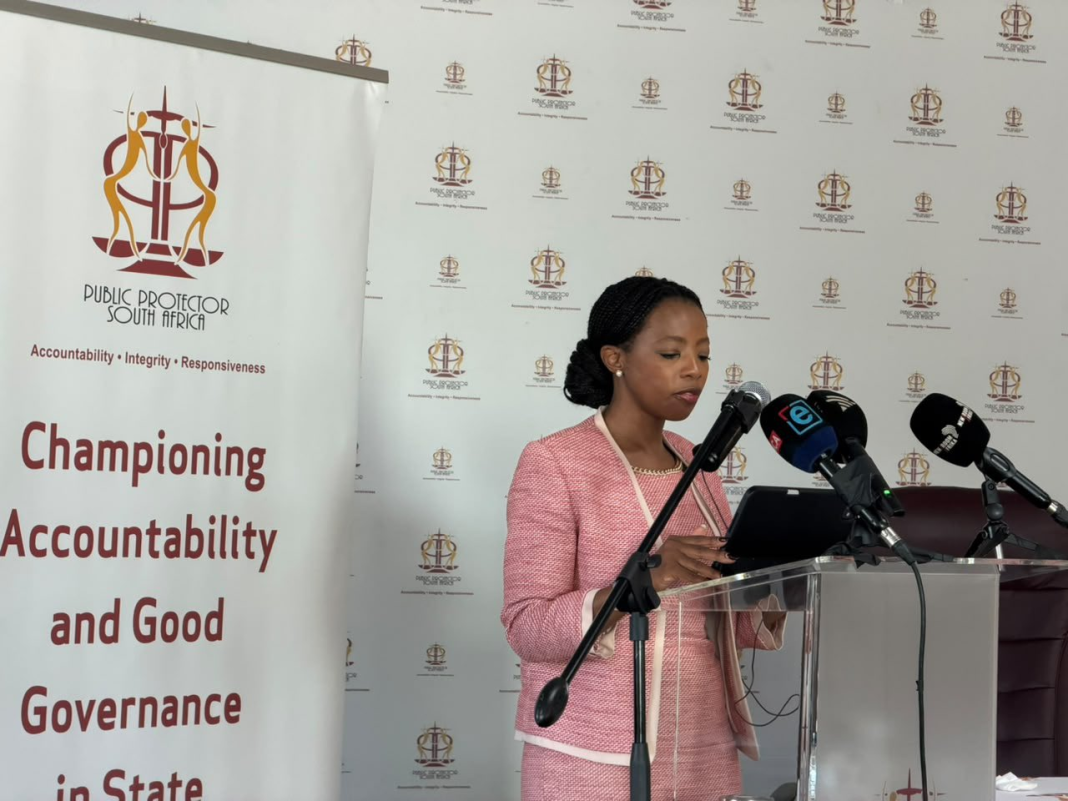
More than 40,000 students at 76 higher education institutions were improperly funded by the National Student Financial Aid Scheme (NSFAS), at a cost of approximately R5.1 billion, with more than R2 billion recovered so far, Public Protector Advocate Kholeka Gcaleka said on Tuesday.
The figures form part of an investigation by the Public Protector into systemic maladministration at NSFAS, which found that failures in the student financial aid system went beyond administrative shortcomings and caused direct and foreseeable harm to students.
Gcaleka made the findings while briefing the media in Pretoria on the progress of her systemic investigation into alleged maladministration at NSFAS.
She said information presented by the Special Investigating Unit (SIU) to Parliament’s Standing Committee on Public Accounts was among the developments that raised concerns about NSFAS and contributed to the investigation.
The investigation found that allegations of systemic deficiencies in the administration, governance, funding, coordination and oversight of student financial aid were substantiated.
Gcaleka said students had experienced recurring delays in funding decisions, appeal outcomes and allowance payments, with the consequences extending beyond inconvenience.
“These delays caused direct and foreseeable prejudice, including food insecurity, accommodation instability and exposure to unsafe living conditions,” she said.
The investigation found that the problems affecting students were not isolated incidents but reflected recurring failures across the higher education sector.
The Public Protector said the investigation began after complaints against NSFAS concerning administrative deficiencies affecting students’ access to financial aid and, consequently, higher education.
However, as the investigation progressed, the office identified broader systemic challenges, including inadequate access to tuition funding, inefficiencies in existing funding mechanisms, delays in allowance payments and problems with the administration of funding criteria.
“The recurrence and consistency of these concerns strongly suggested the existence of systemic rather than isolated administrative deficiencies,” Gcaleka said.
The investigation also found persistent instability at NSFAS, which the Public Protector said had weakened the entity’s ability to fulfil its statutory mandate effectively.
The office pointed to leadership and governance disruptions dating back several years, including the suspension and termination of former CEO Andile Nongogo in 2023, the dissolution of the NSFAS board in 2024 and renewed governance difficulties after a new board was appointed in 2025.
NSFAS has also been placed under administration three times in the past eight years — in 2018, 2024 and 2026.
The Public Protector said independent reviews, including a 2021 Ministerial Committee of Inquiry, had found that NSFAS had operated in a “near-permanent state of crisis”.
Gcaleka said the instability had contributed to repeated failures in the administration of student funding.
“The evidence gathered depicts NSFAS as an institution affected by persistent governance instability, administrative weakness and inadequate systems,” she said.
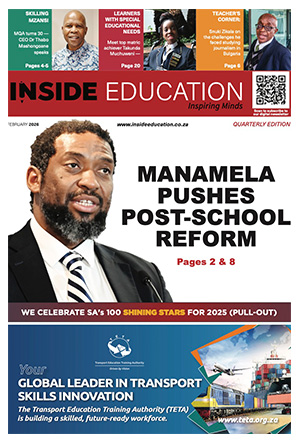
Higher Education and Training Minister Buti Manamela welcomed the Public Protector’s report, saying its findings were consistent with longstanding concerns about NSFAS.
“The issues identified in the report are not new. They are among the longstanding governance, administrative and operational challenges at NSFAS that have been a matter of concern to the Minister,” Manamela said.
He said these challenges had contributed to his decision to place NSFAS under administration.
The investigation found that students continued to face delays in funding confirmations, allowance payments and appeals.
The Public Protector also raised concerns about NSFAS’s ability to assist students when they sought help.
NSFAS reported that it was unable to resolve 80% of queries received through its contact centre without escalating them to internal units.
The Public Protector found that the entity’s limited accessibility and ineffective query-resolution arrangements undermined students’ ability to obtain assistance on matters directly affecting their access to higher education.
Gcaleka said NSFAS’s limited accessibility had affected its ability to provide students with effective assistance.
“The inability to establish accessible and responsive administrative mechanisms capable of providing students with effective assistance in relation to matters that directly affect their constitutional right to further education, is in conflict with section 195(1)(e) and (g) of the Constitution,” she said.
The investigation further found that delays in eligibility verification were linked to NSFAS’s reliance on third-party data sources and weak interfaces with institutions and state entities such as Home Affairs, SASSA and SARS.
These weaknesses contributed to delays in funding determinations and resolving eligibility disputes.
Mid-year defunding and funding reversals were also found to have caused serious disruption to students who had already enrolled and started their studies.
The Public Protector said such decisions exposed students to severe financial, academic and personal prejudice, particularly where funding was withdrawn after the academic year had begun.
The investigation found that NSFAS needed to address eligibility verification delays and ensure that students received timely decisions, adequate notice and an opportunity to respond before adverse funding decisions were implemented.
Appeal backlogs added to the problem, with students left unable to secure support while waiting for their cases to be resolved.
The investigation also criticised the pace at which government had implemented recommendations contained in the 2022 Ministerial Task Team report on student funding.
The Public Protector found that three years after the report was tabled before Cabinet, limited progress had been made in converting its recommendations into an operational and coherent funding reform programme.
“Three years after the report was tabled to Cabinet, the evidence indicates limited progress in converting the recommendations into an operational and coherent funding reform programme,” Gcaleka said.
The so-called “missing middle” was among the unresolved issues.
The Department of Higher Education and Training (DHET) reported that NSFAS had been capitalised with R3 billion over a three-year cycle from 2024 to 2027 to support students in this category.
However, despite receiving 43,261 applications from students eligible for the funding, NSFAS could not roll it out because it needed to procure a new loan system.
The Public Protector also found that recommendations on funding postgraduate studies had not been implemented.
Gcaleka said the collective conduct of NSFAS and DHET impaired the practical realisation of the constitutional right to further education and constituted maladministration.
Manamela said the findings were consistent with concerns raised in a report he received earlier this month from NSFAS Administrator Professor Hlengani Mathebula, which identified a range of challenges requiring urgent intervention.
He said his concerns about NSFAS had also intensified after a March meeting with the Auditor-General of South Africa over the scheme’s financial management and governance.
The Auditor-General had issued NSFAS with a disclaimer of opinion, with Manamela saying its accounting records and supporting evidence were so inadequate that the AGSA could not determine whether the financial statements were reliable.
“Measures to remedy the situation will continue to be explored,” Manamela said.
He said the administration of NSFAS formed part of a broader effort to restore stability, strengthen systems and ensure the scheme could fulfil its mandate.
The investigation is now at the stage where affected and implicated parties have an opportunity to respond to the Public Protector’s notice before the findings and proposed remedial action are finalised.
The parties have 60 calendar days from receipt of the notice to submit written representations, including any records, information or evidence they want the Public Protector to consider.
Gcaleka cautioned that the findings contained in the notice are not yet final and may change after the affected parties have made their representations.
The Public Protector has proposed several remedial measures, including requiring NSFAS to clear appeal backlogs, strengthen financial controls and improve its systems for processing funding decisions.
NSFAS would also be required to identify officials or former officials responsible for governance breaches, maladministration and control failures that caused prejudice to students, with consequence management to follow where warranted.
INSIDE EDUCATION