



By Lebone Rodah Mosima
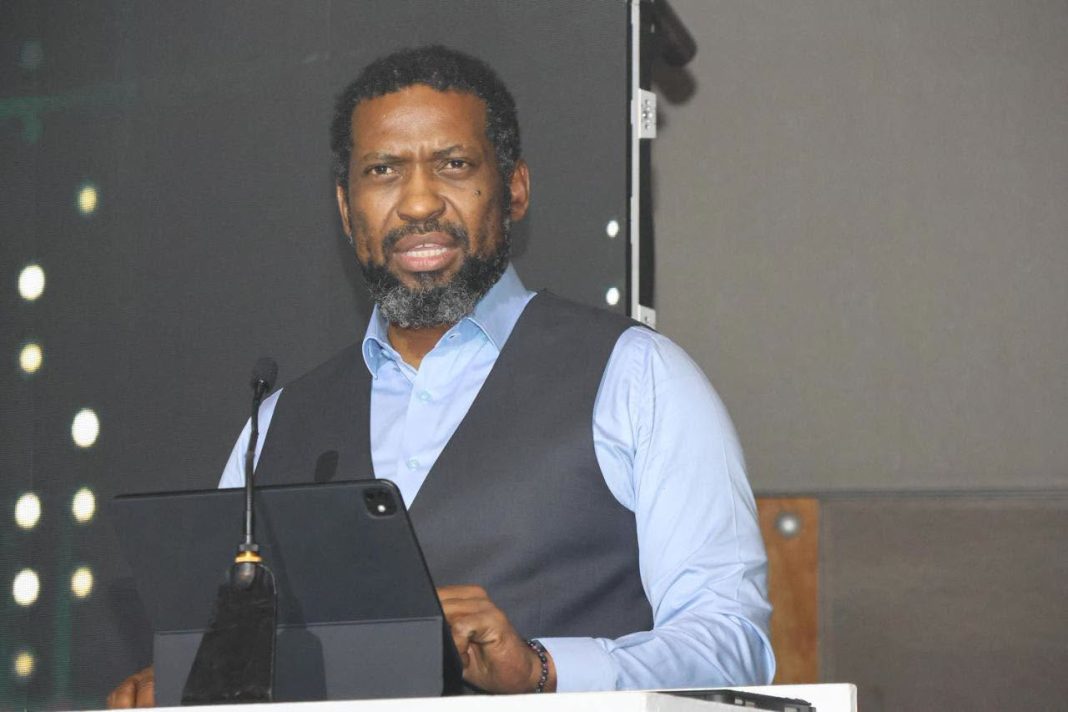
Higher Education and Training Minister Buti Manamela says his department could clear a backlog of between 29,000 and 36,000 TVET students needing workplace opportunities within the next year, as it pushes SETAs, colleges and employers to better coordinate training and placements.
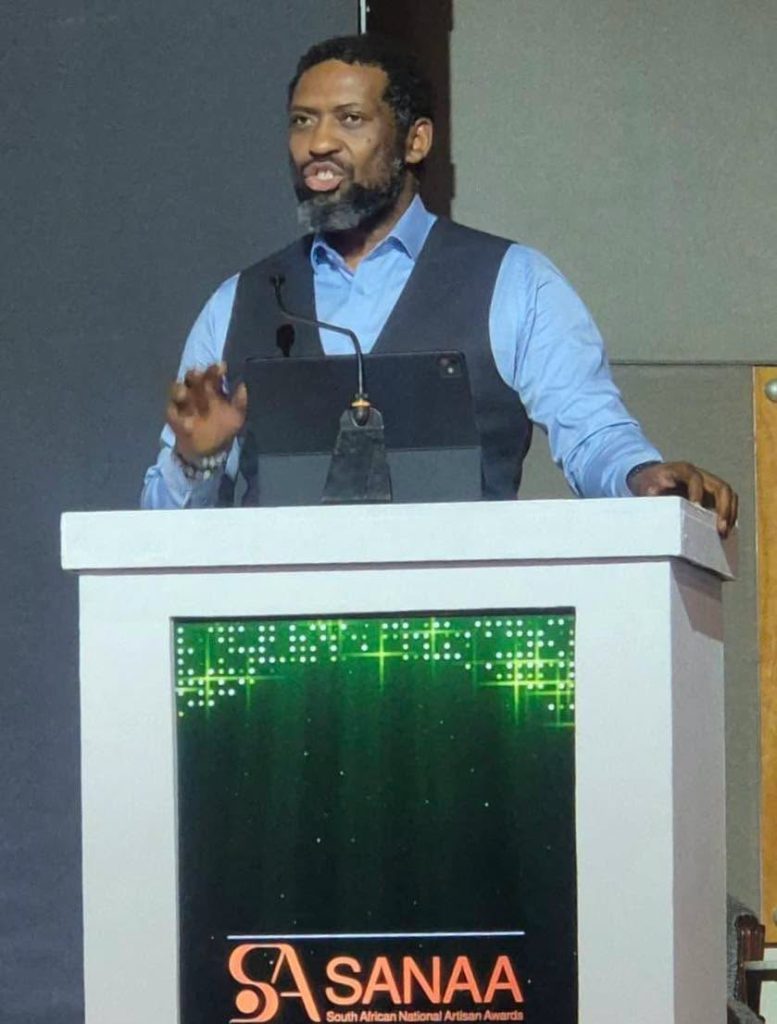
Speaking to Inside Education on the sidelines of the South African National Artisan Awards (SANAA) 2026 in Gauteng, Manamela said figures presented last week showed between 29,000 and 36,000 students still needed assistance, but he believed most could be brought into programmes over the coming year.
ALSO READ: UJ researchers honoured at 2026 NRF Awards
“So that’s the second number we are working on. The third and big number is being able to place each and every student who registers for an occupational trade at our TVET colleges – not just theory, not just workshop, but also link them to a host employer. That will be the major sign of success,” he said.
Manamela said the objective was to create a system in which training led students into workplace experience, employment or entrepreneurship.
He said every young person who walked onto the stage at the awards was linked to employment or had started a business, with each award recipient intentionally connected to some form of work.
“What we need to do additionally is to link them into entrepreneurship,” he said.
“Our economy has been facing major challenges. For the last five years, the economy has been under decline. Unemployment has been its worst, and graduate unemployment has also been affected greatly.”
Manamela said having an in-demand skill improved a young person’s chances of finding work, but the department could not stop training people simply because the economy was struggling to absorb them.

Institutions contributing to the country’s skills pool, he said, had to work more deliberately with industry so that money spent on training produced programmes linked to economic demand.
A particular challenge was finding workplace opportunities for N6 graduates who had completed the academic component of their studies but still needed workplace-integrated learning to obtain their diplomas.
“About two or three years ago, the President announced a target of 10,000 initially of our N6, in particular graduates, getting them into workplace-integrated learning,” he said.
ALSO READ: DUT finalises R1.15m Motsepe Foundation allocation for students with historical debt
“If we succeed with the integrated planning that we have enforced between the department, the SETAs, the National Skills Fund, and to mobilise industry, we should be way in advance to ensure that all those students who have their N6, who do not have their diploma, who do not have work places, are placed.”
Manamela said the department would continue visiting colleges throughout the year to assess infrastructure, the availability of teaching material and whether occupational programmes were starting as planned.
“We have to understand that this is a major transition. It has been in the build up for some few years, and there are going to be a lot of challenges that we’re going to be confronted with,” he said.

“Now and then, there’ll be a student who does have a stipend. We have to check with the principal, the HOD, the person who was responsible for occupational programmes. We have to check with the SETAs that are supposed to fund these programmes, and the National Skills Fund that’s dedicated billions of to this.”
He said the department had to establish whether problems stemmed from inadequate resources or failures in planning, and ensure fragmentation within the system did not hurt students.
College principals, he said, had to take responsibility for what happened at their institutions and would be held accountable by the department.
“Whoever they hold accountable subsequent to that, working together with their council, that’s their issue.”
“We’re going to drag them. We’re going to push them. We’re going to make sure that they give us the results that we want in the country.”
Manamela acknowledged that the transition from legacy qualifications to occupational programmes could temporarily affect the number of artisans qualifying, but said getting the system right over the next year or two could ultimately put the country ahead of its artisan targets.
ALSO READ: Public school fees rise faster than inflation as families battle cost of living crisis
“[W]e think that with time, we should be able to get the TVET college system, the SETA system, our people at NAM, and all these other institutions that are responsible for artisan training programmes, to give us the numbers that we need over time,” he said.
His comments came as SANAA held its second annual awards under the theme “Changing Artisanal Identity and Status”, recognising artisans across 13 priority trades.
The gala featured the SANAA Awards, Artisans of Mzansi Awards and Inter-College Competition Awards, while a Rite-of-Passage Ceremony formally invested 34 artisans as National Artisan Ambassadors.
“The recitation of the SANAA National Artisan Ambassador Declaration is more than a ceremonial moment – it is a solemn pledge that defines the values, responsibilities, and legacy of every artisan chosen to wear the SANAA Ambassador Blazer,” SANAA said.
“This declaration is not just words — it is a living commitment. It reminds artisans that their craft is a cornerstone of South Africa’s economic growth, industrialisation, and community development.”
In his keynote address, Manamela challenged the perception that a university degree was the only path to professional success, saying that qualified artisans carried advanced applied knowledge, judgement and discipline.
“A nation that cannot produce its own plumbers, welders and cobblers does not have the luxury of dreaming about sending people to Mars,” he said.
“The point is simple. Ambition must stand on capability.”
He said talented young people were too often forced to carry the consequences of fragmented planning, weak equipment, delayed certification and too few workplace opportunities.
“The classroom, the workshop and the workplace must operate as one learning system,” Manamela said.
“When they are disconnected, the student pays. When they are aligned, the country gains a capable artisan.”
Manamela said the National Development Plan set an objective of producing 30,000 qualified artisans a year by 2030, but cautioned that progress could not be measured merely through registrations, launches or agreements.
“We must count learners who complete, artisans who qualify, graduates who enter work, and enterprises that survive and grow,” he said.
“We must modernise college workshops and simulators, strengthen lecturer development and industry exposure, and protect the integrity and turnaround times of assessments, trade testing and certification.”
He said workplace learning was a central bottleneck in the artisan training system. While government could fund training and colleges could provide theoretical and simulated practical learning, apprentices could not become fully competent artisans without meaningful exposure to real workplaces under qualified mentors.
Employers, he said, needed to help design programmes, open workplaces, provide mentors, verify competence and absorb capable graduates, while SETAs and the National Skills Fund had to ensure funding followed learners throughout their training.
“The measure is not how many meetings we hold. It is whether, week by week, the system moves more apprentices into workplaces, more candidates through trade tests and more qualified artisans into productive work,” he said.
Manamela also called for women, people with disabilities and young people from rural and township communities to have greater opportunities to enter, qualify and advance in the trades.
“Inclusion is not achieved by enrolment alone. It requires safe training environments, fair assessment, competent mentorship and visible routes into employment, ownership and leadership,” he said.
Addressing the finalists, Manamela said recognition carried a responsibility to uphold the standards of their trades, mentor young people and help create opportunities for others.
He said South Africa valued and needed its artisans, and was now asking them to lead.