


By Charmaine Ndlela
The Department of Higher Education and Training (DHET) is deliberately tracking the number of girls and young women entering STEM-linked TVET programmes as part of a drive to increase women’s participation in engineering, artificial intelligence, robotics and other technology-driven careers.
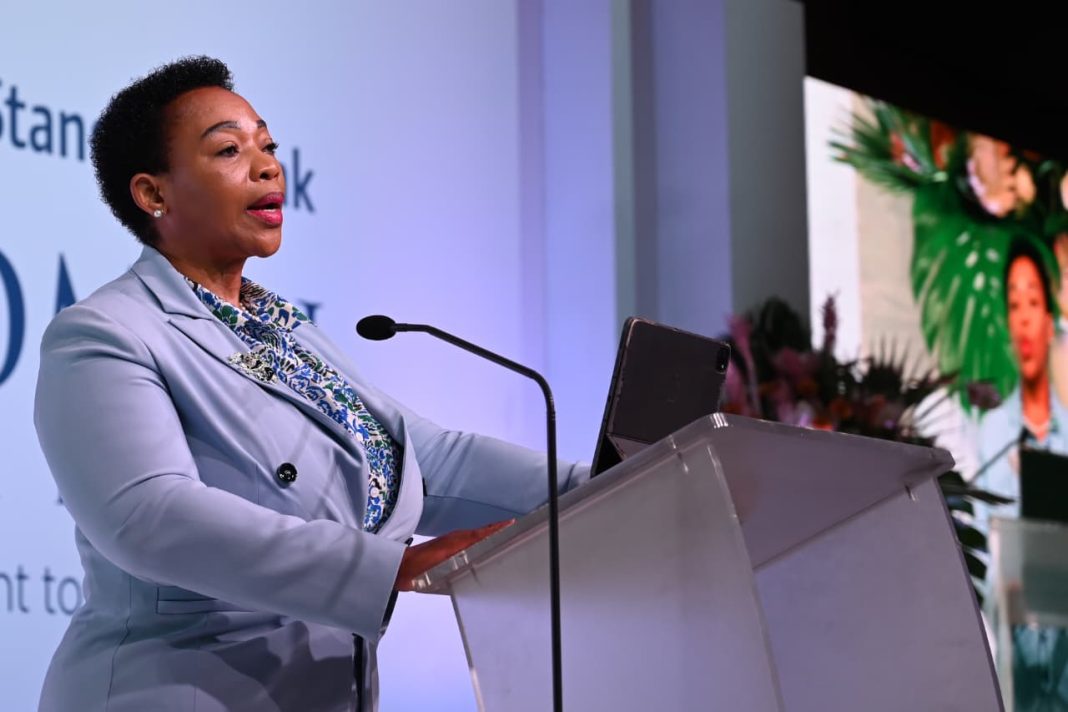
Deputy Minister of Higher Education and Training Dr Nomusa Dube-Ncube said the government was working to equip girls and young women with digital, AI and robotics skills across the post-school education system, from TVET colleges to universities.
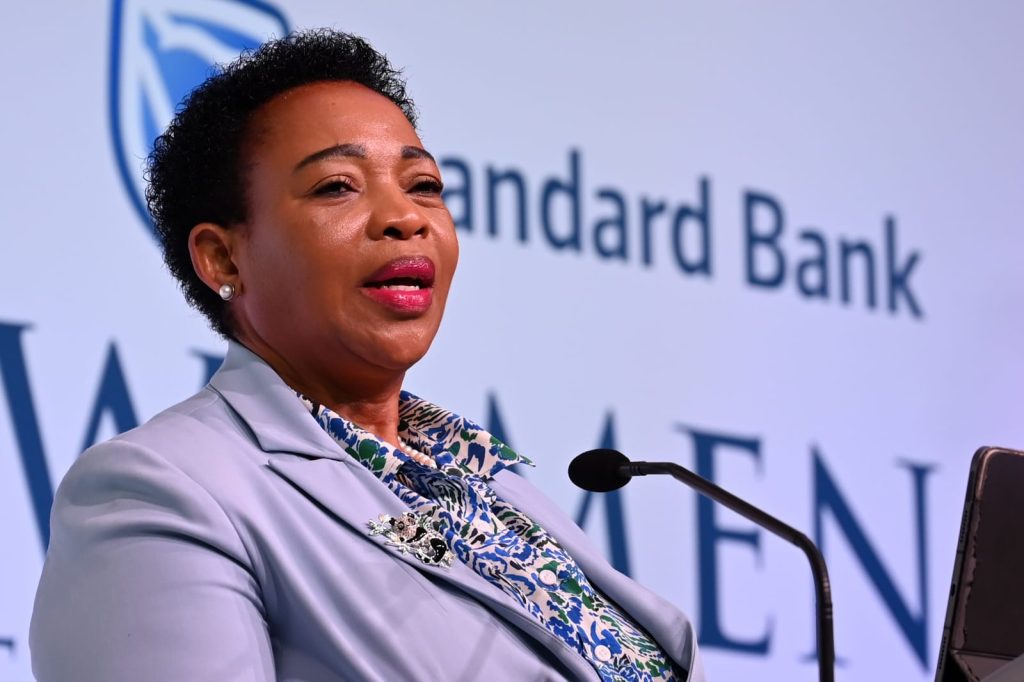
“We are tracking, deliberately, the number of girls and young women entering STEM-linked TVET programmes, because a target we do not measure is a promise we cannot keep,” she said.
She was speaking at the Standard Bank Top Women Conference 2026 at the Sandton Convention Centre in Johannesburg on Tuesday, where she placed education and post-school training at the centre of efforts to expand women’s participation in the economy.
The two-day conference brings together women entrepreneurs, business leaders, policymakers and other stakeholders to examine economic inclusion, skills development, technology and opportunities for women to grow and lead.
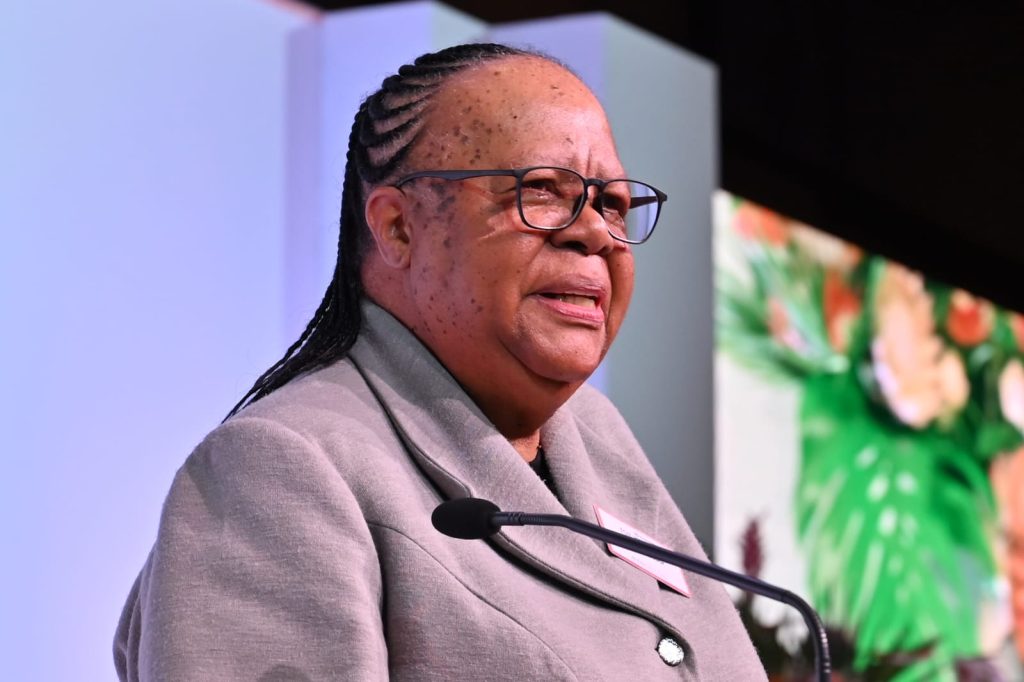
Dube-Ncube challenged stereotypes that continue to discourage girls from entering science, technology, engineering and mathematics fields, singling out engineering, coding, robotics and artificial intelligence as areas where women needed to be represented not only as users of technology but as its creators.
“For too long, chauvinism dressed up as common sense has told girls that engineering, coding, robotics and artificial intelligence are not spaces for them,” she said.
“This was never tradition. It was, and remains, a stereotype, and it has cost this country generations of talent we can no longer afford to waste.”
“The technologies reshaping our economy are built by women, not merely used by them,” she said.
Dube-Ncube said the government was also focused on ensuring that qualifications translate into workplace experience.
She highlighted the department’s Skills Revolution programme, which is expanding Work-Integrated Learning placements to give students practical workplace experience before graduation.
Sector Education and Training Authorities are also partnering with employers to place learners directly into industry, while TVET colleges continue to strengthen the artisan pipeline.
Dube-Ncube said obtaining a qualification should only be the start of a young woman’s journey.
She said education was the first rung on a ladder leading from opportunity to enterprise, representation to multiplication, and mentorship to sponsorship.
“The department can build the technical pipeline. It is this room, and platforms like it, that build the confidence, the networks and the sponsors who turn a qualification into a career, and a career into leadership.”
She said corporate involvement needed to move beyond once-off sponsorships towards sustained commitments that produce measurable outcomes.
These could include bursaries linked to Work-Integrated Learning placements, mentorship that develops into sponsorship and procurement pipelines that create opportunities for women-owned businesses.
“Government brings policy, scale and reach; industry brings capital, workplace exposure and markets. Neither is sufficient alone,” she said.
She said girls’ education was an economic issue, citing World Bank estimates that the global economy forfeits between US$15 trillion and US$30 trillion in lost lifetime earnings and productivity because millions of girls do not complete 12 years of quality education.
She said the figures demonstrated why girls’ education should be treated as an economic priority rather than simply a social intervention.
“A woman who completes secondary education earns, on average, almost twice as much over her lifetime as one who does not,” she said.
“That is not a social statistic. It is an economic one, and it belongs in every industrial strategy, every skills plan and every investment prospectus this country writes.”
Dube-Ncube said Africa could unlock significant economic gains by closing the gender gap.
She cited McKinsey research estimating that Africa could add US$316 billion to its GDP if every country matched the progress of the continent’s best-performing nation on gender parity.
She also pointed to a Mastercard Foundation-commissioned study which puts another US$287 billion on the table by 2030 if the continent reverses the decline in young women’s share of Africa’s GDP.
That contribution fell from 18% in 2000 to 11% in 2022, according to the study cited by Dube-Ncube.
“That is not a statistic we can accept without a fight, and post-school education and training is where that fight is won or lost,” she said.
The Deputy Minister also linked education and economic independence to the fight against gender-based violence and femicide.
She said constitutional rights to dignity, equality and safety must be supported by opportunities that allow women to become economically independent.
“An educated girl, and later a skilled and economically independent woman, has more power to walk away from harm, to negotiate her worth in a relationship or a boardroom, and to refuse a dependency that abusers so often use as a weapon against her,” Dube-Ncube said.
She said investing in girls’ skills was therefore also an investment in their safety and ability to make independent choices.
“South Africa’s future economy starts in today’s classrooms,” she said.
“Every girl equipped with digital, AI and robotics skills is a future engineer, entrepreneur and executive we choose not to lose.”
She said every rand invested in a girl’s education should ultimately be viewed as an investment in economic growth, personal safety and the dismantling of gender stereotypes.
“Let us strengthen this partnership, deliberately and without delay, so that Her Power, truly, becomes Africa’s Future,” she said.
Her call was echoed by Topco Media CEO Ralph Fletcher, who told Inside Education that education and skills should be regarded as fundamental to developing women and nurturing talent within organisations.
Topco CEO Ralf Fletcher at Top Women Conference says Education and skills unleash brilliance and that the best investment is in yourself. With AI giving access to all knowledge, it’s up to skills to make us more productive and open up opportunities for women.
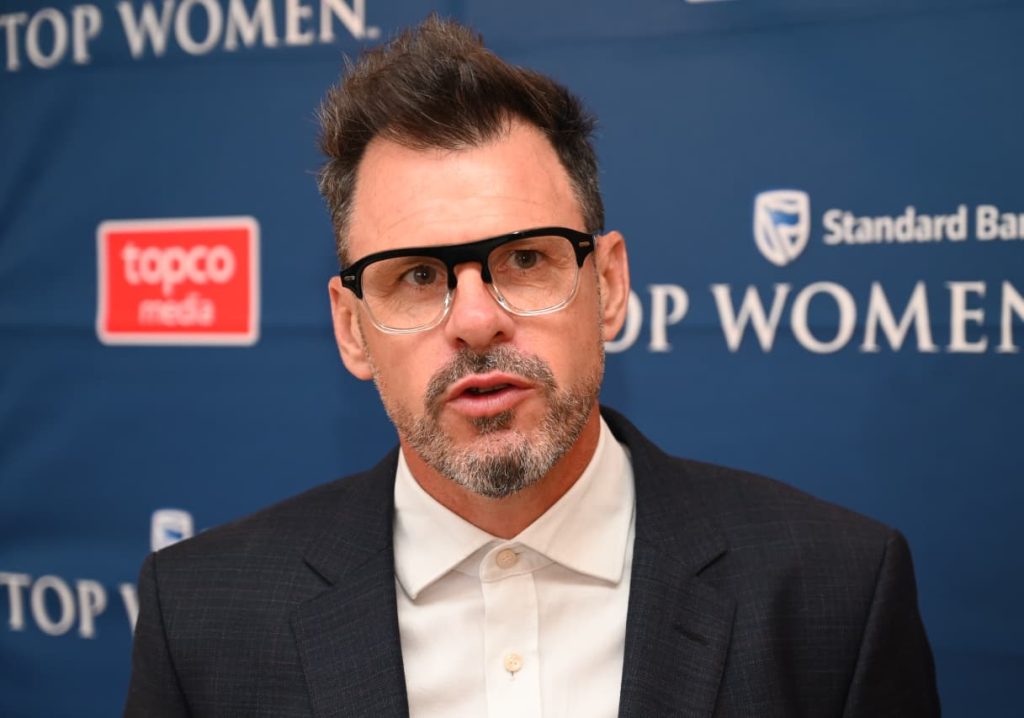
Fletcher said the conference should not be viewed simply as a business networking event, adding that its value also lies in exposing women to opportunities, role models and networks that can help them move from education into enterprise.
“What education does and skills do is it unleashes the brilliance within you,” he said.
Fletcher said businesses had a responsibility to invest in their people, particularly as artificial intelligence changes the workplace and the way people access knowledge.
“With AI, suddenly I’ve got access to all the knowledge, and that skill is going to make us far more productive and raises the bar for all of us and opportunities,” he said.
Fletcher pointed to the growth of the conference’s WhatsApp community and its digital platforms, saying the event’s message was reaching people beyond those physically attending the conference.
The conference programme itself includes initiatives designed to move conversations towards practical opportunities, including Business MatchMaking and PitchPower Networking, while the EmpowHER Pitching Den gives women entrepreneurs an opportunity to present their businesses to potential investors and partners.
Fletcher said the platform’s value could also be seen in the progression of women who had previously participated as finalists or emerging entrepreneurs and had since grown their businesses.
He recalled the example of a civil engineer who was a finalist several years ago and who has since secured major multinational contracts.
“What Top Woman does is it gives people a platform to basically lift their own confidence and confidence that other organisations have in them,” he said.
Fletcher said successful women also played an important role in showing young women what could be possible beyond the classroom.
“People are getting more exposed now to ordinary stories of ordinary women who finished school, didn’t really know where they were going. And now they’re doing extraordinary things,” he said.