


By Lebone Rodah Mosima
Science, Technology and Innovation Minister Blade Nzimande has warned that artificial intelligence and other emerging technologies could usher in new forms of colonialism in Africa unless their development is governed by an ethical framework.
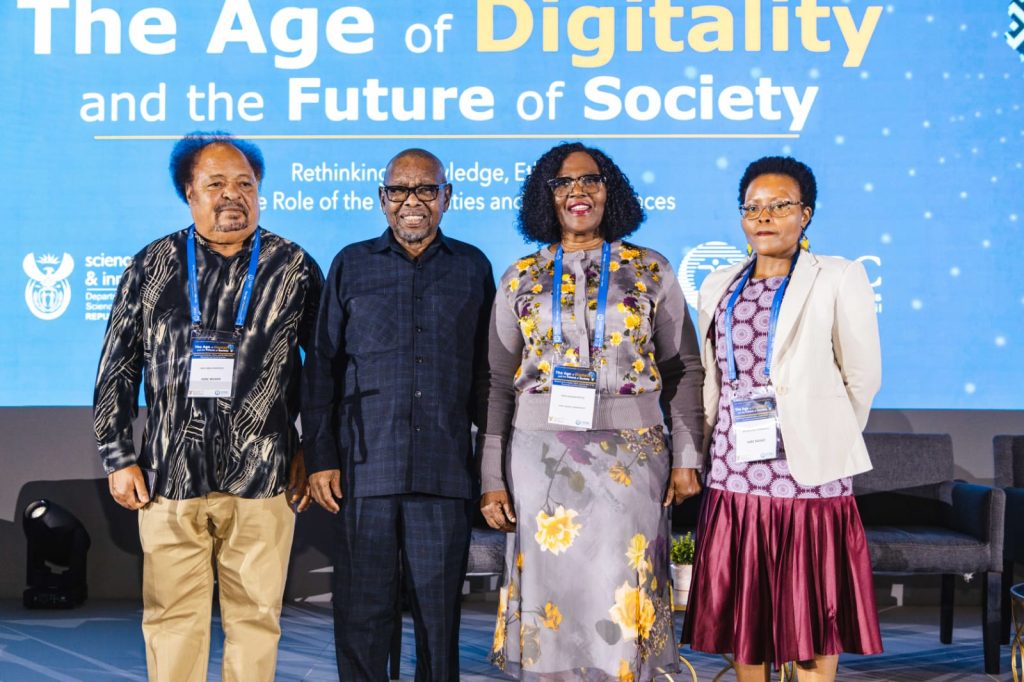
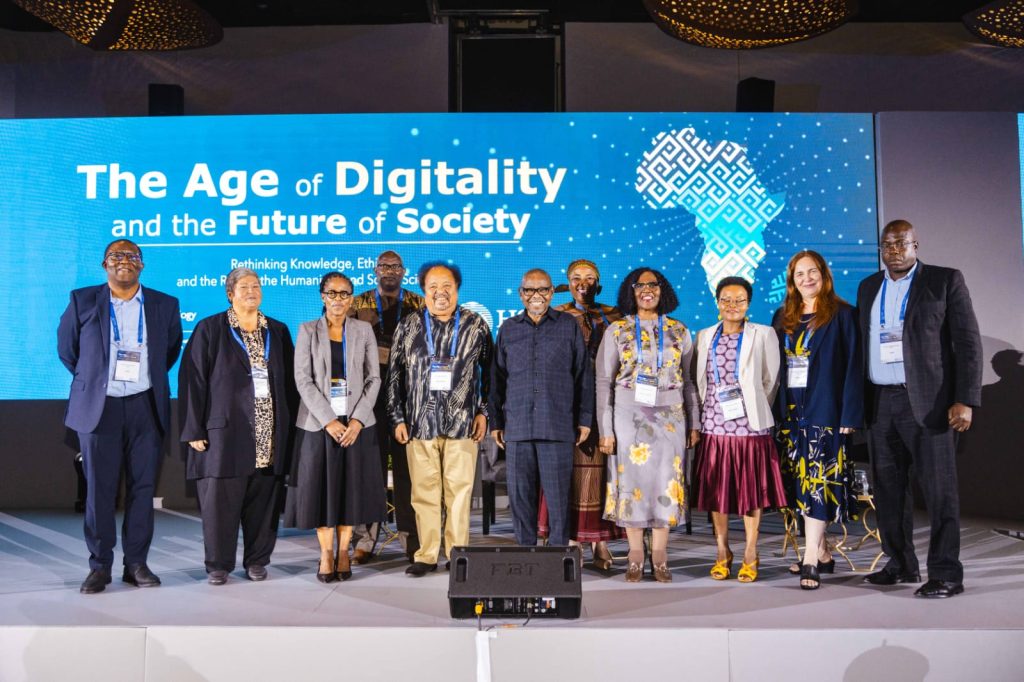
Nzimande made the remarks in his closing address to the Human Sciences Research Council’s (HSRC) annual conference in Ekurhuleni.
He said AI could not be properly understood without examining the social relations and power structures shaping technological change.
ALSO READ: Gauteng invests more than R2bn in social infrastructure as five delayed schools completed
“These narratives sometimes tend to represent technological change as if it evolves outside of social relations and power structures in which it is expressed,” he said.
He said the social sciences and humanities had a critical role to play in examining the promises and dangers of technologies including AI, robotics and bioengineering, as well as the political economy underpinning their development.
Citing US sociologist John Bellamy Foster, he said that the fetishisation of technology could obscure the economic and political forces driving inequality, ecological destruction and threats to democracy.
“We know from history that all the great leaps of technological change, from agrarian to industrial societies to the digital age – are not only the result of specific choices by dominant forces in each historical period, but have also been accompanied by new forms of inequality and social exclusion,” he said.
Nzimande also raised concerns about the effect of technology on mental health and social relations.
“A good case in point is the contradictory impact of social media on communities, including rising levels of suicide and depression in certain demographics,” he said.
He highlighted South Africa’s high suicide burden among young men and said government needed to better understand and address the problem.
Nzimande also questioned how society should value human intellectual labour compared with machine-generated work, particularly in education, the arts and culture.
“If AI becomes smarter than us, in more fields than narrow intelligence domains like chess or mathematics, should we allow it into other areas of human agency?”
He also criticised the influence of powerful technology executives in shaping visions of society’s future.
“It is perhaps not surprising that many of these techno oligarchs have amassed spectacular personal wealth and are often ardent sponsors of right-wing political and social movements across the world,” he said.
Nzimande said an ethical framework for AI would need to address inequality, neo-colonialism and international conflicts rather than treating technological development as politically neutral.
“It must speak against the use of digital tools such as AI in the genocide in Gaza, the invasion of Venezuela, and the Middle East,” he said.
He said such a framework should not be shaped only by governments and experts, but should also include civil society, labour movements and grassroots organisations.
Nzimande said the International Union of Scientists planned to hold a global people’s summit on ethical AI in South Africa in May next year, with the aim of adopting a People’s Charter on ethical AI.
“I wish to commend this effort and hope that it will galvanise as wide as possible a cross-section of social forces, especially from the global south and the wider African continent for this important task,” he said.
He also pointed to the department’s efforts to place science, technology and innovation more centrally within government and society.
“To be sure, when we refer to science here, we refer to both natural and social sciences. We have to remind people of this all the time, as well as humanities, with particular emphasis on transboundary and interdisciplinary knowledge as critical to the future of the national system of innovation,” he said.
Nzimande said the 2019 White Paper on Science, Technology and Innovation and the Science, Technology and Innovation Decadal Plan 2022–2032 recognised the importance of indigenous knowledge systems and ensuring marginalised communities were included in innovation and development.
“Our department has also been looking into programmes to develop African languages through machine learning tools – now widely available – and their integration into our education system.”
He said the HSRC had a central role to play alongside the Council for Scientific and Industrial Research, National Research Foundation, universities and other institutions in monitoring the social consequences of technological change.
“For too long, science and technology have been the preview of elites and experts. We need to find a way of bringing this closer to the people.”
He said the social sciences and humanities were crucial to preserving human qualities such as care, solidarity, cooperation and compassion as machines became more embedded in everyday life.
“After all, these human traits, perhaps uniquely human, have been the key to our survival and eventual flourishing as a species for over 300,000 years of human evolution.”