
By Thapelo Molefe
The implementation of the Basic Education Laws Amendment (BELA) Act faces an estimated R51 billion infrastructure bill, with the Department of Basic Education (DBE) warning that funding shortages could delay the provision of Grade R classrooms and the employment of qualified teachers across the country.
Briefing Parliament’s Portfolio Committee on Basic Education on Tuesday, the department revealed that R6 billion is needed to provide Grade R infrastructure at schools without adequate facilities, while a further R45 billion is required to address the country’s classroom shortage.
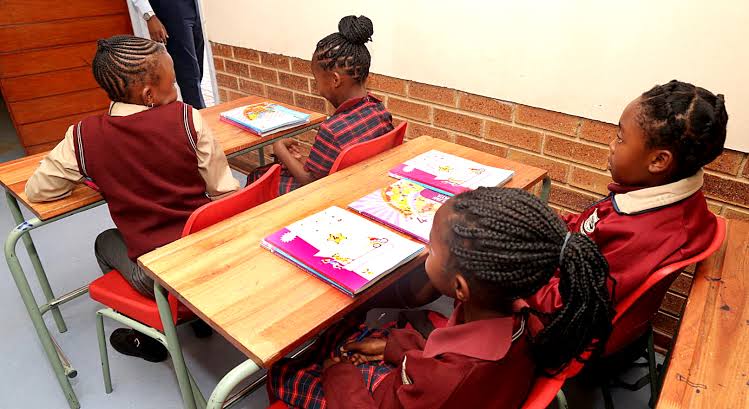
The department said 4,844 public ordinary primary schools still require Grade R classrooms, despite the legal requirement for children to begin compulsory schooling in Grade R having taken effect.
ALSO READ: Wits launches centre to give Global South greater say in future of universities
Of the country’s 15,861 public ordinary primary schools, only 11,017 currently have Grade R classrooms.
The infrastructure backlog presents a major challenge to the implementation of the Act, which came into effect in December 2024.
The department reported that only 136 Grade R classrooms were provided during the 2025/26 financial year, against the estimated R6 billion needed to ensure appropriate facilities at schools currently without Grade R infrastructure.
It said the cost estimate was based on the construction of appropriate Grade R facilities, with each classroom designed to accommodate 30 learners.
The department’s infrastructure plan provides for phased construction across provinces over the medium-term period, including 37 classrooms in the Eastern Cape in the current financial year, 70 in 2027/28 and 63 in 2028/29.
The broader classroom shortage is equally concerning, with the department estimating that 43,000 additional classrooms are needed nationally.
The estimated cost of addressing this shortage stands at R45 billion.
Beyond infrastructure, the department faces a substantial funding gap in ensuring that Grade R practitioners are properly employed and remunerated.
An estimated 13,600 Grade R practitioners are currently receiving stipends, including 5,600 who are already qualified teachers but are not being paid under full educator conditions of service.
An official from the department’s human resources team said: “We have on average 13,600 practitioners that are being paid stipends at the moment.”
“Of those 13,600, 5,600 are already qualified teachers and they are currently being underpaid,” the official said.
The department said R5.5 billion was needed to align qualified Grade R practitioners with full educator conditions, but only R342 million had been allocated over the 2026 medium-term expenditure framework period.
This represents approximately 6% of the required funding.
The department said provinces were currently making arrangements within their existing compensation budgets to accommodate Grade R posts.
ALSO READ: Three-year funding deal brings life-saving water safety lessons to Richards Bay children
Limpopo and North West were the only two provinces that had incorporated Grade R into their 2027 post-provisioning processes, rather than relying on funds redirected from other compensation allocations.
The department is reviewing its post-provisioning norms, with a draft policy expected to be completed by November. Its longer-term objective is to incorporate Grade R educators fully into provincial post-provisioning budgets.
North West and Mpumalanga were also identified as the only provinces that exclusively appoint fully qualified Grade R educators.
The rollout of the Act’s regulations is another area facing delays, with none of the eight sets of regulations discussed by the department having been finalised.
The regulations cover learner admissions, school capacity, learner pregnancy, home education, teacher development, school governing body elections, unauthorised remuneration and the National Education Information System.
The department attributed the delays partly to requests for extensions from stakeholders and the time required for consultations, socioeconomic impact assessments and constitutional vetting.
Draft admission regulations attracted more than 62,000 public submissions, while the school capacity regulations received more than 40,000 submissions.
The capacity regulations were also subject to a court order requiring the department to complete the process within three years. Although the department acknowledged that the deadline had passed, it said it had submitted its application for a socioeconomic impact assessment certificate on 9 September, before the 10 October deadline.
The application remains under consideration.
An official responsible for the regulations acknowledged the missed deadline, saying: “These regulations, we missed the court order.”
On school admissions and language policies, the department reported progress in supporting schools to review their policies, particularly those serving diverse communities.
However, significant backlogs remain, with the Eastern Cape, KwaZulu-Natal and Limpopo accounting for approximately 87% of the outstanding reviews, according to figures raised during the committee briefing.
Committee member Sedukanelo Louw said nearly 12,000 schools had updated their admission and language policies but warned that substantial work remained.
“About 87% of the backlog sits in three provinces. We’ve got Eastern Cape, we’ve got KZN and Limpopo,” Louw said.
Louw also raised concerns about the department’s findings of potentially discriminatory admission practices, including the use of tests, interviews and demands for proof of employment and other documents when admitting learners.
The department’s presentation further highlighted challenges in closing and merging underutilised schools, particularly in rural communities where there are insufficient learners to sustain some institutions.
It said the process was complicated by resistance from communities and traditional leaders, as well as the inability of some provinces to provide scholar transport for learners who would be affected by school closures.
A DBE official said: “Sometimes we are unable to transport these children or offer scholar transport.”
The official said schools sometimes remained open despite having very few learners because provinces could not provide transport for those who would have to move to other schools.
Meanwhile, the department reported that the 2027 school governing body elections would be conducted under a single national regulation, replacing the nine different provincial regulations previously used.
The elections are scheduled for March 2027.
Despite the financial and administrative challenges, the department maintained that several provisions of the Act were already being implemented, including the three-day process for tracing learners who fail to attend school, strengthened disciplinary procedures, measures against corporal punishment and greater oversight of school finances.
Basic Education Minister Siviwe Gwarube said implementation required cooperation between national and provincial departments, school governing bodies and other institutions.
“The implementation of these provisions must be approached carefully and responsibly,” she said.
Gwarube said the department had a responsibility to implement the legislation lawfully and transparently while identifying practical risks and reporting honestly on progress and challenges.