
By Charmaine Ndlela
Deputy Minister of Higher Education and Training Yusuf Cassim has vowed to follow up on thousands of student complaints received through his Helpdesk, after revealing that about 4,429 queries were recorded in July, including 560 NSFAS-related cases.
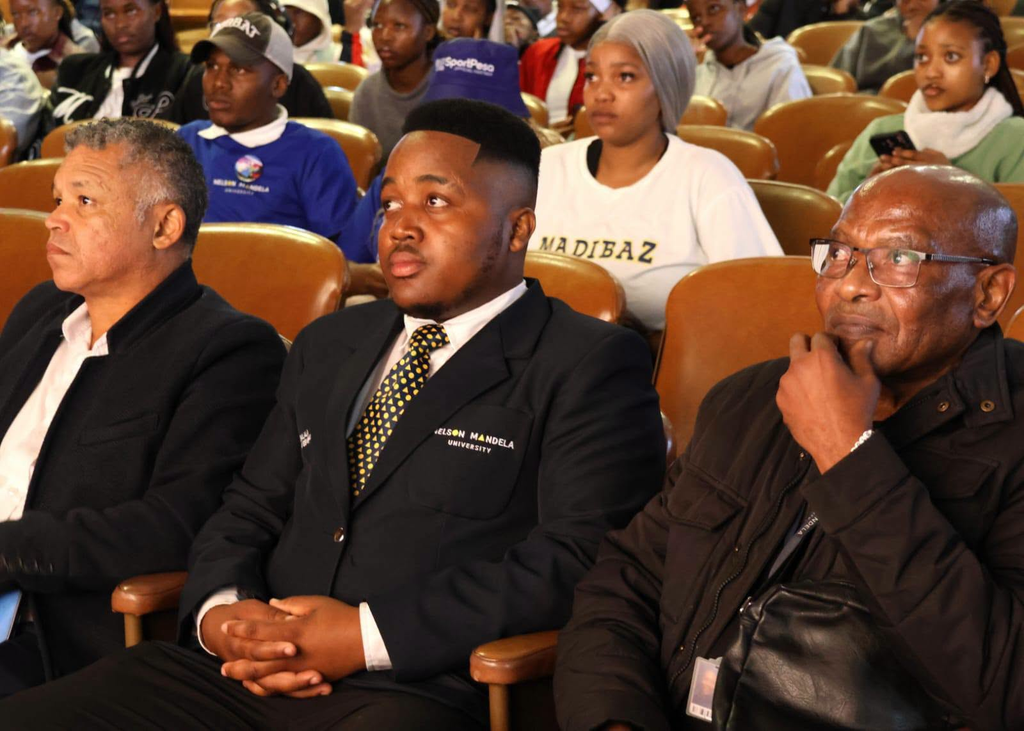
Cassim made the remarks during a visit to Nelson Mandela University (NMU) in Gqeberha on Friday, where he engaged directly with students about funding, food, transport, connectivity and unpaid work-integrated learning stipends.
The session also focused on student accommodation, non-academic barriers to well-being, SETA support, and restoring NSFAS funding for the Extended Studies programmes.
“A responsive government must be prepared to listen when questions are difficult, go where problems are experienced, distinguish between what it knows and what it still needs to establish, and identify clearly where responsibility sits,” Cassim said.
The visit went ahead despite a disagreement between NMU management and the Deputy Minister’s office over the arrangements and timing of the engagement.
Cassim’s office said the university had initially confirmed and supported the visit before later raising security concerns and asking that it be postponed.
NMU said it had welcomed the proposed visit but raised concerns about the short notice, security risks, the possible mobilisation of thousands of students and the impact on the academic programme.
Despite the disagreement, Cassim proceeded with the visit and met students who had raised concerns through his office.
“This is not a ceremonial visit. I am here because students have raised matters with my Office that require attention,” Cassim said.
The Deputy Minister, an NMU alumnus and former SRC president, said he wanted to hear directly from students and find practical solutions to problems affecting their university experience.
He said the Helpdesk had become an important mechanism for identifying recurring challenges across the higher education sector.
“In July alone, it recorded approximately 4,429 queries, including 560 NSFAS-related queries,” he said.
Cassim said the figures highlighted pressure points in the system, but warned that the Helpdesk should not become a place where students receive reference numbers without substantive assistance.
“It must be a mechanism through which we listen, identify patterns, intervene where necessary and follow cases through to substantive responses,” he said.
He said his office had undertaken similar engagements with students and institutions at Unisa, the Central University of Technology and Tshwane University of Technology.
Cassim said the NMU visit followed the same approach: listening to students, establishing the facts, identifying responsibility and determining what action was required.
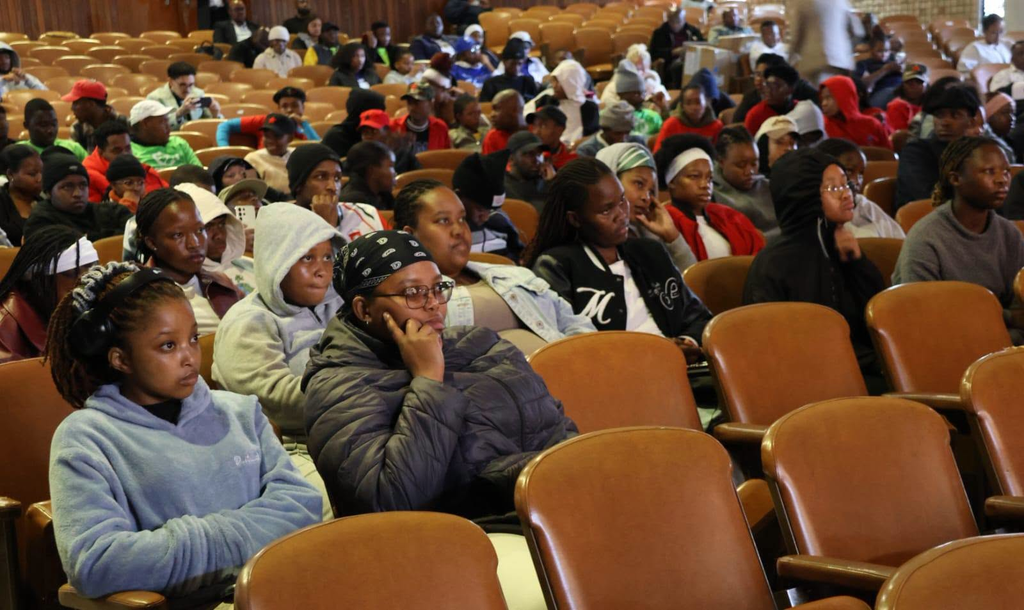
Among the main issues raised was NSFAS funding and financial exclusion.
Cassim said his office had previously engaged NSFAS leadership over GAP investigations and the difficulties these cases created for students.
He said the department needed an updated picture of students affected by GAP investigations and cases involving dual registration.
A student submission cited during the engagement indicated that 63 NMU students were affected by GAP matters linked to dual registration, although Cassim said the figure still needed to be verified.
He called for clarity on how many students had been defunded, how many had appealed and how many cases remained unresolved.
He also questioned what happened to students who remained academically active but were financially excluded.
“A referral is not a resolution,” Cassim said.
He said students needed to know who was responsible for their cases, what information was still required and when they could expect a response.
Food insecurity was another concern raised during the engagement.
Cassim referred to a 6 May 2026 communication from the university regarding a proposed alternative Meal Management System under which students could opt out of catered meals and receive their food allowance directly into their bank accounts.
He said the status of the required safety and infrastructure assessment needed to be established, including what remained outstanding and when the model could be implemented.
He also called for immediate assistance for students struggling to access food.
Accommodation and transport were also raised.
Cassim said his office needed to establish the current accommodation gap and what immediate measures were available for students unable to secure accommodation on campus.
He said accommodation and transport could not be viewed separately because students living off campus still needed reliable access to lectures, laboratories and libraries.
The Deputy Minister also raised concerns about connectivity, saying reliable Wi-Fi had become essential to participation in higher education.
He called for an assessment of connectivity gaps both on campus and in accredited off-campus accommodation.
Another matter involved about 50 Medical Laboratory Science students undertaking work-integrated learning through the National Health Laboratory Service.
The students reportedly had not received their WIL stipends since July.
Cassim said his office had engaged the Health and Welfare Sector Education and Training Authority to establish whether the students were correctly captured, whether verification was outstanding and what was required for payments to be processed.
“The student should not carry the consequence of an administrative problem between institutions,” he said.
Student wellbeing was also discussed, with Higher Health participating in the engagement.
Cassim said students’ mental and emotional wellbeing could not be separated from the conditions in which they lived and studied.
He said financial exclusion, food insecurity, accommodation problems, transport difficulties and academic disruption could all affect students.
“Are students able to eat? Do they have a safe place to stay? Can they get to class? Do they have access to funding?” he asked.
Cassim told students he could not guarantee that every matter would be resolved immediately because some cases required verification and formal processes.
However, he said students should not be left moving from one office to another without knowing who was responsible for their cases.
He also addressed the absence of NMU management from the engagement.
Cassim said he had hoped university management would participate because some of the concerns raised by students required the institution’s response.
“I am not here to turn that decision into an institutional dispute or speculate about its reasons,” he said.
“But the absence of one stakeholder does not make the issues raised by students disappear.”
The university disputed the suggestion that it had refused to host the Deputy Minister.
In a statement, NMU said it was first notified of the intended visit on 11 September, seven days before the engagement.
It said management had to reconsider longstanding commitments, including preparations for a scheduled Council meeting, while the programme extended across two campuses and included weekend activities.
The university also pointed to the upcoming SRC election process scheduled for Monday, 21 September, saying the possible mobilisation of large numbers of students had implications for safety, security and the academic programme.
NMU said an internal security assessment had identified concerns that were shared with the Deputy Minister’s security detail.
It said it had proposed either proceeding with the visit under an arrangement that clearly allocated responsibilities and liabilities, or rescheduling it to allow the objectives of the visit to be achieved while managing the identified risks.
The university said it remained committed to constructive engagement with the Department of Higher Education and Training.
Cassim, meanwhile, said his office remained prepared to engage with the university through appropriate institutional channels.
The Deputy Minister is scheduled to continue the engagement at NMU’s George Campus on Saturday.
He said the measure of the visit would be whether students saw progress after the engagement.
“The real measure of this visit will not be how many meetings we hold or speeches we make. It is whether the student sees a change after we leave,” Cassim said.
He said this could mean a student’s question being answered, a funding case being addressed, an accommodation problem being escalated or a WIL stipend matter being progressed.
“The work does not end when we leave this room,” he said.
INSIDE EDUCATION