
By Thapelo Molefe
The National Skills Fund (NSF) has come under intense parliamentary scrutiny over unpaid stipends, accommodation problems and disruptions to the training of hundreds of young people transferred to the Denel Training Academy programme.
The Portfolio Committee on Higher Education heard on Wednesday that some learners had been removed from accommodation, forced to travel long distances to training sites and, in some cases, found sleeping in corridors after the termination of service provider Phila Jordan Capital (PJC).
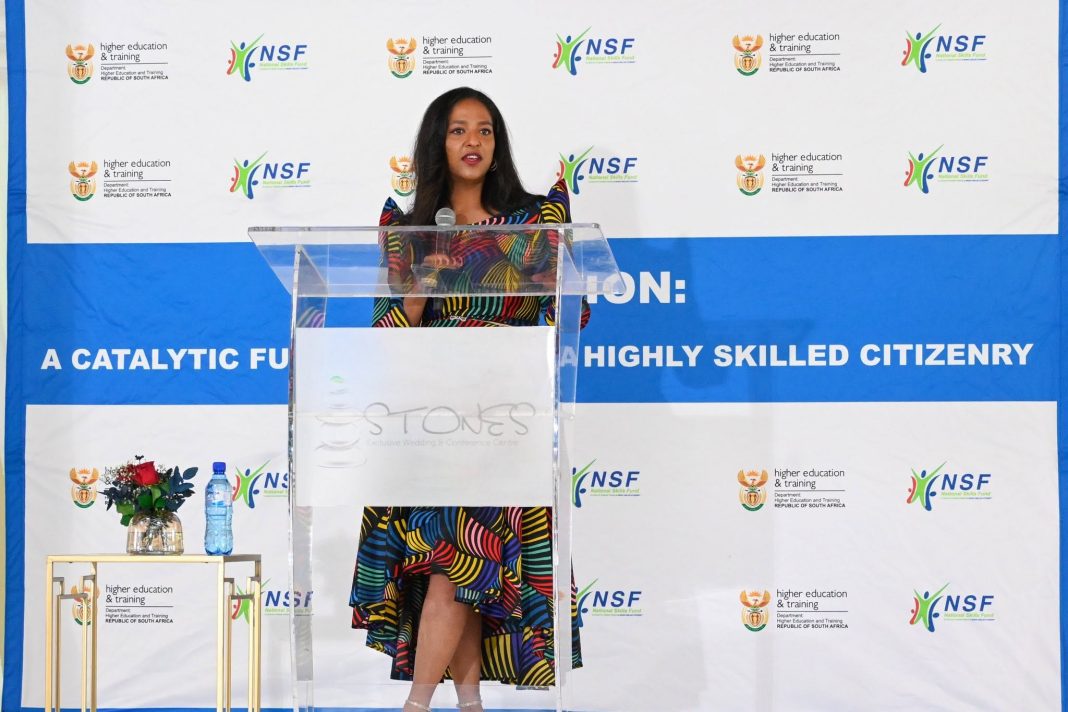
NSF acting chief executive Melissa Erra told MPs that the fund had been alerted that learners were being “kicked out of their accommodation or being relocated” after the PJC project was terminated.
Some learners were moved so far from their workplaces that they had to wake up at 3am or 4am to travel from Pretoria to Johannesburg, she said.
“When we deployed our security team to go and verify the status, we found that some of the learners were sleeping in the corridors,” Erra said.
The NSF subsequently intervened with food packs and sanitary supplies.
The crisis affects 761 learners who were transferred from PJC to Denel after the NSF terminated PJC’s contract following concerns about its delivery of the programme.
The fund said 701 learners received their July stipends, while August payments were only made in September after administrative problems at Denel. May and June stipends remain unresolved because no teaching and learning took place during the transition between PJC and Denel.
The NSF said a legal opinion from the Department of Higher Education and Training indicated that paying stipends for periods when no training took place could potentially constitute fruitless and wasteful expenditure.
Denel has since been asked to pursue a declaratory order in the Labour Court on the outstanding May and June payments.
But MPs questioned why learners should continue bearing the consequences of administrative failures.
Higher Education Minister Buti Manamela said the situation was unacceptable and warned that responsibility must extend beyond simply fixing the administration of the projects.
“So when that opportunity is interrupted, Chairperson, by unpaid stipends, inadequate accommodation or a provider that fails to deliver, I think the consequences should extend beyond the administration of a project,” Manamela said.
“Those families have made sacrifices. Learners have moved away from home and their plans and expectations are placed in jeopardy.”
He said learners should not suffer because of failures within the administration of the NSF or its service providers.
“I do not think and I remain committed to the fact that learners should not be prejudiced, should not in any way suffer precisely because of the challenges that those who are responsible for administration have committed.”
Manamela said there should be consequences for training providers and any NSF officials found to have been negligent.
The briefing also exposed confusion over the exact status of some payments.
The NSF said most April learners had been paid, except four suspended learners, while its project manager later acknowledged that she might have been wrong about the timeline after MPs challenged the account against information previously provided by Denel.
Committee member Sedukanelo Louw demanded clarity on the payment failures.
“Learners are suffering,” he said. “We can’t be lying forever. We must be truthful and we must take a decision as Parliament.”
The committee also heard that one learner remained outstanding for April and 57 for July at one stage of the payment process, while individual learners were still affected by missing attendance registers and work-integrated-learning documentation.
The August stipend payment was eventually made by Denel on 14 September, a day later than planned.
Committee chairperson Tebogo Letsie said Parliament would engage directly with affected learners and indicated that members were likely to visit or speak to them in the coming weeks.
The crisis follows the NSF’s termination of the PJC project in May after repeated non-compliance.
The fund said its security verification found learners facing serious accommodation and food problems, while teaching and learning had been disrupted.
The NSF said more than R11 million remained unreconciled from the PJC project and that the matter had been referred to the state attorney for recovery. It was also referred to the Hawks.
Erra said the NSF accepted responsibility for the learners because they are beneficiaries of the fund.
“We do take accountability because these are our beneficiaries,” she said.
The NSF is now targeting 30 October to stabilise the Denel programme, including finalising a remedial plan, addressing additional training requirements and resolving outstanding stipend matters.
The fund said Denel’s latest remedial plan requires another two months of workplace teaching and learning, while SAA Technical has indicated that it needs another 10 months.
The discrepancy is still being investigated and could have financial implications for the programme.
The NSF’s intervention comes amid broader concerns about its management of skills projects. Parliament has previously raised concerns about alleged maladministration and financial management at the fund, while the Special Investigating Unit has been authorised to investigate allegations involving the NSF.
For the learners caught in the Denel transition, however, the immediate issue remains whether and when they will receive the money they are owed and whether the training programme will be completed without further disruption.
INSIDE EDUCATION