
By Gontse Sekhantso and Charmaine Ndlela
South Africa’s education institutions should stop treating artificial intelligence as something students need to be protected from and instead embrace it as the next major shift in how people learn, solve problems and prepare for work.
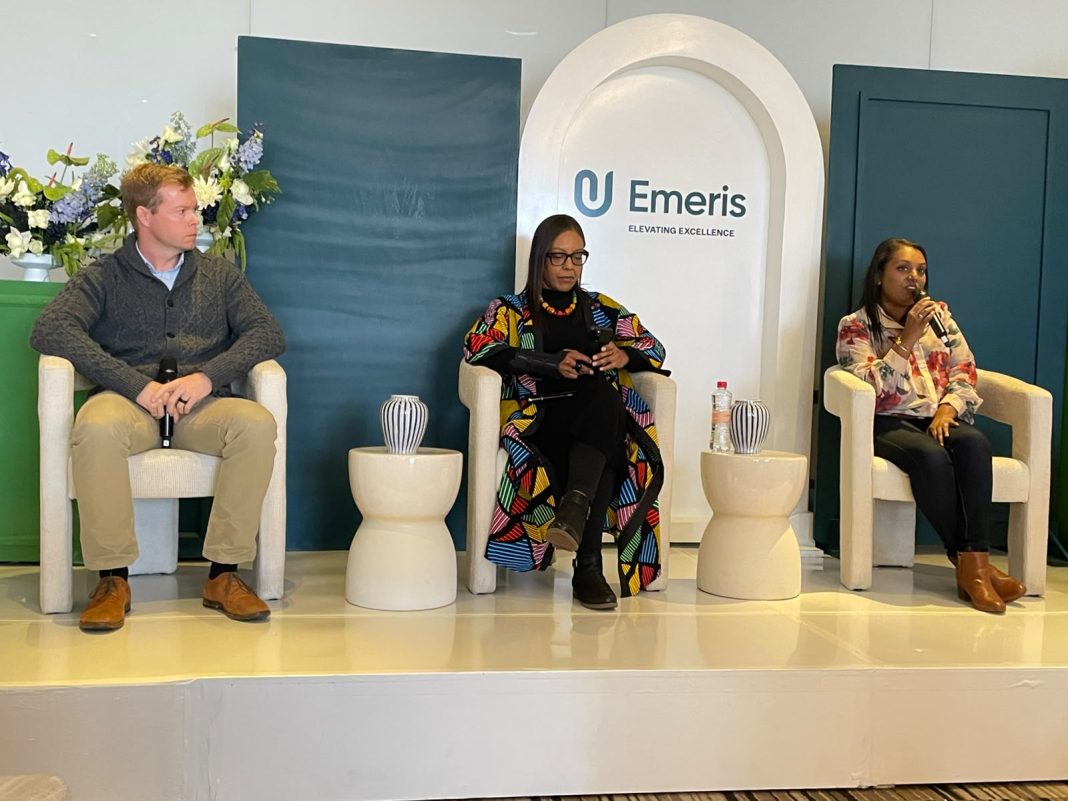
That was the argument from Anthony Wingfield, a senior lecturer at Emeris and head of digital and brand strategy at Vega School, during the Emeris Education and Skills Dialogue hosted on Wednesday in Sandton, Johannesburg.
ALSO READ: AI is blurring proof of learning, says Cassim
“Get super excited about AI,” Wingfield said, aadding that the technology should be treated as a tool that can enhance learning and problem-solving rather than something institutions should try to keep students away from.
He compared the development of AI to previous technological breakthroughs, saying that innovations such as calculators did not eliminate mathematics and the internet did not eliminate the need for human thinking.
“Telling students not to use AI is like telling them not to use the internet,” he said.
The dialogue, themed around education before and beyond, brought together education and industry voices to discuss how South Africa can prepare the next generation for a rapidly changing world of work.
It focused on what it will take to produce graduates who are employable, capable of creating jobs and equipped with the skills needed to navigate an economy increasingly shaped by technology and AI.
Wingfield said AI was already changing what students were capable of producing, with learners now able to move beyond developing basic prototypes to creating fully functioning websites, applications and digital solutions.
ALSO READ: New HIV test helps flag drug resistance
He gave the example of a student who recently developed a functioning customer-satisfaction and loyalty scanning system for a restaurant.
“Now they’re developing the websites or the apps and they’re fully working, not just in prototype stage,” he said.
According to Wingfield, the rapid development of AI means the focus of education needs to shift towards problem-solving, critical thinking and the ability to evaluate and improve work produced with the assistance of technology.
“The process of solving the problem is more important than the problem,” he said.
Emeris Head of Communications Sarnelia Mandapalli said the debate around AI was similar to the disruption experienced by the media industry when digital platforms began changing how audiences consumed information.
She said the emergence of websites and digital media had initially created fears that traditional media jobs would disappear, but the industry instead evolved as audiences changed how they consumed news and information.
Mandapalli said AI was now presenting a similar challenge, particularly as tools such as ChatGPT, Grok and Claude can perform tasks that were previously done exclusively by humans.
But she said the human element remained critical.
“As much as we can use technology, there still has to be a human element,” Mandapalli said.
She said Emeris was in the process of developing a qualification focused on AI and its ethical use, reflecting the institution’s recognition that students would increasingly encounter and use the technology in their studies and future workplaces.
She said institutions needed to acknowledge that students were already using AI rather than simply attempting to prevent its use.
“We know our students are going to use it. We just have to ensure that they use it responsibly, ethically, and if they are using it, that they obviously reference it properly,” she said.
She said Emeris had processes in place to monitor the use of AI in academic work, while assignments were also designed to ensure that students could not rely solely on AI-generated material.
Emeris is an educational brand of The IIE, which is registered with the Department of Higher Education and Training as a private higher education institution under the Higher Education Act, 1997.
The IIE is responsible for conferring qualifications available at Emeris and is responsible for the quality of curriculum development, teaching, assessment and compliance with laws and regulations.
South African Qualifications Authority (SAQA) CEO Nadia Starr said regulators were also navigating how AI should be incorporated into education, with no simple approach yet emerging globally.
She said regulators needed to remain part of the conversation with educators, institutions and technology developers as AI continued to evolve.
“Everyone being in the conversation and putting their perspectives and creating this context that is really multifaceted” was important, she said.
Starr also cautioned that the rapid adoption of AI needed to take South Africa’s unequal access to technology into account.
She said the purpose of education extended to helping people live meaningful lives, contribute to their communities and develop a sense of self-worth.
While employability remained an important concern in a country where unemployment continues to affect large numbers of people, she said education should provide value beyond the workplace.
“Education, the purpose of education is that people can live meaningful lives,” she said.
Starr also highlighted the importance of lifelong learning, saying participation in higher education remained limited and that learning and skills development needed to be viewed as a lifelong endeavour.
The discussion further touched on the growing prominence of micro-credentials and shorter forms of learning, with Starr noting that the way education is packaged will continue to evolve as technology and the needs of society change.
Wingfield said the changing technological landscape also reinforced the importance of ensuring that graduates leave higher education with skills that extend beyond their qualifications.
He said employers increasingly need graduates who can think strategically, solve problems, adapt and work with others.
“The degree you get, the certificate gets you an interview. What you bring to the table is what keeps you in the room,” Wingfield said.