
By Peggie Mars
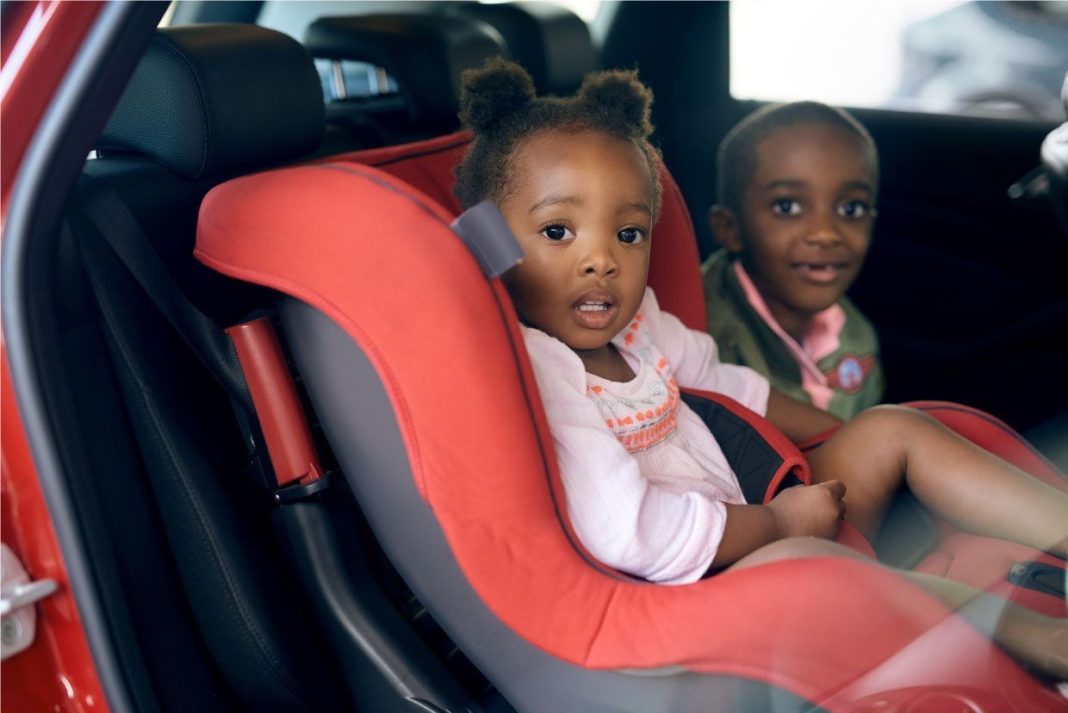
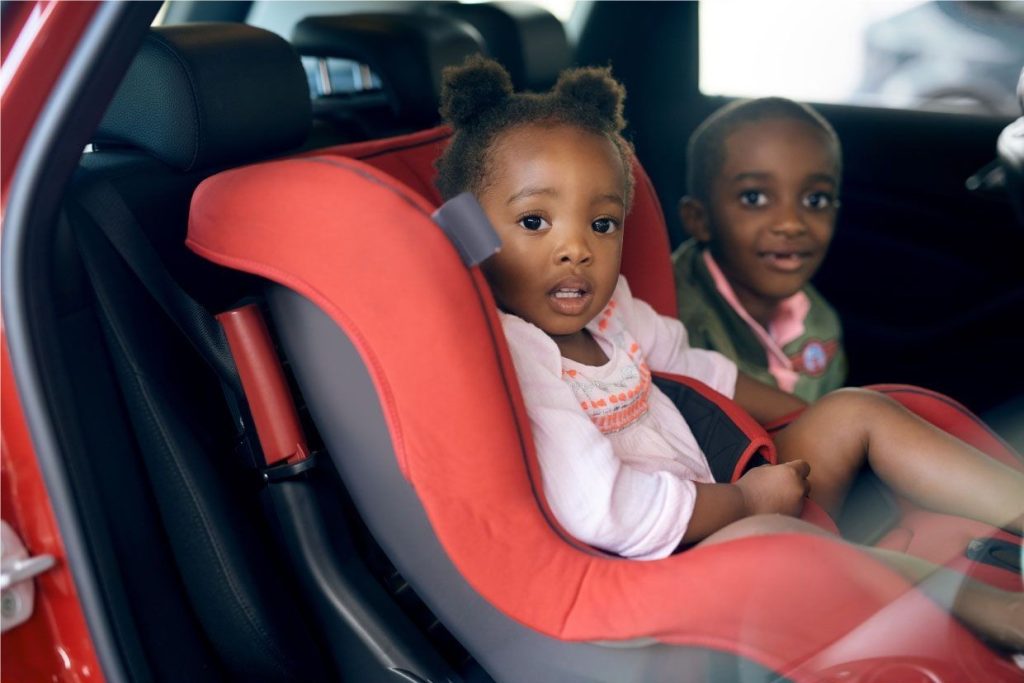
South Africa observed Child Passenger Safety Week late last month, with the focus being on protecting children as passengers and young road users.
But keeping children safe on our roads requires us to look beyond what happens inside a vehicle and consider the environments they navigate every day.
Every morning across South Africa, millions of young road users step out of their homes and into an unforgiving environment never built for them. As adults, when we witness a child dart across a busy road, hesitate mid-crossing, or step out from behind a minibus taxi, our default reaction is often frustration or blame.
ALSO READ: Western Cape scholar transport resumes, but diesel hike deepens cost dispute
We ask why they failed to look left and right, why they did not obey the rules or why they could not see the approaching vehicle?
The painful truth is that our entire approach to child road safety is built on a dangerous fallacy. We treat children as miniature adults who simply need to be lectured a few more times, while quietly offloading the burden of survival onto the shoulders of the most vulnerable people on our roads.
We cannot educate biology away. Expecting a seven or eight-year-old to navigate heavy traffic using adult judgement is not just unrealistic; it is a fatal design flaw. If we intend to protect young road users, we must stop expecting children to adapt to our roads and start engineering our transport systems, school precincts and driving culture around how children actually behave.
The biological reality: a brain under construction
A child’s brain, nervous system and physical senses are not fully developed versions of an adult. They are physiologically incomplete, processing sensory input and assessing risk through a completely different framework.
An adult enjoys a horizontal field of view of roughly 180 degrees, allowing us to detect peripheral motion, like an overtaking vehicle or an approaching cyclist, without turning our heads.
A child under 10 has a field of view that is about one-third narrower. They live with natural tunnel vision, seeing only what lies directly in front of them. Hazards closing in from the flanks simply do not register until they are almost on top of them.
Compounding this is the development of depth perception and velocity calculation. Adults intuitively judge speed, distance and deceleration within fractions of a second. A child’s visual cortex has not mastered this integration. Until roughly the age of 10 to 12, a vehicle travelling at 60 km/h looks virtually identical to one moving at 30 km/h.
To a child, a fast-moving vehicle does not look like an imminent physical threat; it looks like a flat picture that is gradually getting larger. When a child misjudges a gap and steps into the road, they are not being reckless. Their brains simply cannot compute the rate of closure.
Auditory localisation is equally fragile. When an adult hears a sudden screech of tyres or a blaring hooter, our brainstem calculates the minute difference in sound arrival time between our ears, instantly orienting us toward the threat.
ALSO READ: Northern Cape Urban TVET College faces forensic probe over fraud concerns
In young children, this system is still developing. When an approaching driver hoots aggressively to warn a child near the kerb, the sound often causes sensory overload rather than clarity. A child might hear the hooter from the right, turn their head to look left, or freeze entirely in panic.
Then comes the prefrontal cortex, the seat of impulse control, executive function and risk assessment, which is the last part of the human brain to mature. Children do not possess multi-channel attention. If a classmate calls out from across the street, a stray dog darts past, or a juice bottle rolls into the gutter, the road and every rule they have ever been taught evaporates from their working memory.
They act first and calculate consequence later.
Furthermore, young children operate on magical thinking and egocentric logic: If I can see the front grille of the car, the driver can see me. They have no practical concept of windscreen pillars, blind spots or stopping physics. Combine that with a physical height that falls well below the bonnet line of modern SUVs, bakkies and minibus taxis and you have pedestrians who are literally invisible to drivers until it is too late.
The systemic failure: blaming the victim
Despite this overwhelming biological evidence, our societal response continues to place the primary responsibility for road safety squarely on the child.
We hand out colourful colouring books, stage road safety talks in school halls and teach catchy songs about looking left and right. Then, we send those same children out into high-speed transit corridors without footpaths, force them to navigate open drainage ditches alongside fast-moving traffic, and expect them to cross multi-lane arterials outside school gates with zero pedestrian priority.
When a collision occurs, the conversation inevitably drifts toward child error: “The learner dashed out unexpectedly.”
This is an abdication of adult responsibility. An unpredictable dash is not an anomaly; it is standard child behaviour. A safe road system expects human error and absorbs it; our current system expects perfection from developing brains and punishes failure with death or life-altering disability.
Designing for reality: roads, school zones and transport systems
If we accept that a child cannot rewrite their neurobiology to suit our roads, the mandate shifts entirely to the adults who plan infrastructure, regulate transit and operate vehicles.
First, we must fundamentally redesign our school precincts. A school zone should not simply be a street with a faded sign that drivers ignore. It must be self-enforcing through physical design. This means traffic calming by default: speed humps, raised zebra crossings, chicanes and narrowed carriageways that physically force vehicle speeds down to a survivable 30 km/h. At 30 km/h, a driver’s stopping distance is drastically reduced, and should an impact occur, a child’s chances of survival rise to roughly 90%. At 60 km/h, it is almost certain death.
Second, infrastructure must prioritise pedestrian separation. Dedicated, paved walkways that keep children physically away from traffic lanes, pedestrian guardrails that guide energetic groups directly to designated crossing points and car-free drop-off bays are basic necessities, not luxuries. If we know children have single-track focus, we must build physical barriers that prevent an impulsive dash from landing them in the path of a moving vehicle.
Third, our scholar transport operations must integrate child-centred defensive protocols. A child is at their most vulnerable during the first and last 50 metres of the journey. Transport operators must enforce strict kerbside-only boarding, keeping sliding doors locked until the vehicle is fully stationary.
Drop-off routines must include the non-negotiable rule that children remain on the pavement until the transport vehicle pulls completely away, preventing the deadly blind cross where small pedestrians step into traffic directly around high vehicle bonnets.
Businesses that operate fleets or provide services on our roads also have a responsibility to ensure that their vehicles, drivers and safety practices do not add unnecessary risk. Companies such as Supa Quick, which works closely with motorists and vehicle owners, also have an opportunity to reinforce the importance of vehicle safety and responsible road use.
Road safety is not the responsibility of one sector alone; every organisation that puts vehicles on the road has a role to play.
Continuing to rely on child education as our primary line of defence is an ongoing policy failure.
Real protection requires a fundamental shift: designing infrastructure, setting speeds and operating transport around the reality of how children actually behave. Until we build that buffer of safety around their biological vulnerability, we are not managing road safety; we are simply leaving our children’s lives to chance.

Peggie Mars is a child passenger safety expert and founder of Wheel Well.