
By Charmaine Ndlela
The exclusion of Black voices from cultural institutions and the appropriation of African heritage by global commercial interests have renewed questions about who controls, preserves and benefits from the continent’s cultural narratives.
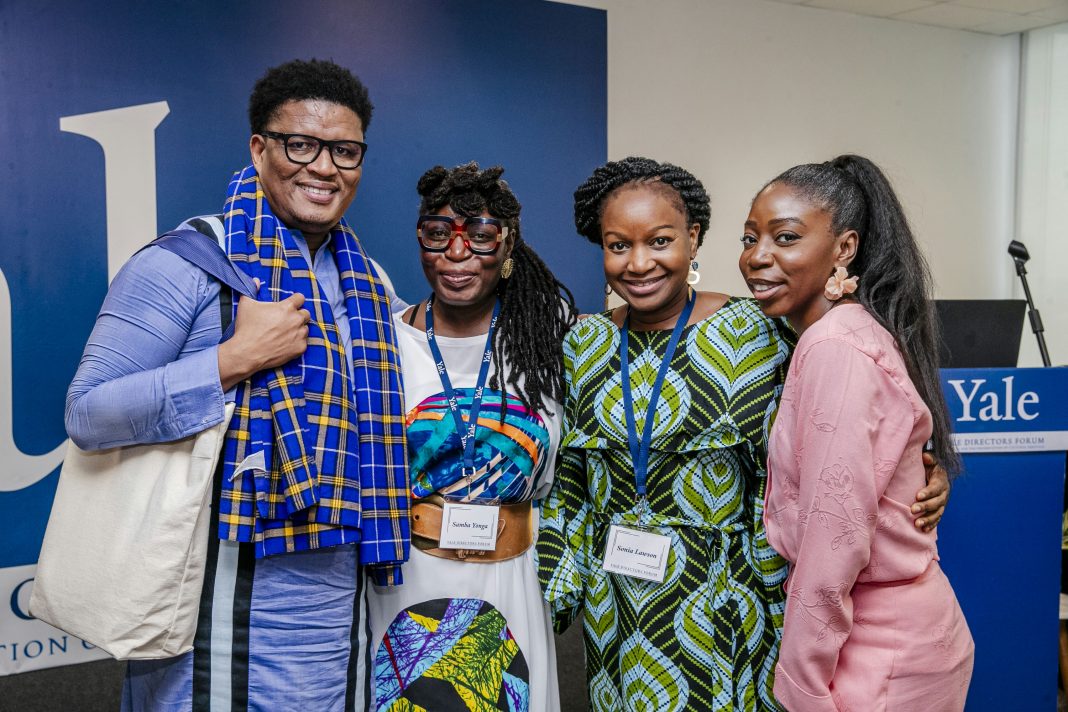
These issues took centre stage at the Yale Directors Forum 2026 Global Symposium in Johannesburg on Tuesday, where international cultural leaders examined how museums and heritage institutions can confront historical inequalities, recognise African knowledge and ensure communities retain a voice in how their histories are told.
Held from 12 to 16 October, the symposium brought together museum directors, curators, conservators, academics and creative practitioners from 15 countries to explore the role of cultural institutions in preserving history while responding to contemporary social and economic realities.
Convened by Yale University’s Institute for the Preservation of Cultural Heritage (IPCH), the gathering focused on representation, institutional transformation and the recognition of African knowledge, with discussions extending beyond museum collections to include textiles, food, music, photography, religious traditions and creative enterprises.
In her welcoming address, Charlotte Ashamu, director of international programmes at Yale’s IPCH, said the Yale Directors Forum emerged from conversations with people establishing museums, libraries and cultural spaces across Africa, many of whom were working in isolation and using their own resources.
The programme was established to connect these leaders, enabling them to exchange knowledge, build professional relationships and learn from one another’s experiences.
Ashamu said the network had grown to include 28 fellows across 15 countries, with participation extending to Latin America and the Caribbean.
The initiative promotes the exchange of knowledge, recognising that cultural institutions in Africa and the Global South have valuable expertise to contribute to international heritage preservation.
Through the network, fellows have visited one another’s institutions, collaborated on projects and introduced organisational changes, including staff training and specialised departments such as collections management.
Ashamu said preservation extended beyond exhibitions and public programmes, requiring the patience, technical expertise and rigour of the people responsible for ensuring cultural materials remained accessible to future generations.
She also highlighted the importance of recognising the knowledge embedded in African textiles and other cultural practices.
Drawing on her personal connection to textiles through her mother, aunts and grandmothers, Ashamu said their significance extended beyond aesthetics and fashion.
Textiles carry histories, techniques and knowledge passed down through generations, yet African traditions are often used by global fashion brands without adequate recognition of their origins, she said.
She stressed the need to document these traditions and acknowledge the communities and practitioners responsible for sustaining them.
The discussion raised broader questions about who receives recognition for cultural knowledge, whose histories are documented and whose contributions are overlooked when traditional practices enter global commercial markets.
Reclaiming Black histories
The symposium also examined how museums can confront difficult histories and challenge institutional practices that have excluded Black people from positions of influence.
Anthropologist and curator Hélio Menezes drew on his experience at Museu Afro Brasil, now known as Museu Afro Brasil Emanuel Araújo, to illustrate how cultural institutions can develop more inclusive and historically grounded accounts of society.
Menezes, whose research explores contemporary art, race, archives and Afro-diasporic practices, said he had studied the museum for about 15 years before becoming its artistic director.
Founded in 2004, the museum holds a collection that, according to Menezes, demonstrates why Brazil cannot be understood without acknowledging the central role of Africa and the African diaspora in shaping its identity.
He highlighted Brazil’s history of slavery, saying about five million Africans were brought to the country through the transatlantic slave trade. Brazil abolished slavery in 1888, becoming the last country in the Americas to do so.
Despite the profound influence of African heritage on Brazilian art, culture and society, the country continues to grapple with racism and inequalities affecting Black communities, he said.
Menezes challenged the notion of Brazil as a racial democracy in which different populations blended harmoniously, describing it as a myth that obscures racial discrimination.
He said the museum’s collection offered an opportunity to confront these contradictions and recognise the African foundations of Brazilian society.
However, transforming the institution required more than displaying historically significant objects.
When he assumed leadership, the museum faced weaknesses in conservation, governance, programming and publishing. Menezes also questioned its limited engagement with contemporary African and Afro-Brazilian artists, curators, critics and other cultural practitioners.
He said the museum’s board had consisted entirely of white men from Brazil’s elite during its first 15 years, highlighting the disconnect between its African-centred collection and the lack of diversity in its governance.
The imbalance raised questions about who holds decision-making power in institutions established to represent Black histories and experiences.
Menezes said his appointment came with considerable challenges because he had previously criticised the museum’s curatorial choices and institutional structure.
He accepted the opportunity to help transform the institution and broaden its understanding of African and Afro-Brazilian cultural production.
Changes included introducing contemporary African artists into the collection, moving beyond displays that relied heavily on ethnographic interpretations of African art.
The museum also reconsidered how it presented slavery, seeking to move beyond representations centred on suffering and the aesthetics of torture towards a fuller account of African and Islamic contributions to Brazil’s production techniques and labour history.
Its treatment of Afro-Brazilian religions was expanded to acknowledge connections with other Black religious traditions across the Americas, including Cuba and the southern United States.
Menezes also described efforts to improve representation in the museum’s historical displays. In one section, about 85% of the people depicted were Black men, prompting the institution to include more Black women and broaden the narratives presented to visitors.
These changes formed part of a wider effort to move beyond narrow national interpretations of cultural heritage and recognise the historical exchanges connecting Africa, Brazil and the wider Atlantic world.
Heritage as an economic resource
The Johannesburg symposium also explored cultural heritage as a source of economic opportunity, highlighting its links to tourism, creative enterprise and cultural businesses.
The discussions recognised that traditions and historical knowledge could support livelihoods while strengthening communities’ understanding of their identities.
Johannesburg was presented as a fitting setting for the conversations because of its position as a regional arts and cultural hub, with a living heritage expressed through its neighbourhoods, music, food, photography and contemporary creative industries.
The programme includes a visit to Eyethu Heritage Hall in Soweto on Wednesday. The cultural space draws on the legacy of Eyethu Cinema, one of South Africa’s first Black-owned cinemas.
The visit is hosted by Yale Directors Forum fellow Batana Vundla, executive director of Eyethu Heritage Hall, and includes musician Yvonne Chaka Chaka.
The engagement highlights the importance of preserving community-based cultural spaces and recognising the people and institutions that safeguard histories beyond conventional museum settings.
Through its international network, the Yale Directors Forum aims to strengthen collaboration among cultural leaders and support institutions in preserving collections, expanding public engagement and responding to changing social realities.
INSIDE EDUCATION