
By Charmaine Ndlela
The University of Johannesburg (UJ) has recorded its highest annual intake into the Academy of Science of South Africa in five years, with 19 researchers joining the body compared with six in 2025.
Three other UJ researchers were elected to the South African Young Academy of Science (SAYAS), the university said.
The appointments, announced at an awards ceremony in Johannesburg in late October, bring UJ’s total ASSAf membership to 60 and SAYAS membership to seven.
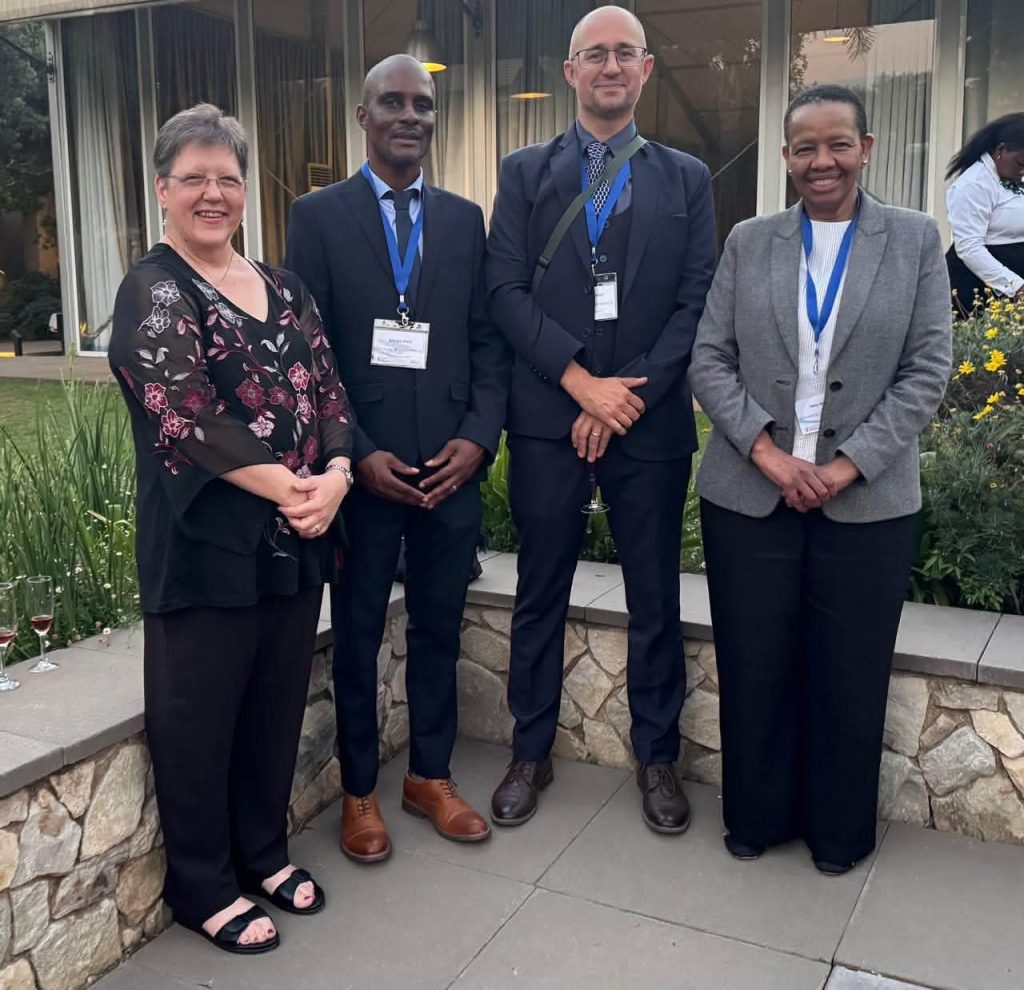
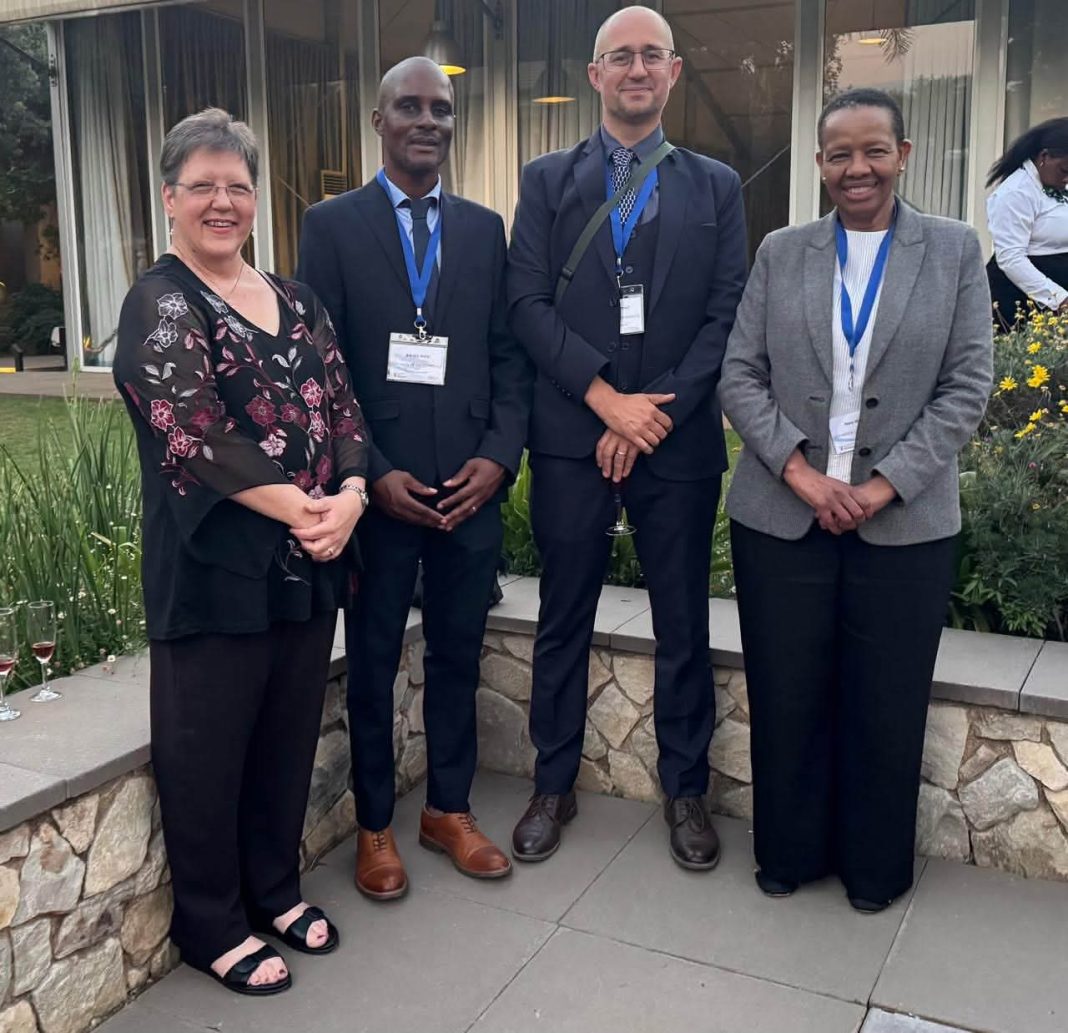
Right side (woman with short hair ) Prof Neo Morojele (Department of Psychology), Prof Ben Smart, (Department of Philosophy), )Prof Admire Mare (Department of Communication & Media), lastly Anna-Mart Van Wyk (Department of Politics & International Relations)
The university recorded one new ASSAf member in 2022, two in 2023, five in 2024 and six in 2025, before the increase to 19 this year.
UJ Vice-Chancellor Professor Letlhokwa Mpedi said the appointments reflected the institution’s investment in research and international partnerships.
“Our Strategic Plan 2035 places research, innovation, societal impact and global partnerships at the heart of UJ’s future,” Mpedi said.
Election to ASSAf and SAYAS is based on scholarly achievement, scientific leadership and contributions to society. New members are selected through a peer-review process involving the academy’s membership.
The 19 newly elected ASSAf members come from the faculties of Science, Humanities, Engineering and the Built Environment, Health Sciences and Education, as well as the university’s senior administration.
Their research covers a range of fields, including water treatment, environmental science, public health, artificial intelligence, energy systems, nuclear history, education and digital media.
Among them are Professor Nicola Wagner, whose work includes critical raw materials, coal geology and carbon capture and storage, and Professor Caliphs Zvinowanda, who specialises in water and wastewater treatment.
Professor Farai Nyabadza, whose research includes mathematical epidemiology and mathematical modelling, and Professor Admire Mare, who studies digital journalism, disinformation and surveillance, were also elected.
Other appointees include UJ Registrar Professor Bettine van Vuuren, whose research examines genetic patterns in animal species, and Associate Professor Justin Bradfield, who studies the use of animal materials in Stone Age societies.
The three academics elected to SAYAS are Dr Edith Phalane, Research Manager at the Pan African Centre for Epidemics Research; Professor Cayle Lupton from the Faculty of Law; and Professor Bonginkosi Thango from the Faculty of Engineering and the Built Environment.
Deputy Vice-Chancellor for Research and Innovation Professor Refilwe Phaswana-Mafuya described the growth in ASSAf membership as “a phenomenal achievement”, particularly given UJ’s relatively young history.
She said the university had 398 National Research Foundation (NRF)-rated researchers across various categories, including one P-rated researcher, a classification recognising promising young researchers.
In 2025, 27% of the university’s research articles appeared in journals ranked among the top 10% globally, according to Elsevier’s CiteScore percentile measure.
Nearly 60% of its articles, reviews, books and book chapters published that year involved international co-authors.
More than 57% of UJ’s research output between 2020 and 2025 involved international collaboration, placing the institution among the top three South African universities in its benchmarking group for this measure.
In October, 88 of its researchers were included on the World’s Top 2% Scientists list, according to TopSciNet.
The university also reported that it was ranked first in Africa in eight subjects in the 2026 ShanghaiRanking Global Ranking of Academic Subjects.
UJ said it received two new Tier 1 South African Research Chairs Initiative appointments from the NRF, along with two National Science and Technology Forum awards, one NRF award and one South African Women in Science Award in 2026.