
By Lebone Rodah Mosima
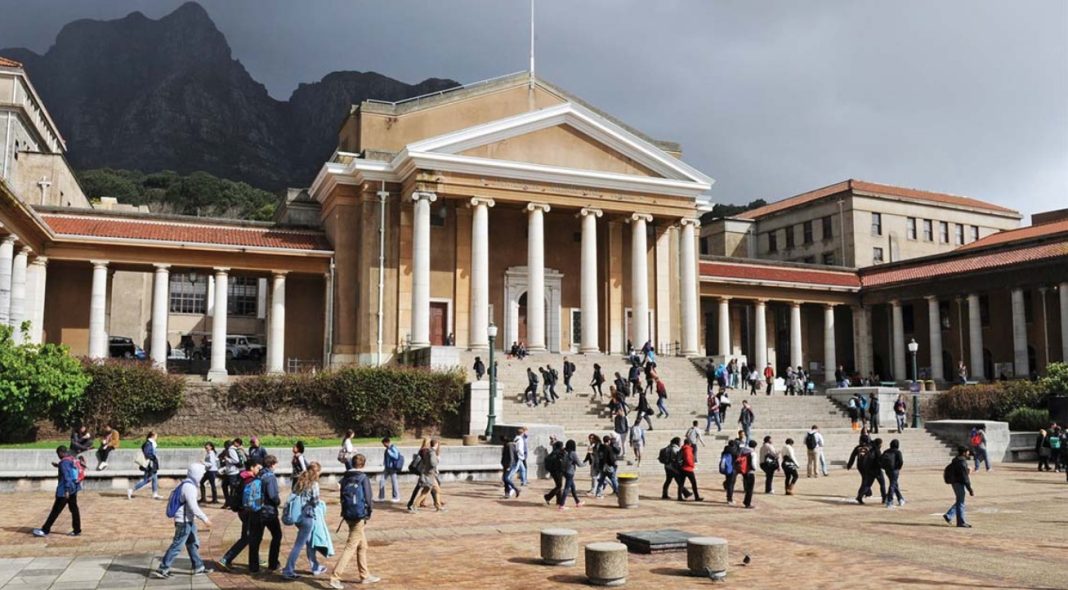
The University of Cape Town’s (UCT) MBA programme has climbed five places to rank second globally in the 2026 Corporate Knights Better World MBA Ranking, retaining its position as Africa’s highest-ranked programme for sustainability and impact.
The UCT Graduate School of Business (UCT GSB) announced on Thursday that its MBA programme had finished ahead of Australia’s Griffith Business School, which previously topped the ranking for six consecutive years.
Maastricht University’s School of Business and Economics in the Netherlands claimed first place in the 2026 ranking, which assessed 166 MBA programmes worldwide.
The result follows two consecutive years in which UCT’s MBA programme placed among the world’s top 10 in the sustainability-focused ranking.
UCT GSB Director (Dean) Dr Catherine Duggan said the achievement reflected the demanding business environment in which African graduates develop their leadership skills.
“I like to say that doing business in Africa is like playing on ‘hard mode’—you’re managing the same things as executives in markets like North America or Europe, but in African markets you have to be more adaptable, more strategic, better able to navigate uncertainty and solve problems, and even more aware of the impact your decisions have on society and the environment.
“Some of the most interesting innovation in the world is happening in Africa, and we’re proud to help bring some of that approach to impact and innovation to the global stage. Our students learn to navigate complex and fast-changing environments while understanding that business performance is inseparable from the health of economic, social and environmental systems.”
The Better World MBA Ranking, compiled by Canadian sustainability research and media company Corporate Knights, evaluates MBA programmes according to their integration of sustainable development into compulsory courses and the impact of their graduates.
The curriculum component accounts for 80% of the overall score, while graduate impact contributes the remaining 20%.
The weighting assigned to alumni impact doubled from 10% in 2025 to 20% in 2026, placing greater emphasis on the proportion of recent graduates working in sustainability-related positions or organisations with social or environmental missions.
Associate Professor Caitlin Ferreira, Programme Director for the Modular MBA, welcomed the increased focus on graduate outcomes.
“I’m happy that the ranking now places more emphasis on what MBA graduates go on to do with their degrees,” Ferreira said.
“Students work on real problems and hard questions faced by large corporations, small ventures and non-profit organisations, often alongside executives, entrepreneurs and decision-makers.”
Ferreira said the programme incorporated sustainability and responsible leadership throughout its curriculum, including its capstone project, while preparing graduates to understand complex business systems and the long-term consequences of their decisions.
According to UCT GSB, the ranking’s greater emphasis on graduate careers reflects changing expectations of business leaders as companies confront climate volatility, resource insecurity, geopolitical uncertainty and technological disruption.
The school cited Corporate Knights research showing that sustainable revenue at some of the world’s largest companies had grown twice as fast as their other revenue in recent years.
It also pointed to growing concerns among employers about whether MBA graduates were adequately prepared to manage the risks associated with artificial intelligence.
The university referred to an October 2026 Corporate Recruiters Pulse Survey by the Graduate Management Admission Council (GMAC), which found that US recruiters were questioning whether MBA programmes sufficiently prepared graduates to understand AI’s limitations and use the technology responsibly.
Dr Wayne Moodaley, Programme Director for the Full-Time MBA, said technological developments were creating new challenges for business leaders.
“AI can help organisations analyse information and make decisions more efficiently, but these benefits need to be weighed against potential environmental and social costs, as well as questions of errors, risk and accountability. Throughout the MBA, we teach students to evaluate these and other trade-offs, integrating sustainability and responsible management into core business decision-making.”
UCT GSB said its approach sought to equip graduates with an understanding of sustainability, ethics and artificial intelligence alongside conventional business management skills.
The university also highlighted its performance in other international business school rankings.
According to UCT, its MBA retained the top position in Africa in the latest QS ranking, while Ferreira received the MBA Director of the Year award from the London-based Association of MBAs (AMBA) earlier in 2026.
The university said its Executive MBA was ranked among the world’s top 100 by the Financial Times, first in Africa and the Middle East by QS, and sixth globally by CEO Magazine.
UCT GSB is also the only African member of the CEMS alliance, whose Master in International Management programme was ranked fourth globally in the 2027 QS Master’s in Management Rankings.
INSIDE EDUCATION