
By Charmaine Ndlela
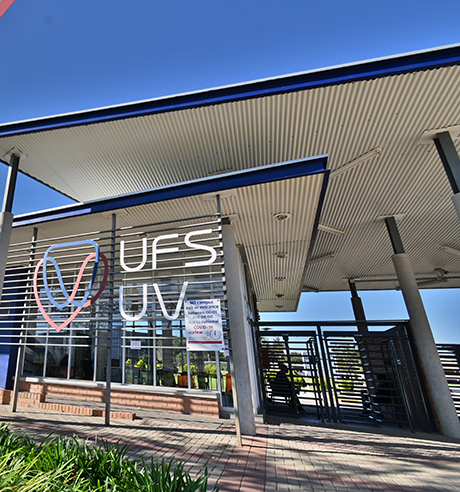
The University of the Free State (UFS) is exploring international research and academic partnerships as it prepares to establish its School of Veterinary Sciences in Bloemfontein.
A seven-member UFS delegation led by Deputy Vice-Chancellor for People and Operations, Professor Bulelwa Nguza-Mduba, recently visited France to explore collaboration opportunities in veterinary education, research and clinical training.
The delegation, which travelled from 7 to 13 October 2026, visited VetAgro Sup, a French veterinary institution with a history dating back to 1761, to gain insights into veterinary education and the operation of teaching hospitals.
ALSO READ: BELA Act rollout faces R51bn infrastructure bill and Grade R funding shortfall
The visit was undertaken at the invitation of Vincent Abt, French Agricultural and Food Counsellor for Southern Africa, and facilitated through the university’s Land, Enterprise and Agricultural Futures (LEAF) initiative.
The engagements come as the UFS works towards establishing a Veterinary Academic Hospital on its South Campus in Bloemfontein. The facility is expected to provide supervised clinical training for students while extending veterinary services to surrounding communities.
UFS Vice-Chancellor and Principal Professor Hester C. Klopper previously said the establishment of a veterinary science programme reflected the university’s commitment to transdisciplinary research and addressing national priorities through innovation in higher education.
The initiative also seeks to address South Africa’s shortage of veterinary professionals, which has implications for food security, animal welfare, public health and agricultural productivity.
A Western Cape government statement published on 28 February 2023, titled South Africa bleeding veterinarians, said the country had approximately 60 to 70 veterinarians per million people, compared with an international norm of between 200 and 400.
“The opportunity for the UFS is not simply to produce veterinarians, but to develop graduates and partnerships that contribute to the well-being of communities, the sustainability of agriculture, and the resilience of our national animal health systems,” said Nguza-Mduba.
During the visit to VetAgro Sup’s teaching hospital, UFS Estates representatives Nico Janse van Rensburg and Christopher de Jongh examined the layout of clinical facilities and the movement of patients through the hospital.
ALSO READ: Applications for 20,000 school assistant jobs set to open
The university said the observations would inform planning for its Veterinary Academic Hospital, particularly its clinical infrastructure and operational requirements.
The proposed facility will provide students with opportunities to gain supervised clinical experience as part of their training, while the nearby Paradys Experimental Farm will expose them to livestock production systems and prepare them for veterinary practice in South African agricultural conditions.
Discussions also explored opportunities for postgraduate supervision, academic staff exchanges and joint research projects. Student exchanges could be introduced once the UFS veterinary school becomes operational.
Dean of the Faculty of Natural and Agricultural Sciences Professor Paul Oberholster said the visit demonstrated the value of international partnerships while keeping South Africa’s agricultural priorities in focus.
“The engagements in France demonstrated the value of learning from international experience while remaining focused on the realities and priorities of South Africa,” Oberholster said.
The delegation also attended the Sommet de l’Élevage livestock exhibition in Clermont-Ferrand, where it was exposed to developments in livestock production.
Meetings with pharmaceutical company Boehringer Ingelheim and Montpellier-based veterinary diagnostics company IDVet explored how industry expertise could complement academic research, particularly in disease surveillance and diagnostics.
LEAF manager and senior lecturer in agricultural economics Dr Lindie von Maltitz said the initiative was creating opportunities for international cooperation in veterinary and agricultural research.
“LEAF opens doors for international veterinary and agricultural collaboration, and this visit is an example of how we aim to translate international engagement into practical opportunities for collaborative research, education, and innovation,” von Maltitz said.
The university said it expected a reciprocal visit by Abt and representatives of VetAgro Sup to identify shared research priorities and potential areas of cooperation.