
By Johnathan Paoli
Civil rights organisation AfriForum has welcomed the Department of Basic Education’s decision to extend the deadline for public comments on the draft regulations of the Basic Education Laws Amendment Act (BELA).
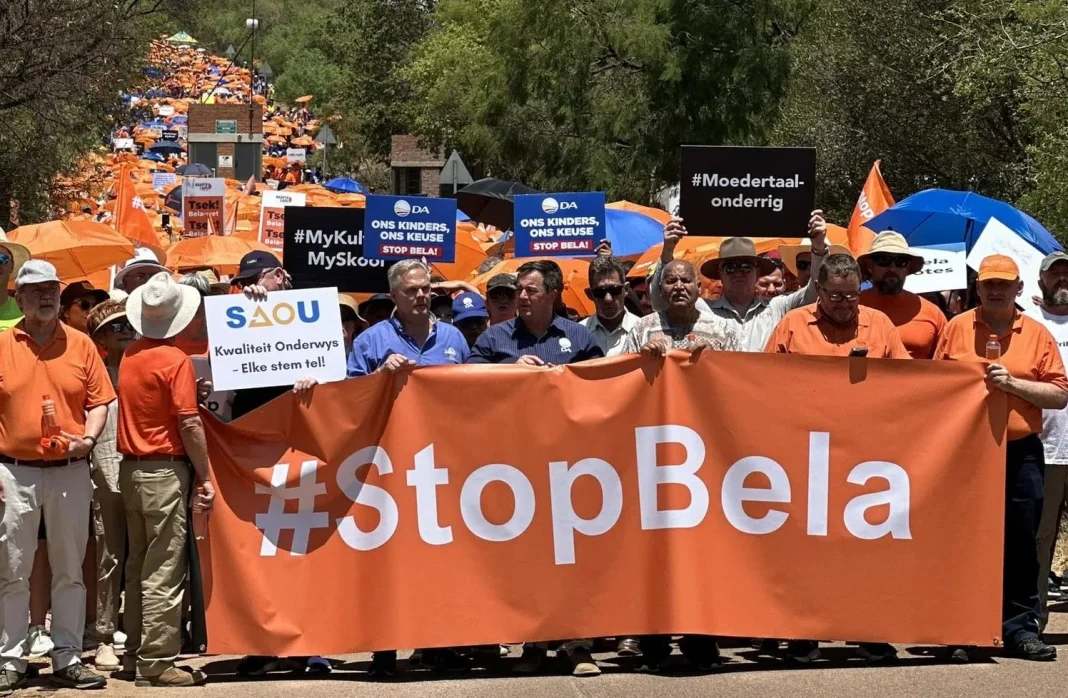
The move has reignited calls from civil society organisations, unions, and advocacy groups for South Africans to help shape the future of schooling.
AfriForum’s Head of Cultural Affairs, Alana Bailey, described the extension as “positive and necessary.”
“Both sets of regulations will have a significant impact on the nature of public schools and the provision of high-quality education. It is essential for as many institutions, organisations, and individuals as possible to submit comments,” she said.
Originally set to close on 5 September, the deadline has now been extended to 5 October, according to the Government Gazette.
The regulations, published in August, focus on school capacity and admissions and form part of implementing the BELA Act, which came into effect on 24 December 2024.
Bailey welcomed the extra time, saying it would allow the public to provide more thoughtful and detailed input. She also warned that vague or contradictory regulations could trigger costly legal battles.
“Legislation is often broad, and regulations must bring clarity on its application. If people feel the regulations are unclear, inconsistent, or out of touch with realities in schools, these concerns must be raised with the Minister and the Department. This is particularly important if they infringe on the rights of learners, teachers, or the Constitution itself,” she added.
AfriForum confirmed it is finalising its submission in consultation with its legal team.
The South African Democratic Teachers’ Union (SADTU) has also weighed in, voicing “great concern” over the minister’s approach.
SADTU General Secretary Mugwena Maluleke argued that the regulations undermine both the letter and spirit of the Act, which followed more than a decade of consultations and parliamentary processes.
“Regulations cannot be used to change the text of the Act, impose requirements not provided for, or undermine its purpose and intent,” he said.
The union criticised the Minister for publishing regulations on only two areas instead of the eight originally envisaged, warning this piecemeal approach could create confusion. It further claimed that several provisions fall outside the Minister’s legal authority, encroaching on other ministries such as Home Affairs and Public Administration, and ignoring Constitutional Court rulings on learners’ rights.
Civil society group Free SA has also raised objections, warning that the regulations could weaken school governing bodies (SGBs) and marginalise parents in decision-making. A key concern is a clause that allows provincial officials to override SGB decisions on admissions, zoning, and language policy.
Free SA argues that this shift would erode accountability and weaken the democratic role of SGBs, which were designed to secure parental and community involvement in education.
The Department has defended the regulations as necessary to ensure uniformity, fairness, and improved governance in public schools. Officials say they will enhance equity and accountability while modernising school governance for the country’s 13.5 million learners.
INSIDE EDUCATION