By Lebone Rodah Mosima
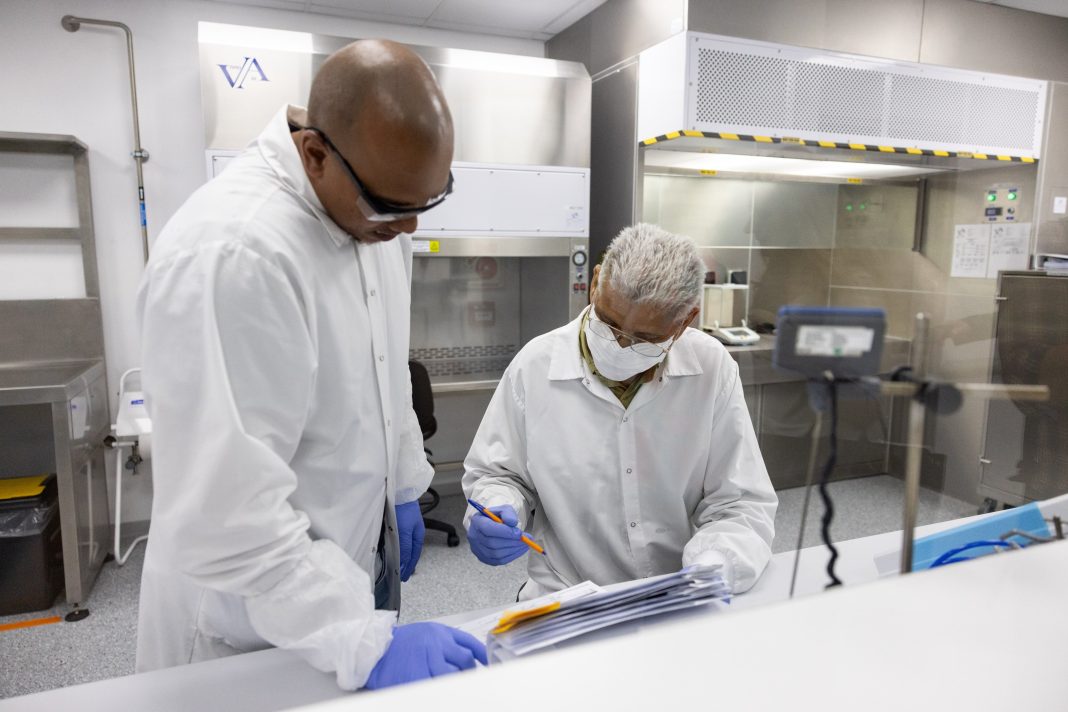
Cape Town-based Biovac has launched a new Product Development Laboratory in collaboration with South Africa’s Department of Science, Technology and Innovation (DSTI) and the Bill & Melinda Gates Foundation, marking what the company called a milestone for Africa’s vaccine self-sufficiency and health security.
Biovac CEO Morena Makhoana and company representatives told Inside Education the facility advances the country’s vision to become a continental leader in vaccine research, development and manufacturing.
Founded in 2003 as a public-private partnership with the South African government, Biovac develops, manufactures and “fill-and-finishes” vaccines for South Africa and other African markets.
The laboratory was designed to ensure Africa possesses the tools, expertise and capacity to develop high-quality vaccines and respond rapidly to future outbreaks and pandemics, Makhoana said.
The facility has developed three technology platforms – mRNA, bacterial and cell culture — enabling Biovac to pursue vaccine projects across multiple fronts.
“Biovac is evaluating project opportunities on all three platforms to ensure sustainable vaccine development for Africa, prioritising the development of vaccines for diseases with significant public health impact in Africa, such as the Oral Cholera Vaccine (OCV),” the company said.
“The end-to-end capability (including R&D) being built will enable future expansion to other high-burden diseases.”
Biovac plans to build on the momentum of mRNA gained during the COVID-19 pandemic by applying the technology to Africa’s major viral threats, including TB, RSV and HIV. While it called mRNA a key tool against the continent’s disease burden, the company added that vaccine development is multifaceted and no single approach is sufficient, so it is broadening its technology stack to deliver durable, locally suited solutions.
The company has developed strong collaborations with South African universities, research institutions, and global health partners.
The new lab will strengthen these partnerships, said Biovac, providing a “collaborative engagement with key institutes and enable growth of the bio-economy”.
“Furthermore, the facility can also be used to work closely with these institutes to foster local talent and providing opportunities for training and development of an African workforce that can meaningfully contribute to critical skills in South Africa and even beyond our borders.”
Through partnerships with UvuBio, SAMRC, and DSTI’s National Research Foundation (NRF), Biovac offers internships and graduate placements for young researchers, providing exposure to multiple vaccine platforms, including mRNA. It said that many these trainees have transitioned into permanent roles within Biovac or the broader biotech industry.
Biovac said that the Gates Foundation’s confidence in its work – and its 10 year collaboration – were pivotal in its ability to deliver on large-scale initiatives.
“DSTI’s commitment to science and innovation has demonstrated to our partners that the South African government stands firmly behind initiatives like this.”
The company plans to significantly expand its manufacturing footprint, aiming to manufacture at least five products for export within the next five years and to double its manufacturing capacity and workforce by 2030.
“We will do our best to retain our current skills as well as attracting new local skills into employment, through the meaningful work and world-renowned skills development exposure on offer through the scientific and manufacturing projects that we currently have in our stable, as well as new projects we are planning”, the company said.
The laboratory has been positioned within Africa’s growing pandemic-preparedness network, meaning it will act as a regional backbone for rapid vaccine response.
Biovac will be able to design, test, and produce outbreak vaccines quickly, to strengthen supply-chain resilience and regional readiness, through its mRNA and other vaccine platforms. “Unlike during the COVID-19 pandemic, Africa is now building the capabilities needed to take care of its own health needs.”
Environmental sustainability is also a priority, the facility said, citing energy-efficient designs, water recycling and secure bio-waste management systems. Biovac said that local vaccine production will reduce emissions associated with long-distance logistics, contributing to a lower-carbon, more resilient African health supply chain.
Biovac plans to create over 400 new jobs in the next five years, growing its workforce from 320 to more than 740 employees.
“Our Science & Innovation department typically employee up to five graduates per year, for a period of 6 to 12 months, and these graduates will participate in the current, as well as the new product development lab activities, so to grow their experience across multiple technology platforms, including mRNA.”
DSTI Deputy Minister Nomalungelo Gina called the lab a “milestone” for South Africa.
“This high-tech facility, equipped with advanced mRNA technology and state-of-the-art research capacity, will empower scientists to tackle the most prevalent diseases in Africa, ensuring that home grown innovation addresses the health needs of the citizens.”
INSIDE EDUCATION