
By Lebone Rodah Mosima
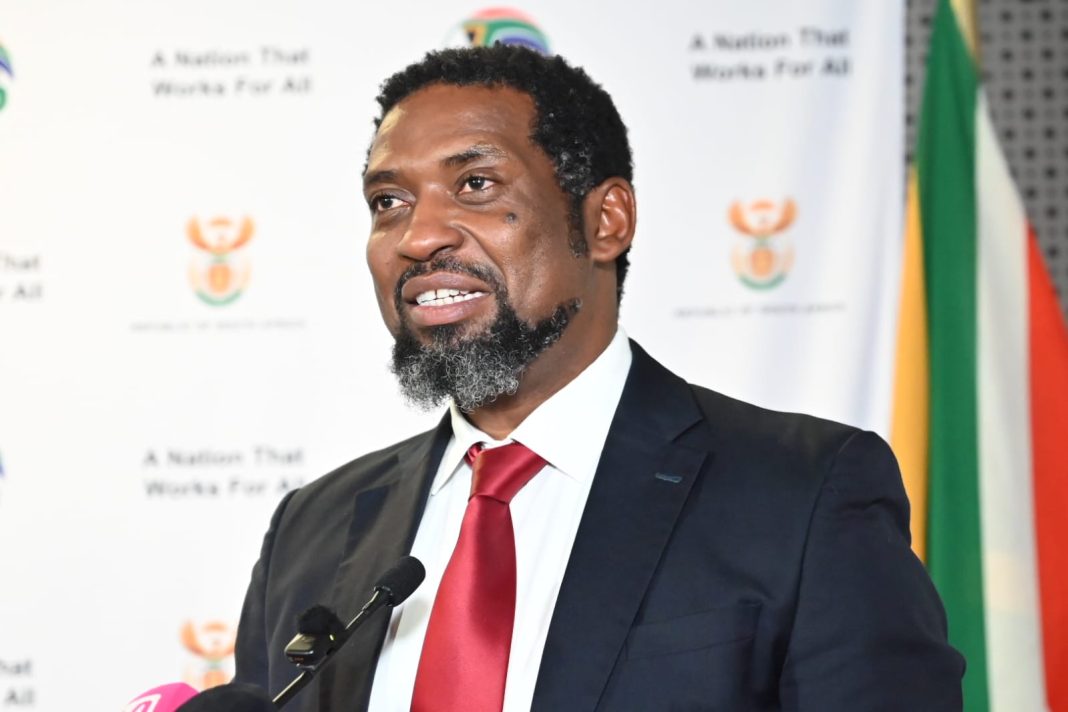
Higher Education and Training Minister Buti Manamela has welcomed the launch of the Charlotte Maxeke Educational Fund, saying it should help keep young women in higher education, particularly those pursuing science-related studies.
The fund was launched during the 125th Graduation Anniversary Memorial Lecture of Charlotte Makgomo Mannya-Maxeke.
“Tonight, in this very programme, the Charlotte Maxeke Educational Fund is launched: private generosity reaching out a hand to a young woman whose studies are at risk, with a special care for those pursuing the sciences. The same degree Maxeke earned,” Manamela said.
“I want to say to the founders of that Fund, and to the philanthropists and institutions in this room: this is how it should be. The public purse and the private hand, pulling the same young person through the same open door. The education she earned in exile is, at last, working for our democracy at home.”
Manamela used the lecture to link the fund to Maxeke’s own journey from singer to scholar, activist and organiser. He said Maxeke travelled abroad with an African choir in the late 19th century before enrolling at Wilberforce University in Ohio.
“One hundred and twenty-five years ago today on the 20th of June 1901, a young woman from this country walked across a stage in Ohio and was handed a degree. A Bachelor of Science. She was the first Black woman in this part of the world ever to hold one. Her name was Charlotte Makgomo Mannya-Maxeke,” he said.
Manamela said Maxeke’s legacy was not only about academic achievement, but about using education to serve others.
“She could have stayed where her degree was worth something. She returned instead to a land where her qualification was an insult to the order of things — and she put every page of it to work. The education she earned abroad, she spent at home, on her people, for her people,” he said.
He said South Africa had made major progress since Maxeke’s time, with women now making up the majority of university students.
“The country that refused Charlotte Maxeke a university has become a country in which the majority of our university students are women. Read that sentence slowly. The doors that were bolted against her are the doors through which her granddaughters now pour,” Manamela said.
“That is not an accident of history. It is the work of a democracy that decided education would no longer be a privilege rationed by birth.”
However, he said the work of expanding access was not complete, particularly in student funding.
“We have built a national financial aid system that has carried millions of young people — most of them young women, many of them the first in their families to see the inside of a lecture hall — from the township and the village to the graduation stage,” he said.
“We are not finished, and I will not pretend to you that we are. We are reforming how we fund our students so that the promise is not only generous but durable — so that the child who qualifies in 2040 finds the door as open as the child who qualifies today.”
Manamela said the central lesson of Maxeke’s life was that education should not only benefit the individual.
“That is the whole of it. That is the difference between an education that liberates a people and a qualification that merely rescues an individual,” he said.
INSIDE EDUCATION