
By Johnathan Paoli
Early Childhood Care and Education (ECCE) is crucial not only in shaping individual futures but also in securing a nation’s long-term prosperity, according to Basic Education Minister Siviwe Gwarube.
“If we are to re-imagine education in SA, then we need to improve the outcomes across the board, and we need to start at the beginning. Investing in the early years of a child’s life is not just an optional extra, it is the most strategic and cost-effective investment a society can make,” Gwarube said on Tuesday.
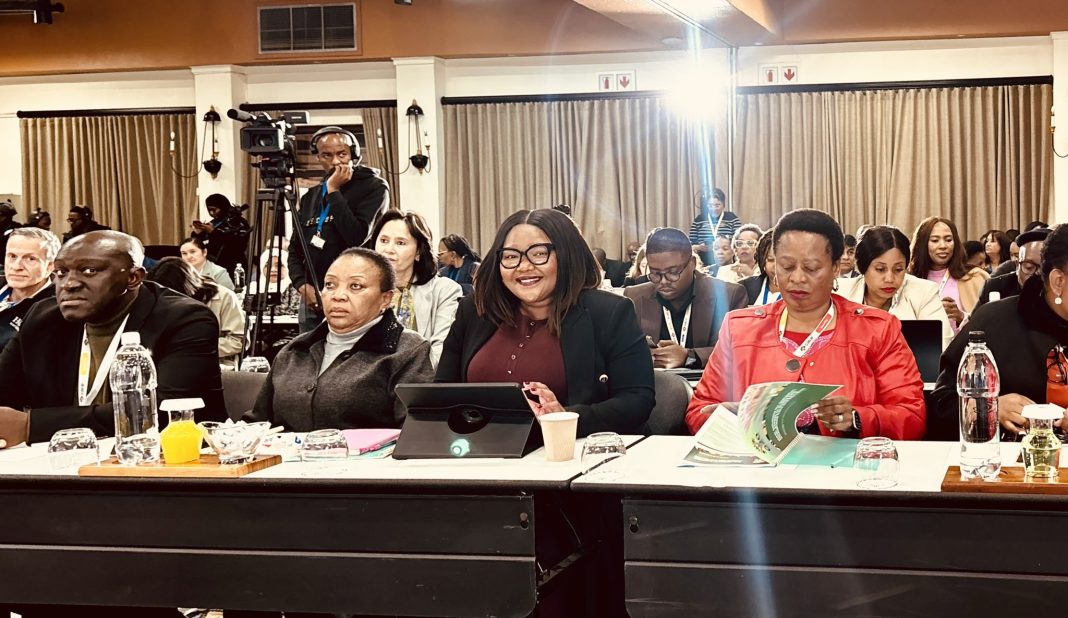
She was speaking at a seminar under the theme “New Solutions for Population-Level Access to Quality ECCE” hosted by her department and the G20 Education Working Group.
Gwarube stressed the collective responsibility of all stakeholders to reflect, learn and lead together.
Opening the seminar in the North West, Basic Education director-general Mathanzima Mweli underscored the importance of investing in the first five years of a child’s life, noting that these formative years were crucial for brain development, school readiness and long-term national prosperity.
He urged delegates to move beyond diagnosing challenges to co-designing scalable and sustainable ECCE systems.
“Early childhood is not a soft issue—it is a hard prerequisite for equity, productivity and national development,” Mweli asserted.
Deputy Minister Reginah Mhaule, representing the North West provincial government, emphasised the need to uphold dignity and respect in how societies treated young children.
She encouraged participants to adopt actionable commitments that would build solid educational foundations, especially in under-resourced communities.
In her keynote address, Gwarube framed ECCE as both a social justice issue and the most cost-effective economic investment a country could make.
She highlighted stark access gaps. Only 44% of children aged 0–5 were enrolled in ECD programmes, with rural and non-English-speaking populations most affected.
Gwarube emphasised the transformative impact of the 2022 migration of ECD responsibilities to the department and called for authentic partnerships with grassroots providers.
She also outlined key department interventions, including a forthcoming Quality Assurance Framework, an ECD workforce development strategy, enhanced data systems and engagement with National Treasury to secure long-term financing.
Notably, Treasury has increased the per-child daily subsidy from R17 to R24 and allocated R10 billion in additional ECCE funding, which is expected to expand access to over 700,000 more children.
Gwarube also stressed the importance of mother tongue instruction in early learning.
“Language is not only an academic tool, but a vessel of identity, belonging and power,” she said.
The seminar featured high-level panels and research-led sessions on global and regional ECCE innovations.
Dr Catherine Draper from the University of the Witwatersrand spotlighted the crucial “next 1000 days” between ages 2 and 5.
While the first 1000 days were widely recognised, Draper argued that the following phase was equally vital for reinforcing or redirecting developmental trajectories.
Her session called for a life-course approach and multisectoral collaboration to address cognitive, social and emotional needs in early childhood.
Elizabeth Lule, the executive director of Early Childhood Development Action Network (ECDAN), introduced a systems thinking approach, highlighting how ECCE must integrate health, education, nutrition and social protection to respond to global shocks like pandemics, conflict and climate change.
She said that siloed interventions could not meet the needs of the 43% of children under five in low middle income countries (LMICs) at risk of developmental failure.
Systems thinking, she argued, built resilience, enhanced equity and enabled scale.
Rebecca Hickman of SmartStart presented Canada’s path to universal ECCE, focusing on leveraging community strengths and grassroots networks.
She urged governments to move from being sole providers to enabling inclusive ecosystems through partnerships and integrated planning.
Ben Hewitt of Theirworld emphasised the urgent need for bold investments in ECCE, proposing innovative funding mechanisms like social impact bonds and excise taxes.
He noted that a 2.1% GDP investment in childcare could enable over 10 million South African women to enter the workforce within three years.
Sibongile Khumalo of DataDrive2030 shared insights from the Thrive by Five Index, which showed that just 46% of children enrolled in early learning programmes were school-ready.
Data revealed stark inequalities along socio-economic lines, reinforcing the need for targeted, evidence-based interventions to narrow development gaps.
Unicef’s Hana Yoshimoto presented a four-part strategy to mobilise parental and community involvement in foundational learning.
She said that by promoting home learning environments, supporting positive parenting and advocating for family-friendly policies, communities could drive equity and child development from the ground up.
The seminar concluded with a robust dialogue exploring how to achieve equitable ECCE access.
Delegates emphasised local government support, the value of public-private partnerships and the importance of closing the policy-implementation gap.
They reaffirmed that ECCE was a shared responsibility and that its success depended on collective action, bold leadership and unwavering commitment to the rights and potential of every child.
INSIDE EDUCATION