
Lerato Mbhiza
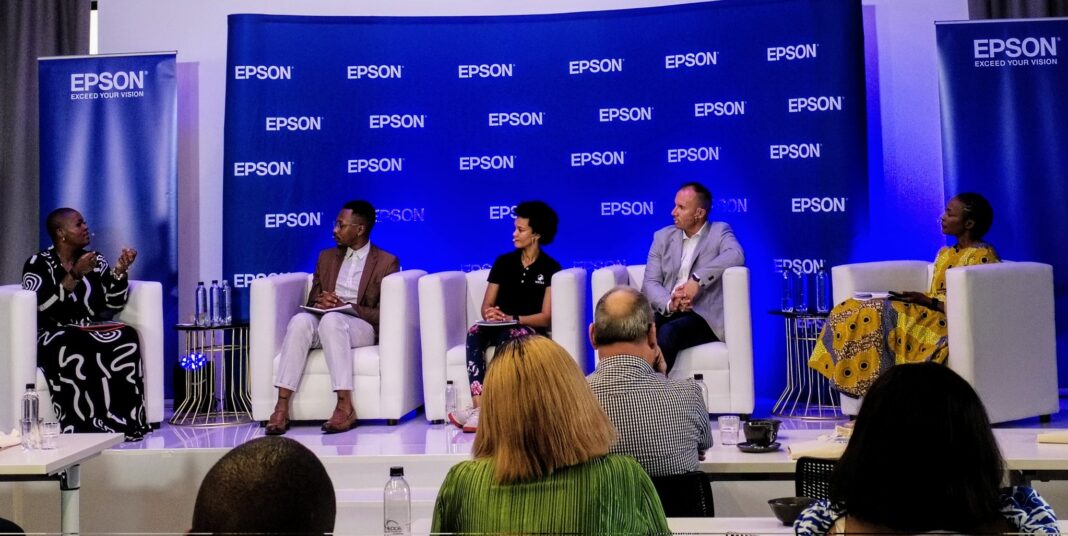
THE climate change literacy workshop kicked off on Wednesday at the Knightsbridge Office Park on the importance of raising awareness among educators and how they can help improve school literacy in South Africa.
Timothy Thomas, a manager at EPSON highlighted the importance of teaching the youth about climate change that has an impact in many communities worldwide. Recently floods in Pakistan affected more than 3 million people and in South Africa over 500 people have died in the April 2023 floods.
“Today is about what we can change as individuals on matters of climate change and finding better ways to inform the community and pupils,” he said.
Sibusiso Masombuka the deputy principal at Greenside High School said schools have few challenges when it comes to teaching climate change literacy because most schools don’t have teachers who have knowledge on the subject.
Masombuka also cited Life Orientation as one area where most schools are lacking in terms of qualified teachers to teach the subject.
“You will find that the teacher teaching the subject is a Maths teacher but took the subject because there was space that needed to be filled”.
He suggested that schools and communities need to be creative and take education further by making programs that will educate the young and the old while calling out on Life Science and Geography teachers to give more information to the community and pupils.
“We need to educate more people .. also teaching takes place in different places not only in schools. We can get parents involved in spreading information on how to take care of the environment”.
Saray Khumalo, a mountaineer told the panel that climate change is being caused by human behaviour and can be reversed by human behaviour. She said that through the right partnership with the department of education and different companies – the schools could be assisted to benefit with resources.
“With the right partnership the school can get resources and be able to spread the message in different areas …teaching people about climate change and what can be done to stop it. Also checking the type of plastic that is used in schools, the eco-friendly plastic needs to be used more in schools to help pupils to understand more on climate change”
Sindili Cloeter from WESSA said teaching climate literacy to pupils is a big challenge as some schools lack resources and teachers have to carry all this pressure to teach and make sure the word reaches the parents and community.
Cloeter added that it has been proven that indigenous knowledge could also be used to stop climate change.
INSIDE EDUCATION