
Staff Reporter
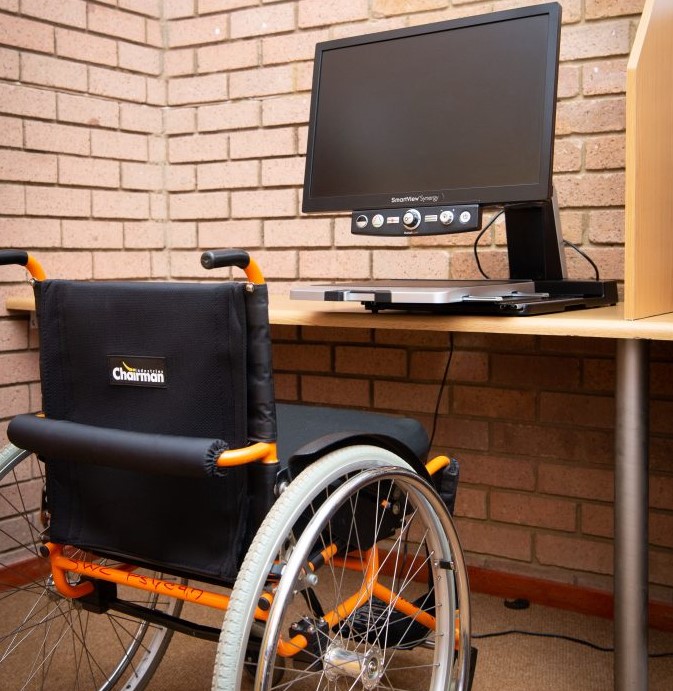
Students with disabilities made up just 1.3% of South Africa’s public university enrolments in 2023, Higher Education Minister Buti Manamela said, urging African universities to build accessibility into their systems rather than treat it as an afterthought.
Speaking at the third edition of the Times Higher Education Africa Universities Summit in Nairobi, Manamela said the numbers showed how far the sector still had to grow regarding inclusion. “These are not figures of inclusion at scale,” he said.
Instead, they were “signs of how much work remains to be done”.
He said the barriers went far beyond admissions, extending to “infrastructure, digital design, assistive technology, curriculum adaptation, staff training” and whether institutions were built around universal accessibility rather than assumptions about a “normal” student.
“Inclusion is not a speech. It is design,” he said.
He said South Africa’s female-majority enrolment pattern was not the continental norm.
Across sub-Saharan Africa, he said, tertiary education still enrolled roughly 80 women for every 100 men, while Kenya’s gross tertiary enrolment stood at about 13% for men and 10% for women.
He called on universities to move beyond symbolic commitments and publish disaggregated data on enrolment, retention, completion, employment outcomes, disability access and leadership representation.
“Without that, we do not have transformation. We have anecdotes,” he said.
Manamela also warned against presenting equity as a choice between competing groups, saying gains by women should not obscure deeper inequalities, while concerns about male disengagement should not be used to roll back gender justice.
“The task is not to choose between women and men. The task is to build institutions capable of producing equality for all,” he said.
He said higher education could not be separated from poverty, labour market inequality and social conditions.
“The higher education question is inseparable from the social question,” he said.
Manamela said South Africa’s experience showed that policy could widen access, particularly for women, but had not yet closed deeper gaps in leadership, employment outcomes, and disability inclusion.
He said the goal should be “not access without success” and “not inclusion without power,” but “real equality.”
INSIDE EDUCATION