
By Johnathan Paoli
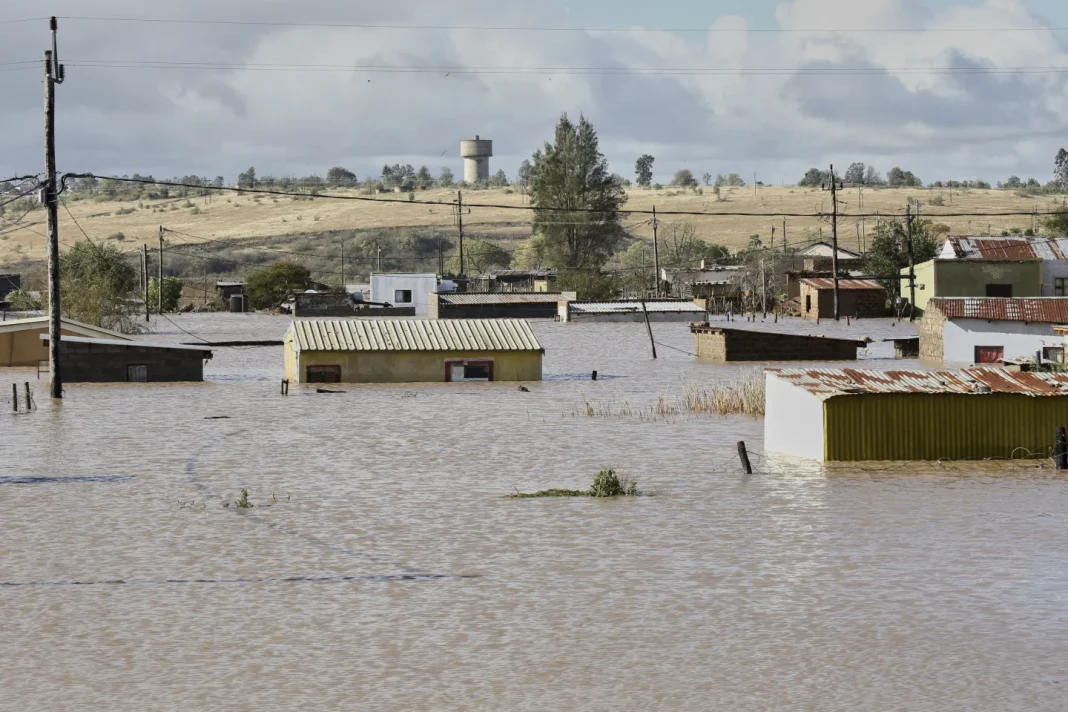
The Eastern Cape government is racing against time to restore learning and teaching in hundreds of schools ravaged by the devastating floods which left widespread destruction across the province, claiming 102 lives and displacing thousands.
According to education MEC Fundile Gade, over 480 schools were initially flagged for assessment after the disaster.
After a comprehensive infrastructure audit, 235 schools were confirmed to have been damaged, 71 of which required major reconstruction.
“These 71 schools will put serious pressure on an already overstretched education infrastructure budget. We are dealing with a backlog of R72 billion for school infrastructure, and our annual budget allocation is only R1.9 billion. Without this disaster, we were already facing a crisis,” Gade said.
The hardest-hit district is OR Tambo, where the highest number of fatalities occurred and where the majority of schools sustained severe flood damage.
Gade confirmed that his department was working closely with the Cooperative Governance and Traditional Affairs (CoGTA) department to reprioritise budgets and prepare a comprehensive response plan.
However, given the scale of the destruction, additional funding from the national government was being sought.
“Education is a constitutional right, and we are committed to ensuring the school calendar continues. We aim to resume full academic activity in all affected schools by the start of the third term in July. But to do that, we must stabilise learning environments, deliver learning materials, and replace uniforms,” Gade said.
He noted that the department has already begun distributing Learner and Teacher Support Materials (LTSM) to affected pupils.
“We’ve set aside R1.079 million for infrastructure-related responses, including school repairs and replacements for learners’ essential materials,” he said.
The floods have also taken a deep emotional toll on learners, educators and communities.
At least 38 of the 101 confirmed fatalities were children, with 32 identified as learners.
Some schools were directly affected by the loss of multiple teachers or learners.
In one tragic incident, an accident unrelated to the floods claimed the lives of four teachers and injured several others from flood-affected schools, further complicating academic recovery.
“Education is not just about walls, it’s a theatre of knowledge. So, we are also prioritising psychosocial support to ensure learners and teachers can cope with the trauma. We’ve mobilised counselors and community-based psychosocial services to assist learners returning to class,” Gade said.
Schools that were unable to participate in the June exam cycle due to the floods were granted extensions.
Learners from these schools wrote postponed exams on Monday, ensuring continuity in assessment and progression.
While emergency shelters were activated to accommodate over 4700 displaced individuals across the province, including many learners, concerns have been raised about long-term solutions.
The human settlements department is currently in the process of securing land for Temporary Residential Units (TRUs), with over R461 million required.
However, the province currently has only R120 million, and is relying on national government intervention.
“Families are expected to remain in temporary shelters for at least 30 days. We are working with traditional leaders and municipalities to finalise land release for permanent resettlement, especially near essential services like schools,” CoGTA MEC Zolile Williams said.
There were also concerns from community members regarding the safety of returning to flood-damaged homes.
The provincial government clarified that no official directive had been issued for families to return to structurally compromised houses, urging residents to remain in shelters until proper assessments and relocations could be arranged.
Of the R5.1 billion needed to repair all damaged infrastructure across the province, R3.2 billion is required by provincial sector departments, including education, while municipalities need R1.8 billion.
Th education department is using the disaster as an opportunity to accelerate long-delayed rationalisation efforts aiming at merging small, under-resourced schools into more sustainable learning institutions.
“We must use this moment not just to rebuild, but to reimagine the future of education in the Eastern Cape,” Gade concluded.
INSIDE EDUCATION