Inside Education Reporter
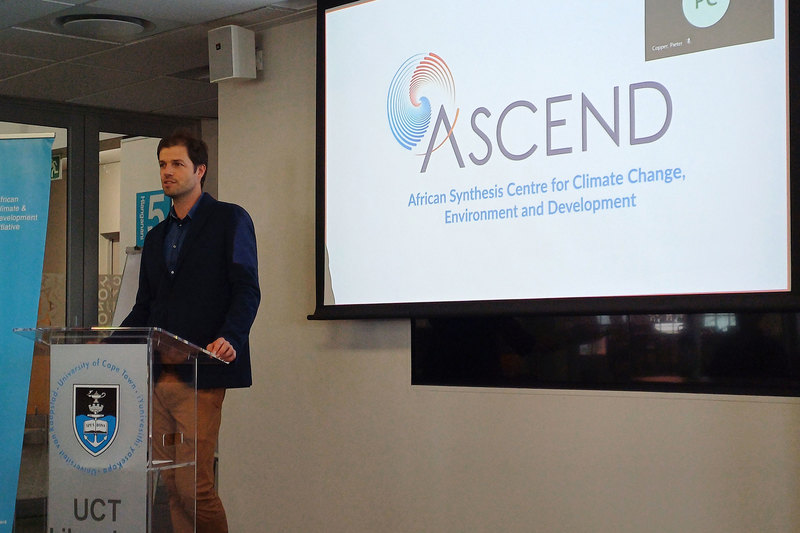
THE international launch of the African Synthesis Centre for Climate Change, Environment and Development (ASCEND) at the University of Cape Town (UCT) is set to accelerate the pace and nature of climate change action across Africa and globally.
Launched on 1 November, ASCEND will provide a specialised infrastructure for teams of researchers, policymakers, and practitioners to harness and integrate diverse data and knowledge on climate change
to accelerate discoveries and enhance equitable and effective action on climate change and development.
The new centre will be hosted at UCT’s African Climate and Development Initiative (ACDI) and represents a first for the continent. It is also the world’s first synthesis centre that focuses on climate change and development and will be underpinned by a strong focus on the Global South. “The 2020s are a critical decade for climate action.”
In an era of rapid climate change, research knowledge and data on climate change impacts and solutions have burgeoned worldwide, said ASCEND director, Dr Christopher Trisos.
“We often think of sophisticated equipment like a radio telescope or a biotech laboratory as essential for scientific discovery, but in this age of complex social and environmental challenges –such as climate change
– another form of research infrastructure is now essential too: synthesis centres.”
As a synthesis centre, ASCEND will provide a platform for transdisciplinary teams of policymakers, researchers and practitioners to synthesise and leverage the wealth of existing data and knowledge for climate change solutions.
The aim is to generate actionable research that will advance climate-resilient development, the core of which is the well-being of people and ecosystems.
The 2020s are a critical decade for climate action,” Dr Trisos said at the launch, attended by high-level researchers, government representatives and funders from Africa and abroad.
“Decision-makers, practitioners, and researchers must address complex problems that cut across disciplines, geographies and socioeconomic divides to enable the transformative change necessary to secure a sustainable future for all.
“Climate change, biodiversity loss, and poverty are interlinked problems that cannot be solved by any single discipline. A lack of data and knowledge synthesis limits breakthrough research and decision-making.”
The centre will welcome synthesis teams in 2024, when work begins on the BAOBAB synthesis project for African research on climate change.This will bring together climate change data, researchers, and decision- makers from across the continent and nurture African scholars and scholarship.
INSIDE EDUCATION