By Charmaine Ndlela
In an era where many learners struggle to stay engaged in the classroom, one foundation phase teacher is proving that creativity can, and does, change that.
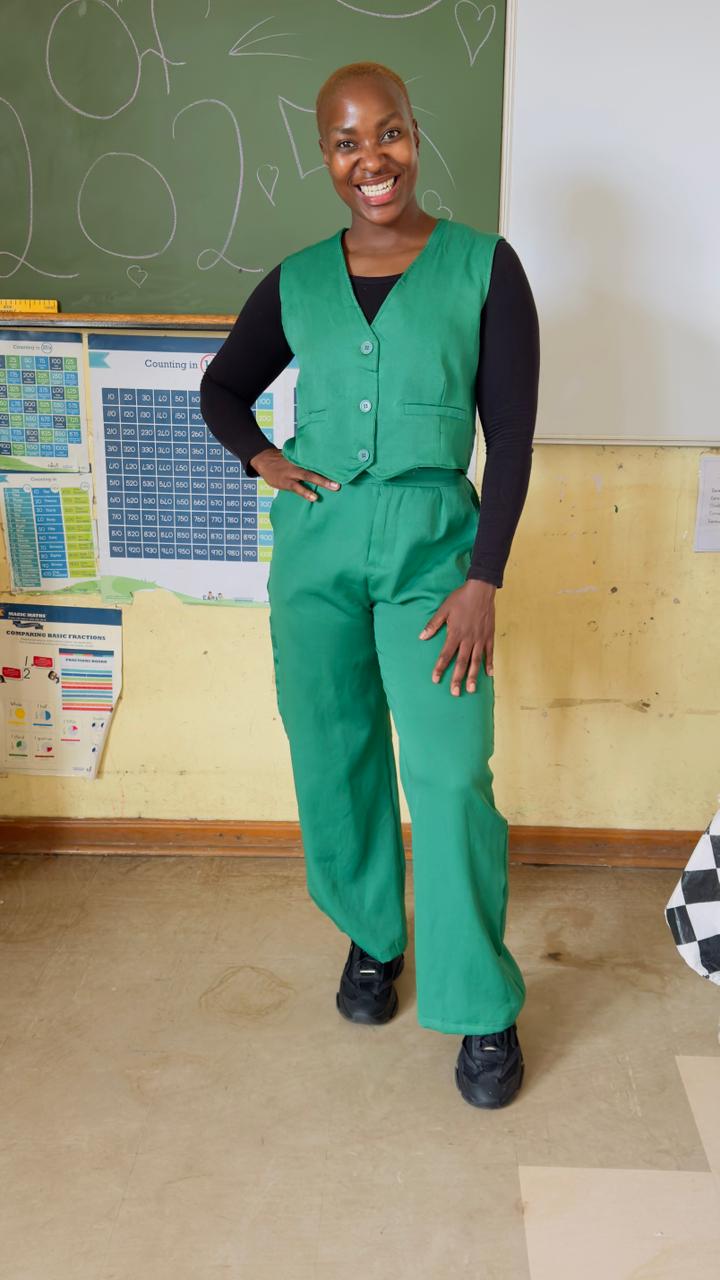
Nqobile Mhlongo, a Grade 3 teacher at Nantes Primary School in Eersterust, Pretoria, has made it her mission to turn learning into an adventure.
Originally from Mandeni, in KwaZulu-Natal, Nqobile started her teaching journey in 2022 and, from the very beginning, knew she wanted her classroom to feel unique.
“I have been using various methods to accommodate learners in my class,” she told Inside Education. “However, the method that best works for me is making learning fun.”
Her passion, drive, and energy have seen her teaching methods go viral on TikTok.
For Nqobile, fun is not a distraction – it’s a doorway to understanding. She weaves songs, sounds, movement, colourful materials, and playful interaction into her lessons.
“I incorporate fun in my teaching, and my learners respond in a fun way. This method has been working for me and the learners I’ve taught. It promotes socialising, boosts creativity, and helps learners develop confidence.”
She shared a moment that reaffirmed her belief in “joyful teaching”.
“There was a time where [my students] were writing an exam and one of the questions was: ‘What is a verb? List two examples.’ They all got it right because we created a song about verbs.”
To Nqobile, this is what learning should feel like: engaging, memorable, and full of joy.
“Making learning fun is an interesting way to get your learners focused, enjoy school, and love one another. That is what I’ve observed from the children I’ve taught, we became family.”
When topics are challenging, Nqobile doesn’t rush. She breaks them down with patience and creativity.
“If the topic is tough, I start by introducing it, and asking about them their knowledge of the topic. Then, from there, I bring in the real teaching material or pictures that will ensure they have a better understanding of the topic.”
Her lessons are interactive, and she keeps learners motivated by recognising their efforts.
“To make lessons more enjoyable, I ask them questions based on what we’ve learned and then reward them with sweets or fruits.”
In a diverse class with various home languages, she embraces inclusivity by connecting with learners in the languages they understand best.
“Sometimes I ask them in their home language as we have mixed languages in my class.”
Nqobile believes every child deserves the opportunity to succeed, even if they learn in their own way or at their own pace.
“Dealing with special learners can be challenging, but I always have extra classes for them. I use a variety of methods to make sure they are on the same path as others. I introduce the lesson for the following day to them, so when we do it with the whole class, they already have an idea about what it’s about and can participate.”
Her creative strategies have had a noticeable effect, particularly in mathematics — often considered a difficult subject for young learners.
“My learners enjoy and pass mathematics more than other subjects because there are lots of exciting activities, and they are related to real-life experiences.”
Even classroom rules become memorable, because they’re sung.
Nobile said these joyful routines help children who might otherwise struggle with concentration, confidence, or language barriers. The rhythm helps them remember; the movement helps them focus. Learning becomes an experience that engages mind and body.
Nobile’s methods are proof that education doesn’t have to be rigid or intimidating. With creativity, compassion, and a little bit of fun, a classroom becomes something every child looks forward to.
INSIDE EDUCATION