By Akani Nkuna
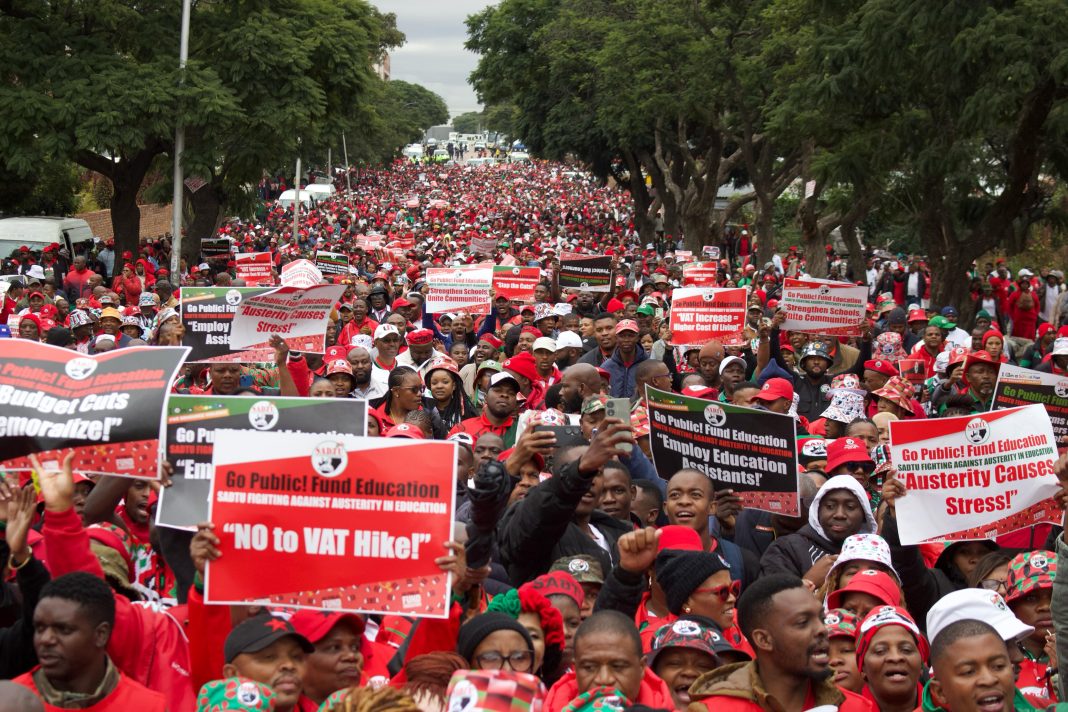
A wave of frustration swept across the education sector as thousands of teachers took to the streets in a mass protest against the chronic underfunding of public schools.
Organised by the SA Democratic Teachers’ Union, the march highlighted growing concerns over deteriorating infrastructure, overcrowded classrooms and a lack of basic resources.
The union is calling for the immediate abolishment of austerity measures. It wants the government to urgently intervene in resolving the deepening funding crisis that continues to cripple the country’s education system.
“We are here to bury neo-liberalism, because neo-liberalism has caused crime in this country. Neo-liberalism has caused our children to take nyaope, because our children do not get the [education] support they are supposed to get because of austerity measures,” Sadtu general secretary Mugwena Maluleke told the protesters outside the National Treasury’s offices in Pretoria on Wednesday.
The union further argues that budget cuts have severely impacted school operations and safety, making it increasingly difficult to deliver quality education. Its grievances come amid growing frustration within the teaching community over the government’s handling of public education.
“Our teachers are treated like maids. They get peanuts when they are supposed to be the anchors of education. We say to Treasury that you have to make sure that there is money for our early-childhood development, and that all our schools are well equipped,” said Maluleke.
Sadtu marched to the Treasury and the Basic Education Department with a list of demands. The protest formed part of a broader campaign under the global slogan of an Education International initiative, “Go Public! Fund Education”.
The demonstration was supported by the Congress of SA Trade Unions, reinforcing the call to defend and sustain South Africa’s public education system.
Cosatu president Zingiswa Losi condemned the budget cuts, describing them as a direct attack on children, educators, vulnerable communities and the working class.
She said that the austerity measures not only threatened the wellbeing of individuals, but the nation as a whole.
Furthermore, Losi issued a stern warning, stating that if the government failed to respond to the demands and continued to cut the education budget, labour was prepared to escalate its actions.
“We are tired of empty promises. We are tired of overcrowded classrooms. We are tired of pros and cons. We are tired of teachers being treated like disposable beings. This is a war against the working class, and we are fighting back. If you touch our education, you touch our future and we will shut this country down,” Losi said.
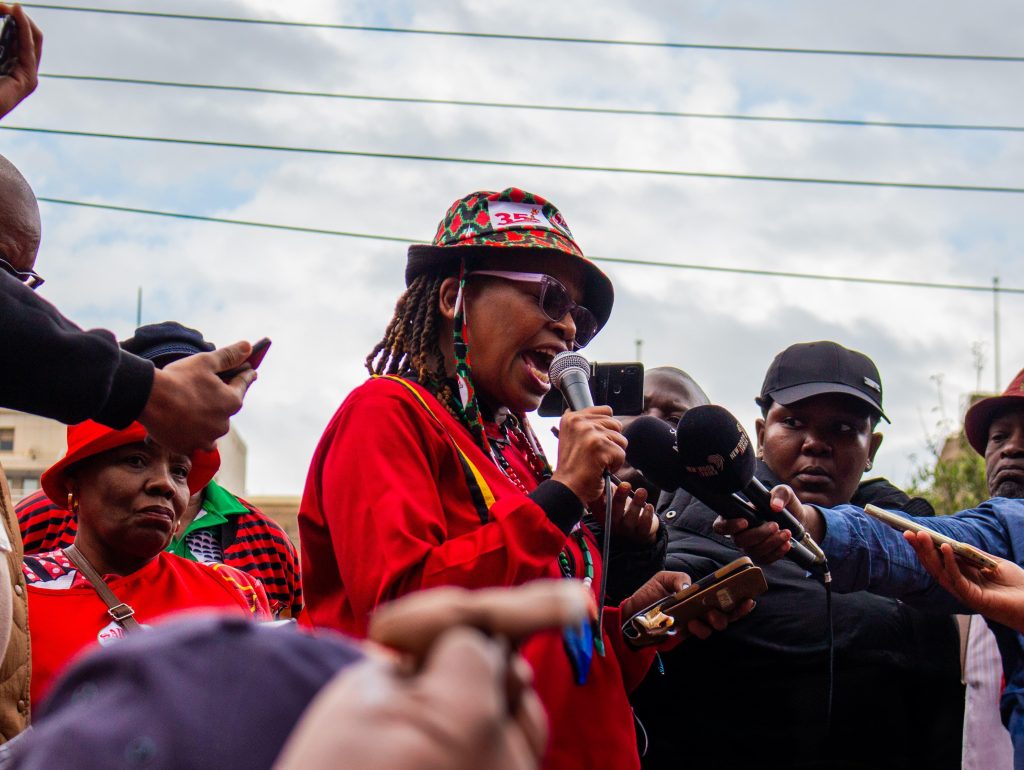
Sadtu spokesperson Nomusa Cembi told Inside Education that the financial constraints were taking a visible toll on school infrastructure, which was falling into disrepair while incidents of violence were on the rise.
According to Cembi, many schools could no longer afford to hire security staff, putting the safety of both learners and teachers at risk.
“We are having vacant posts not being filled. We are having substitute teachers not being employed when a teacher goes on sick or maternity leave which then increases the load of work on teachers who are already overloaded,” she said.
In its memorandum, Sadtu called for the construction of new schools and additional classrooms as a solution to overcrowding.
Another key demand is the upgrading of infrastructure in rural schools to match the standards of those in more developed and industrial areas.
The union has given the government 21 days to respond to its demands.
INSIDE EDUCATION