
By Thapelo Molefe
The Northern Cape will spend the next three to four years formalising and strengthening Early Childhood Care and Education (ECCE) centres to ensure every child has access to quality early learning.
This follows a two-day G20 indaba on ECCE between various stakeholders that saw a renewed focus on foundational learning and inclusive early education in the province.
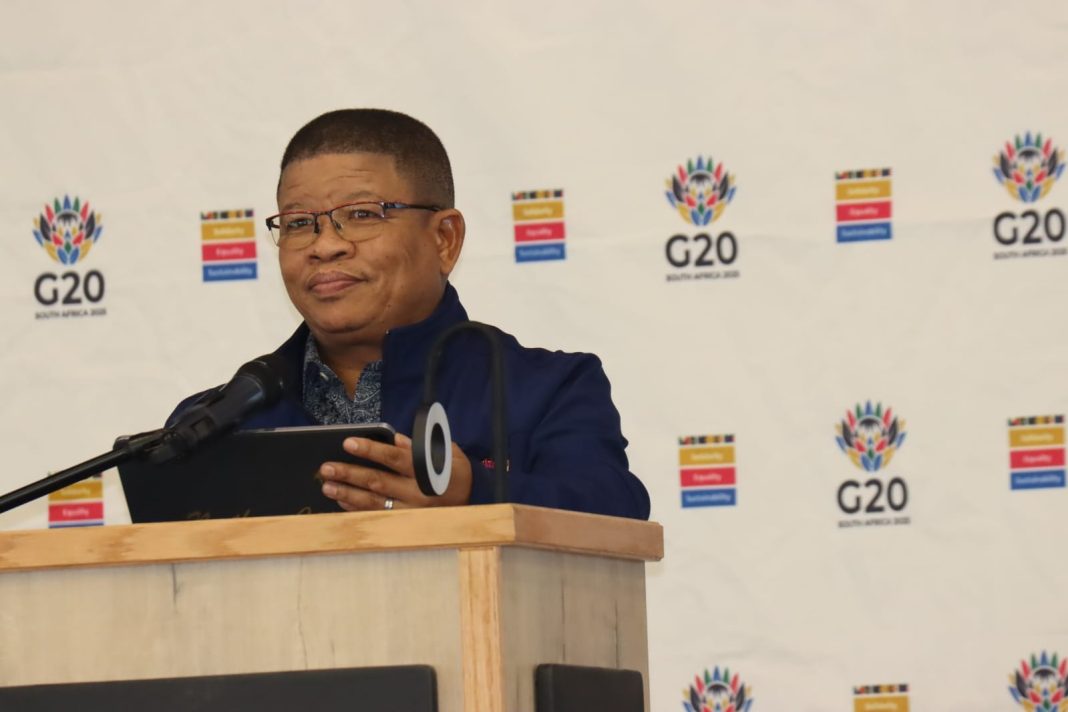
“We are prioritising the improvement of infrastructure, the expansion of access to quality learning and teaching resources, and the integration of technology into early learning environments,” Northern Cape education MEC Abraham Vosloo said.
“We cannot ignore the challenges facing our ECCE sector, particularly in under-resourced areas. That is why we are calling on all partners—municipalities, the mining and energy sectors, civil society and communities to join hands with government to unlock opportunities for our children.”
Several private-sector partners have already stepped forward with meaningful investments.
“Some of our partners in the private sector have built modern, fully equipped ECCE centres that will leave a lasting legacy in their communities,” he said.
“We welcome this and urge more to follow.”
The indaba brought together education leaders and experts who split into three focused commissions to tackle key challenges and develop recommendations.
Commission 1 looked at curriculum innovation and teacher development, with delegates exploring how to strengthen the foundation phase curriculum (Grades R–3) and better equip teachers with skills for age-appropriate, play-based learning.
Commission 2, chaired by senior manager of ECD in the Northern Cape, Mercia Fani, tackled inclusive and equitable access, identifying major systemic barriers such as funding gaps, poor infrastructure and lack of support for vulnerable groups.
“We cannot talk about inclusive education without confronting the real obstacles that prevent children in rural and disadvantaged areas from accessing ECCE,” Fani said.
“This includes rethinking how we fund ECCE and ensuring proper support services are in place.”
Commission 3 focused on stakeholder collaboration and community involvement, with a key recommendation being the formation of interdepartmental ECCE forums at both provincial and district levels.
“We recommend that these forums include departments such as health and social development, and that municipalities take an active role in ensuring ECCE is part of integrated local development planning,” said one delegate during the report back session.
The anticipated outcome of these proposals is more streamlined service delivery and shared accountability for early learning outcomes.
Vosloo reminded delegates that ECCE was not a luxury, it was necessity.
“This is the foundation on which every child builds their future, and we must get it right.”
He said it was important to forge strong partnerships with the mining sector, the renewable energy industry, civil society and municipalities to mobilise resources and ensure sustainable support for ECCE programmes.
INSIDE EDUCATION