By Thebe Mabanga
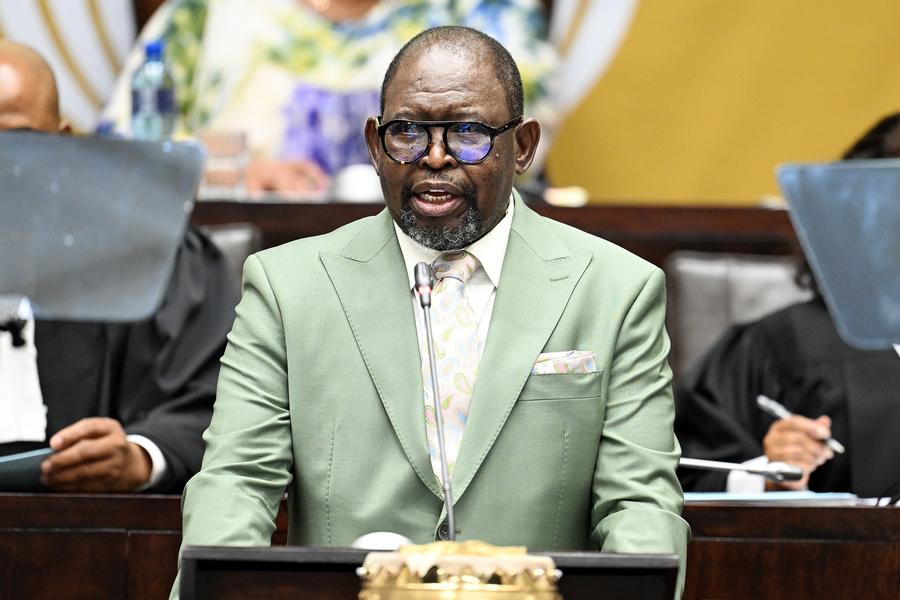
Finance Minister Enoch Godongwana has revealed that government has held behind-the-scenes discussions about shutting down the National Student Financial Aid Scheme (NSFAS), but said “vested interests” are likely to prevent the move from going ahead.
Godongwana disclosed this at a Rand Merchant Bank “Think Budget” event on Thursday, a day after presenting the Medium-Term Budget Policy Statement (MTBPS) in Parliament.
He said the closure of NSFAS was “debated for an hour” at the National Treasury’s Targeted and Responsible Savings but concluded that “vested interests” would prevent the closure.
Godongwana says his frustration with NSFAS, which has an annual budget of R50 billion, is that they “take money from the Department of Higher Education and give it to universities” who do what they need for their operations.
This sounds like an oversimplification of how the student financier operates.
The NSFAS was established in 1996 as a South African government student financial aid scheme which provides support to undergraduate students.
While NSFAS receives funds from the Department of Higher Education Training, they pay institutions, and students directly as well as service providers, most notably for accommodation.
Godongwana then noted that NSFAS “then outsources some of its functions,” a move which he suggests justifies the closure.
In a suggestion that the issue was discussed with President Cyril Ramaphosa, he pointed out that the CEO earns in the region of R4 million per annum, more than the President himself.
Under outgoing chair Dr Karen Stander and acting CEO Waseem Carrim, NSFAS has been reviewing its operating model, deciding which functions will be handed to institutions and negotiating with service providers for student payment and accommodation and extricating the organisation form onerous, costly contracts and looking to decentralise to campuses.
But Godongwana says he decided against the move because “there would be protests on campuses” if he announced the closure of NSFAS.
NSFAS has an annual budget of R50 billion and has a historical debt of R 45 billion.
INSIDE EDUCATION