
By Thapelo Molefe
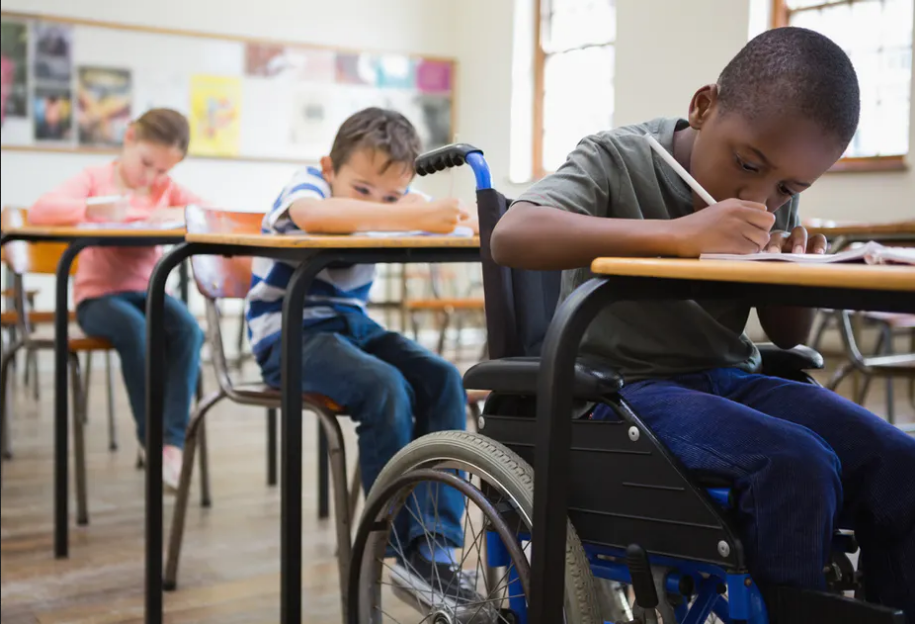
The government is taking steps to make schools more inclusive for children with disabilities.
The Department of Basic Education told Parliament that over 67,000 learners with disabilities were now in ordinary public schools, and more than 259,000 teachers have been trained to support them.
Briefing the Select Committee on Education and Creative Industries, the department said it was working to ensure that children with disabilities could learn alongside their peers in safe and supportive environments, starting from early childhood all the way to high school.
“We are using inclusive education to give effect to the constitutional mandate that education must be accessible to all,” said the deputy director-general Jabulani Ngcobo.
According to the department, enrolment in special schools doubled from 64,000 in 2002 to 127,677 learners. Public schools now host an additional 67,104 learners with disabilities, while about 9000 more remained in community-based care centres awaiting school placement.
To support the rollout of inclusive education, 259,000 teachers have been trained in specialisations such as Braille, South African Sign Language, autism and other inclusive education fields.
“There’s an increase in the number of teachers that are being trained… our current total nationally is just over 259,000,” said chief director Cheryl Weston.
A multidisciplinary national task team has been created to identify and place out-of-school learners into appropriate schools. As of the latest figures, 403 learners had already been moved into schools, with more placements expected as the screening and support processes continue.
“This is a sensitive process. We need to screen learners, identify their challenges and then find schools where they can be placed appropriately,” Weston explained.
The department confirmed that 88% of special schools have already received Information and Communication Technology (ICT) equipment and connectivity. Learning materials, including Braille and large-print books, were also being supplied.
“We can report 100% of requisition already from all special schools for 2026,” Weston said.
She noted that materials were also uploaded online for access by schools and provinces.
Across provinces, infrastructure upgrades were underway.
However, chairperson of the committee, Makhi Feni, raised serious concerns over the state of Nokuthula School in Gauteng, calling it “a ticking time bomb, a disaster or a crisis in motion”.
He criticised the department’s report on the school as not accurately reflecting the real situation.
The department said it was scaling up scholar transport for special schools, with increasing numbers of learners and schools served each year.
It also highlighted co-curricular initiatives like adapted school sports and participation in national choral competitions.
“We are working to ensure that learners with disabilities feel included not only in classrooms but also in extracurricular activities,” Weston stated.
The department is currently reviewing White Paper 6, the national policy on inclusive education, with a ministerial task team working alongside provincial teams.
Oversight has also improved, with three to four provinces monitored annually and collaboration with disability advocacy organisations now a standard practice.
The department’s director-general, Mathanzima Mweli, acknowledged progress, but said more needed to be done.
“We’ve made some progress, but not good enough… Only learners with severe disabilities should be in specialised institutions. The rest must go to ordinary public schools,” he said.
Challenges remain, particularly around under-expenditure in provinces due to delayed appointments and procurement.
Weston said the department has escalated issues to provincial heads and imposed penalties where needed.
“We do issue notices of intention to withhold the transfer. If there’s no improvement, we then withhold the transfer,” she said.
Mweli pledged to follow up on problem areas, including Nokuthula School.
“I promise… I will go to Gauteng and visit Nokuthula, work with the department to deal with the issues,” he said.
“You’re holding us accountable, and we’re making progress because of your oversight.”
Members of the committee welcomed the progress but called for urgency and more honest reporting.
The department was reminded by MP Malesela Mokwele that “disability is not inability”, and urged schools to be more accessible, especially in rural areas.
“We’re not doing oversight just to tick a box…We need full transparency about what is happening on the ground,” Feni said.
INSIDE EDUCATION