
By Lebone Rodah Mosima
Basic Education Minister Siviwe Gwarube has called for urgent and sustained investment in early childhood development (ECD), saying that South Africa and the region risk entrenching inequality before children enter formal schooling.
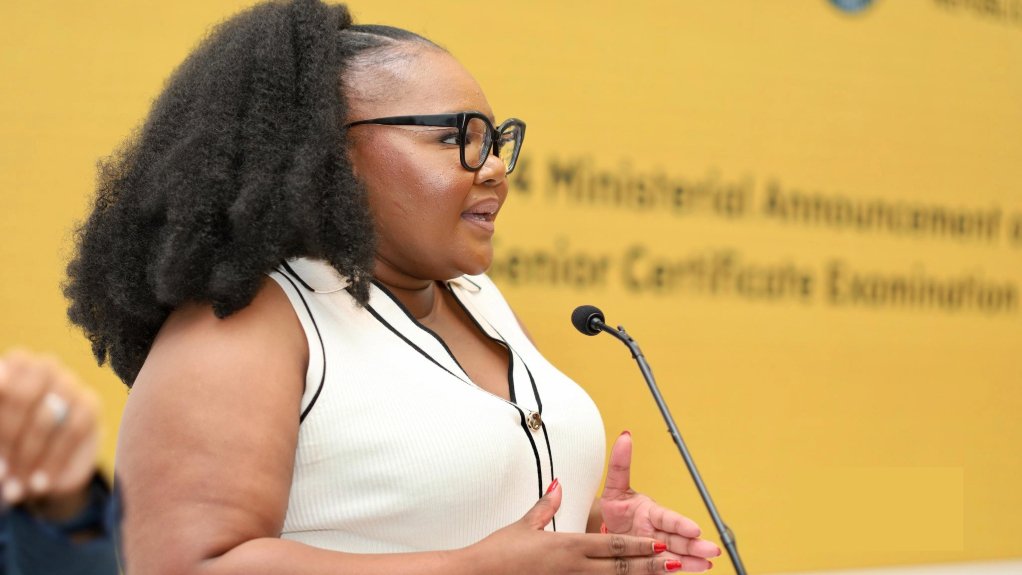
Gwarube was speaking at the Southern and East Africa Regional Childcare Conference in Johannesburg this week, convened by the Department of Basic Education (DBE) and the World Bank to discuss access to affordable, quality childcare and early learning across the region.
The conference comes as government moves to expand access to ECD services through centre registration, increased subsidies and partnerships with the private sector and philanthropic organisations.
The department said government had exceeded its target of registering 10,000 ECD centres by the end of 2025, with more than 13,300 centres registered through the Bana Pele drive.
It has also set aside R10 billion over three years to support ECD subsidies, including an increase in the subsidy from R17 to R24 per child per day.
Gwarube said investment in early learning was critical to improving education outcomes, advancing gender equality and supporting long-term economic growth.
The conference heard that inequalities in education often begin long before children enter Grade 1.
“She illustrated this through the contrasting experiences of two children, one who benefited from early learning and support, and another who did not, highlighting that disparities in opportunity, not ability, determine educational success,” the DBE said.
Gwarube pointed to research showing that many children are not developmentally on track by the time they reach school-going age, while poor nutrition and stunting continue to undermine children’s ability to learn and thrive.
“Learning does not begin in Grade 1. It begins in the earliest years of a child’s life,” Gwarube said.
“If we fail to act during this critical window, we entrench inequality before formal education even begins.”
She also highlighted government’s work with private-sector and philanthropic partners through a R496 million Early Childhood Care and Education Outcomes Fund, aimed at expanding access to quality childcare in underserved communities, including rural areas.
The fund is expected to support the creation of more than 115,000 new ECD spaces in KwaZulu-Natal, the Eastern Cape and Limpopo.
Gwarube said childcare should be treated not only as a social priority, but also as an economic necessity, particularly because affordable and reliable childcare enables more women to enter and remain in the workforce.
The conference also focused on regional cooperation, with countries in Southern and East Africa expected to share best practice, improve quality standards and explore scalable models for childcare provision.
While Africa’s young population presents a major demographic opportunity, Gwarube warned that this potential would only be realised if governments and partners invest deliberately in children’s earliest years.
“The measure of our success must be the number of children who arrive at school ready to learn, to thrive, and to succeed,” she said.
She asked governments, development partners, civil society and the private sector to move beyond commitments and take practical steps to expand access to quality early learning and childcare.
INSIDE EDUCATION