By Levy Masiteng
In classrooms across South Africa, children who race ahead of the curriculum often find themselves waiting for challenges, recognition, and a system built to meet their pace.
How schools respond to gifted learners depends largely on where those schools are and how much they can afford.
In private schools, resources, engaged parents, and specialised staff can help intellectually exceptional students thrive. In the public system, where budgets are stretched and policies are broad, giftedness is often acknowledged only in passing and supported unevenly.
The Department of Basic Education uses what it calls the screening, identification, assessment and support policy, a framework intended to flag learners with “unique educational needs”, which includes giftedness. But implementation varies widely, and much of the responsibility rests on individual schools and teachers.
Kerry Mauchline, spokesperson for the Western Cape Department of Education, said teachers and administrators look for “learners who demonstrate exceptional abilities or potential,” after which district officials, including psychologists, social workers and learning support advisers, step in to craft individual support plans.
“An example of best practice would be Pinelands North Primary School, where gifted learners have the opportunity to explore expanded academic opportunities through discussion groups and additional classes,” Mauchline told Inside Education.
However, she acknowledged that the system “relies on identification at the classroom and school level,” a process that is far from fool proof.
The consequences of missing a gifted child can be profound. Research has shown that students who go unrecognised “may not reach their full potential, leading to boredom, disengagement, and poor academic performance”, and may feel “isolated or unsupported”.
If a gifted child is spotted early and placed in the right environment, their experience can look very different.
At Radford House, a small private school in Johannesburg that specialises in educating gifted children, the emphasis is on promoting curiosity from the earliest years. The school’s approach focuses on “nurturing foundational skills, fostering a love for learning, and providing enriching opportunities”.
Angela Voultepsis, Head of Department for Pre-Primary at Radford House, told Inside Education that the admission process begins with a questionnaire sent to interested parents, asking about their child’s advanced abilities or giftedness.
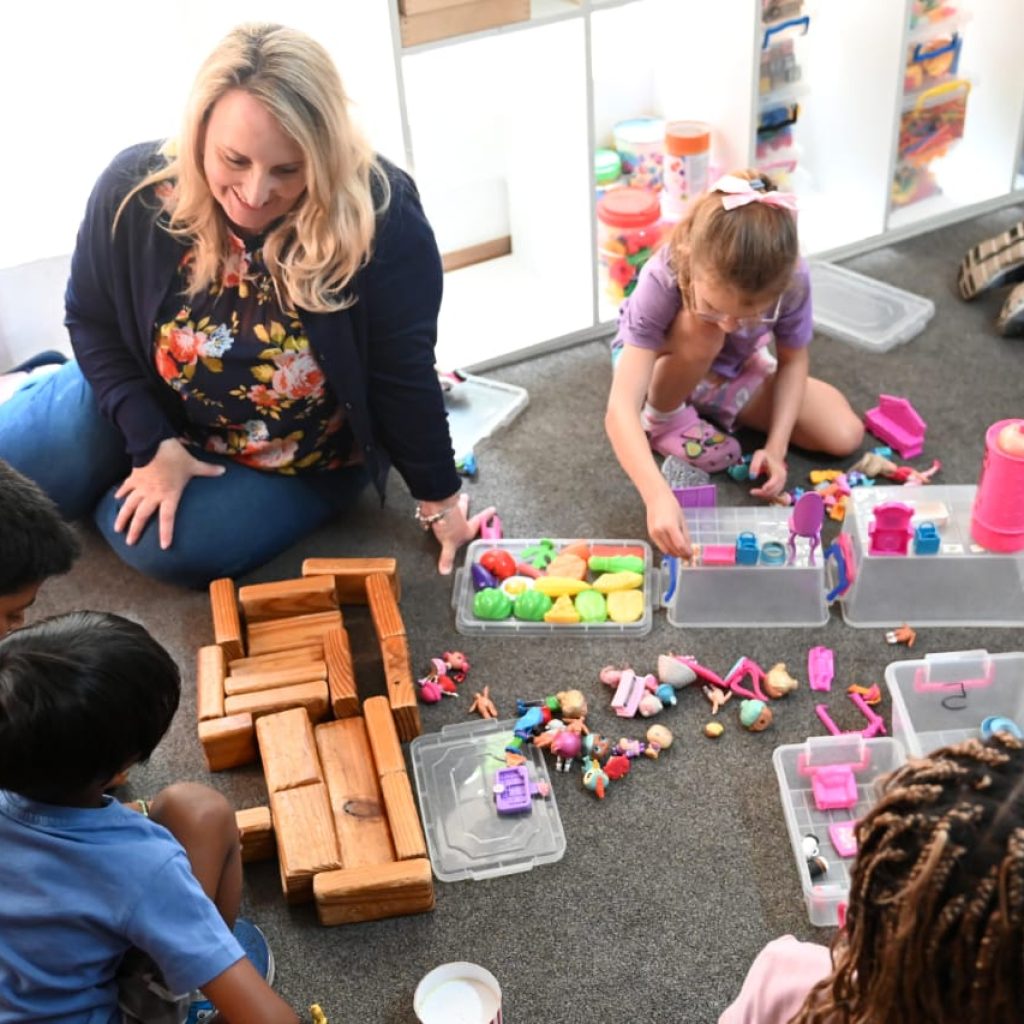
Based on the questionnaire, selected children are invited for a week-long observation, during which they participate in activities and assessments.
“We teach them something new and we do an assessment, then based on the outcomes of those assessments, we would either accept them or say they would not cope in this environment,” Voultepsis said.
Many prospective students have already been assessed by an educational psychologist, who recommends Radford House as the ideal environment for intellectually gifted children.
“Sometimes they’re identified as gifted a little later when the teacher suddenly realises this child is really smart and they’re so capable and need to find another environment for them,” Voultepsis added.
Once accepted, learners aged between four and six years old engage in theme-related teaching, exploring complex topics that include plant physiology and geology. Voultepsis said that themes for study at Radford House are vastly different to those at other preschools. Here, the curriculum is tailored to meet individual needs, with students learning to read and write at their own pace.
“One of our maths lessons would be something like flower plus flower equals 20. What is the flower? What’s the value of the flower? And then we would extend it further and say, well, now that you know what the value of flower is, flower minus B equals 5. What’s the value of B? So, we’ll do those kinds of maths lessons,” she said.
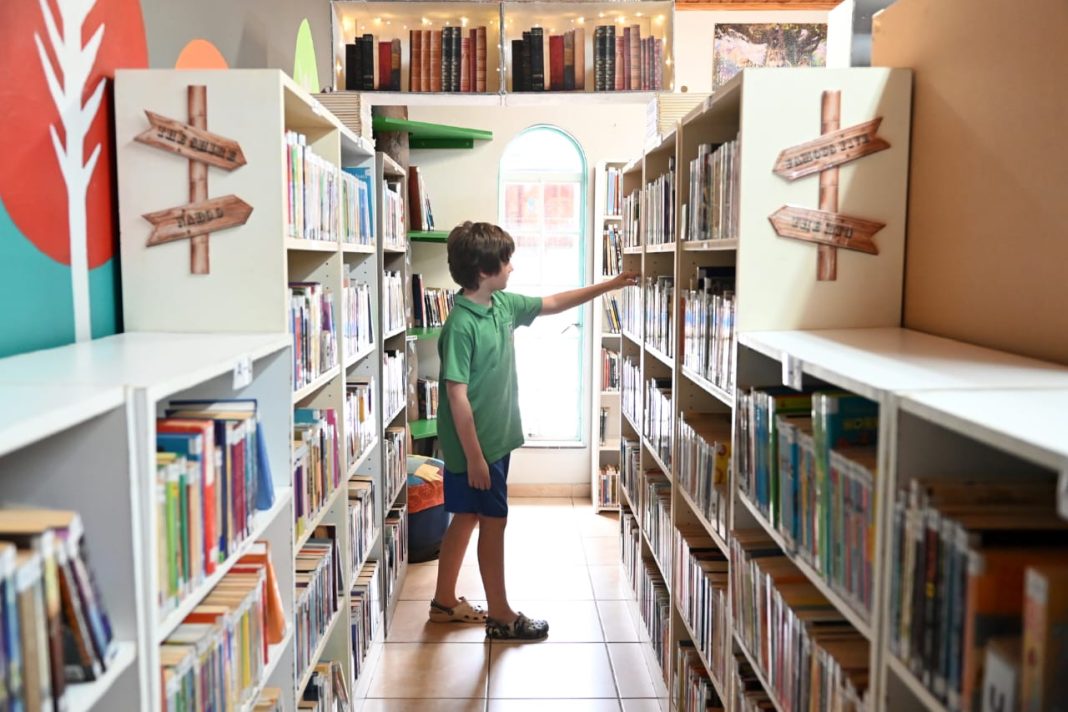
Inside Education’s visit to Radford House revealed small classes and busy, colourful spaces: a library with a Minecraft area, sports fields and a playground designed for pre-primary learners
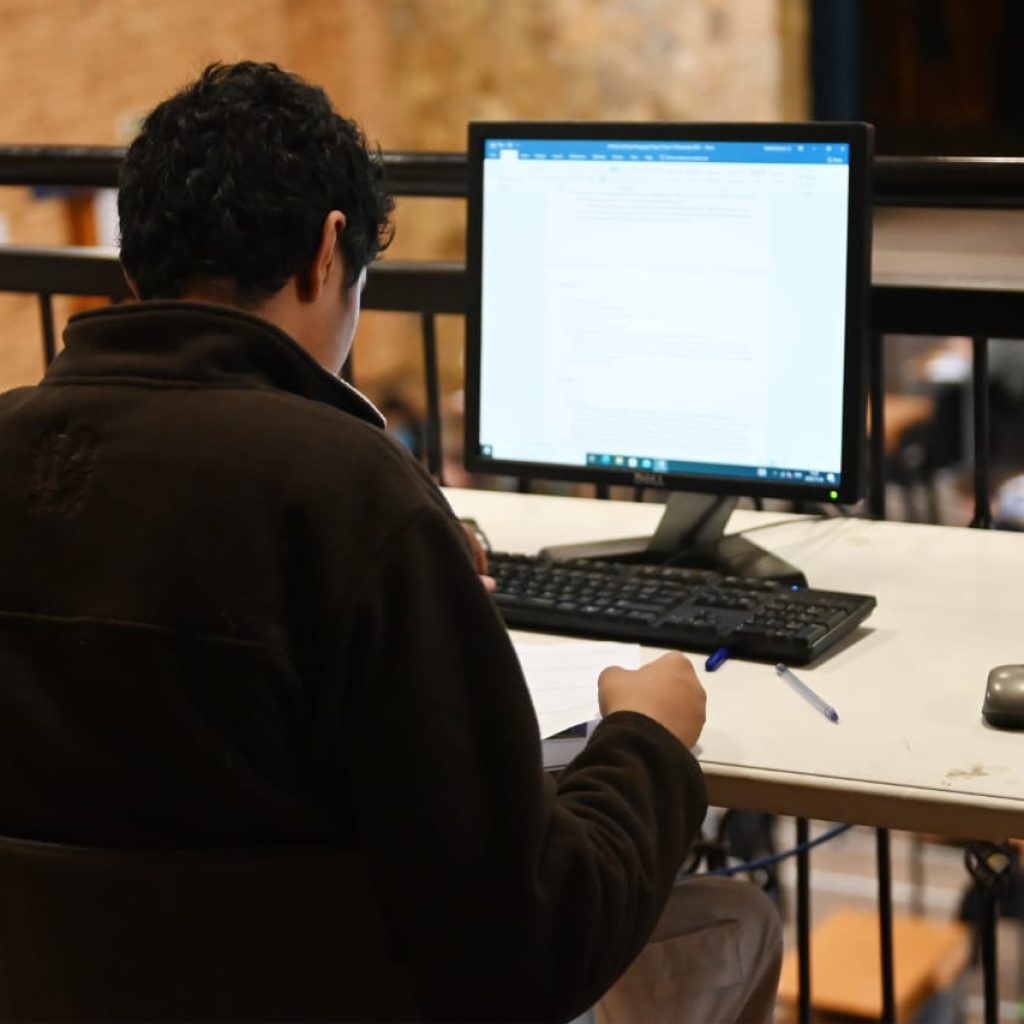
The school’s atmosphere is warm and welcoming, with teachers and students forming close bonds. Grade 11 students were writing exams, with the option to type or handwrite their papers.
“They love to play, but when it’s time to learn, they need more depth. They know stuff already that other children their age don’t, and so we need to help nourish that love for learning,” Voultepsis said.
Head of the school, Philip Kokot, said that the accepted learners have IQs of 125 and above, with some scoring as high as 145 to 150+.
To cater to these exceptional students, Radford House keeps class sizes small, with an average of 12 children per teacher in primary school and three to four learners per teacher in high school. This allows for personalised attention and creates space for more complex work, according to the school.
Kokot told Inside Education that the teachers had to adapt the syllabus and make the work “a little bit harder, more challenging, and a little bit out of reach … incorporate critical thinking skills, multiple intelligence thinking, and challenges”.
“When they’re given a topic, when they’re given a challenge, someone needs to get them excited. When a gifted child is properly inspired, they can go way beyond what a normal child can do,” he added.
The school also prioritises community service and outreach programmes. Radford House works with orphanages, where students tutor and interact with the orphaned children, aiming to promote their social responsibility and empathy.
“Many of our children are very academic or intellectual, but they’re not very good at social [interactions], so they need that [grounding],” he said.
Every Saturday, students participate in outreach activities, such as community clean-ups, walking dogs, or working at animal shelters.
Regarding support for potentially gifted children from disadvantaged backgrounds, Kokot said there was a trust fund contributed to by parents, which helps support students in need. He said parents and teachers had been trying to get the support of the government, but were “still trying”.
“The parents who have more money available, some of them put a little bit extra aside, and they help us with that support. The school’s main job is to pay the rent and electricity. When that’s paid, if there’s money left over, we can use that money for outreach work.”
“We are a school for gifted children. We’re not a school for rich children. So obviously, we do have high school fees, but when a child needs to be here, we make a plan,” he added.
Kokot defined gifted children as those with “an above-average capacity to interact with knowledge and ideas at a more rapid pace, who can solve problems, and who have memory and cognitive abilities that are not unique, but above average.” He likens it to having a brain that can “go a little deeper, a little bit further, a little bit faster”.
By contrast, in the country’s public schools — many of which are under-resourced and often beset with underperforming and demotivated teachers — spotting a gifted child can be far more difficult. Large class sizes, heavy workloads and pressure to meet basic literacy and numeracy targets can leave little time to stretch high-ability learners. Kokot said that for those gifted children who are unable to cope in a normal school environment, home schooling is one solution. He said that in his experience, gifted children often force themselves to fit in, but the social and emotional toll can be severe.
“[T]he gifted cohort or the gifted section of society tends to have the highest incidence of anxiety and stress,” he said.
“The problem is that teachers tend to focus more on marks rather than on intellectual potential. There are many very bright children who don’t do well at school because they’re too bright. If they find the work boring, if they find the work tedious, if they find that the teachers are too restrictive or too structured, then these children lose interest in school. Some of the brightest learners have just given up on school.”
Mauchline encouraged parents who feel that their child has additional educational needs to engage with their schools. This would ensure support that could include district help.
Despite policy commitments, the Department of Basic Education’s annual report shows that there is no specific budget or staff dedicated to gifted learner programmes. Support, when available, is funded under inclusive education, which is a broad umbrella that covers both special needs and high-ability learners. The department also has no central database of gifted students or schools catering for such.
Identifying gifted learners is crucial for their development and future contributions to society. By knowing who these learners are, the department could provide targeted support, enabling gifted learners to reach their full potential and cultivate future problem-solvers and leaders who can drive societal progress.
As Kokot emphasised, gifted learners have a unique ability to solve problems and benefit society, but they need exposure and support to realise their potential.
“Whatever your religious views or whatever your beliefs, somehow they were born with something special, an ability to solve problems in society, and an ability to use their brain in a way that should benefit the world around them. And the only way they’re going to do so is if they’re exposed to the world around them. That’s why there’s an effort to get them out there,” he said.
Internationally, systems like Singapore’s are more structured and centrally directed, identifying gifted learners early and offering tailored curricula. Singapore’s Ministry of Education describes its Gifted Education Programme as one that identifies students in Primary 3 through a two-stage process and trains teachers “with the knowledge and pedagogies to support high-ability students”.
“Test preparation activities are not encouraged as these could inflate the scores, which may then not reflect your child’s actual potential,” the Singapore ministry says.
A study by researchers Annari Milne and Mike Mhlolo of the Central University of Technology in Bloemfontein highlighted what South Africa could learn from that model. They found Singapore’s system displays “institutional alignment, clear focus on bold outcomes, and careful attention to implementation and evaluation”.
“One of the most outstanding realisations when visiting Singapore was that the different ministries (manpower, national development and community development) as well as sectors of the universities, technical institutes and schools share the same clear focus on the same bold outcomes,” the researchers found.
During the visit to Radford House, Inside Education spoke with Grade 5 learners Jessica Gray and Cesare Small. Both navigate complex concepts with ease, which they said was influenced by the school’s adaptive approach.
“I think my favourite part about being at the school is that they don’t teach in one specific way,” said Cesare. “Even in exams, you have different exams for special types of people. So you can either write on a piece of paper or you can type on a computer. So I think it’s not one set way of learning, it’s a bunch of different ways, so that you feel free to express if you’re confused or stuck on something. Test questions are complex and in-depth, which require critical thinking.”
Jessica said the school pushed learners beyond their limits, with the outcome being enhanced learning. “Right now, I’m doing advanced algebra, and it’s challenging, but it’s also exciting. I’m learning new stuff, and it’s helping me improve,” she said. “And also, the questions aren’t base level, they are higher level.”
Cesare said Radford is preparing her for future challenges. “You might not know what you want to study, but they’ll guide you. I want to be a paediatrician, and I feel confident that Radford will help me get there.”
As Kokot puts it: “A gifted child is like a cheetah; they need to run at 120km/h to thrive. We provide the space for them to do so.”
For many as yet unidentified gifted children in South Africa’s mainstream classrooms, however, the system still asks cheetahs to move at a walking pace.
INSIDE EDUCATION